
Bengaluru-based deep-tech company RayVector Technologies is demonstrating its advanced multi-sensor module and wafer-handling technology at SEMICON India. This innovative solution uses sensing, imaging, and AI to detect minute irregularities in semiconductor wafers, helping manufacturers prevent costly production losses. The technology is already being utilised by major global players like Samsung, Intel, and TSMC, highlighting India's growing contribution to the global semiconductor ecosystem.
India is making a significant push to establish itself as a global semiconductor manufacturing hub, driven by strategic investments and policy support. The upcoming SEMICON India 2026 event will showcase the country's advancements and ambitions in this critical industry, which underpins virtually all modern electronic devices and has faced global supply chain vulnerabilities.

'...as we believe with the adoption of AI, our IT services companies' revenue models will have to undergo a reset, which may in turn impact their potential for earnings growth.'

The unprecedented rally in artificial intelligence (AI)-linked stocks has led to Indian companies being excluded from the top 10 constituents of the MSCI Emerging Markets (EM) Index for the first time in over two decades, raising concerns about concentration risk.

Netrasemi, an Indian semiconductor start-up, has announced that its flagship AI chipset, A2000, has achieved silicon bringup and is preparing for commercial production this year. The A2000 SoC, supported by Zoho and the government's DLI programme, will enable smart vision and real-time video analytics for smart cameras and edge AI platforms.

For the foreseeable future, the most likely outcome remains continuation of the status quo. Taiwan will remain self-governing without formally declaring independence, while China continues to apply sustained pressure short of war, predict Krishnan Srinivasan and Manoj Mohanka.

The global artificial intelligence (AI) boom has significantly reshaped equity markets, with Taiwan surpassing India to become the world's fifth-largest stock market. India has seen its market capitalisation decline by 7% year-to-date, while AI-linked economies like Taiwan and South Korea have surged.

Indian equity benchmark indices Sensex and Nifty experienced a significant tumble in early trade, with the Sensex tanking nearly 700 points, driven by uncertainty surrounding US-Iran negotiations, a fresh spike in crude oil prices, and persistent foreign fund outflows.

'No one manufactures intelligence at the moment.' 'This is a concept that your IT industry understands.' 'What you need is infrastructure. Everything else can then be taken care of.'
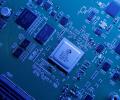
The Indian government is keen to woo major semiconductor players, but a global race to attract them to countries where there is already an ecosystem is making it difficult for India to attract the biggies in the business. On Wednesday the government decided to throw open the doors to more players to participate in its semiconductor scheme. It is now looking at not only 28 nanometre (nm) chips and below, but higher nodes like 40 nm.

Despite all the noise around India's chance to leverage the China-plus one strategy, India's share of global foreign direct investment (FDI) inflows fell from 3.5 per cent in the first nine months of 2022 to 2.19 per cent in the same period in 2023, according to OECD data. The sharp drop of 54 per cent is much steeper than the overall global FDI inflow decline of 26 per cent in the first nine months. FDI inflows to China have fallen dramatically from a share of 12.5 per cent in the first nine months of 2022 to only 1.7 per cent in the same period in 2023.
Foundries in Taiwan account for more than 75 per cent of the chips that mobile devices made in India need, according to estimates by the Indian Cellular and Electronics Association (ICEA), which represents global and domestic manufacturers. The number is slightly lower, 60 per cent, if one considers all chips -- those of consumer electronics, PCs, laptops, autos, etc. This ties in with the fact that foundries in Taiwan, led by TSMC, account for over 70 per cent of the world's microchip supply, according to estimates by Gartner.
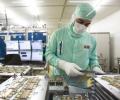
Mumbai-based Indian Semiconductor Manufacturing Company (ISMC) and Singapore-headquartered IGSS Ventures have one strategy in common: They have told the government in their application for semiconductor fabrication plants that they will export the bulk of the chips they make in India in the initial five or 10 years. The third applicant, Vedanta-Foxconn, which is also building a fab plant, has said it will concentrate on the needs of consumer electronics and mobile device markets, and earmark 80 per cent of output for domestic consumption, but has not specified its customers. Finding a viable domestic market could well be the biggest challenge for India's renewed tryst with semiconductors. Fab plants do not sell directly to end users but to intermediary chip design companies - such as Qualcomm or MediaTek.

Clearly, Foxconn Chairman Young Liu and his team are looking to raise their game in India.

Micron plans an assembly testing, marking and packaging project of $1 billion, and talks are on to set up a memory chip plant for captive requirements.
The exclusive club that dominates the global semiconductor fab scenario is about to get a new member. Taiwan, South Korea, and China control nearly 70 per cent of the global capacity. SEMI, the global industry body for semiconductor and electronics design and manufacturing, projects all fabs collectively will churn out 30 million wafers a month this year.

Christopher Wood, global head of equity strategy at Jefferies has rejigged his equity portfolios. In his Asia ex-Japan long-only portfolio, he has added Axis Bank (5 per cent weightage) and increased holding in Larsen & Toubro (L&T) by one percentage point. This, Wood said, will be paid for by removing the investment in ICICI Lombard General Insurance and reducing the investments in HDFC Bank and Reliance Industries (RIL) by one percentage point each.

India on Thursday said it promotes engagement with Taiwan in several areas including trade and investment and Taipei's decision to open an economic and cultural centre in Mumbai should be seen in that context.
The global semiconductor shortage is turning into a headache for automotive (auto) and appliance manufacturers. But it is proving to be a boon for equity investors. Semiconductor stocks are among the best performers this year. The PHLX Semiconductor Index has gained more than 35 per cent year-to-date.

Tata Group is in discussions with some major international companies, including those from Taiwan, for its foray into the semiconductor chip business. The Union government had earlier tried to bring in Taiwanese manufacturers Taiwan Semiconductor Manufacturing Company (TSMC) and United Microelectronics Corporation (UMC) for chip manufacturing in India. A person close to the development said the Tatas have now opened a separate channel for a possible tie-up. Currently, India mostly imports chips, which are fabricated and assembled to put into various applications, including automobiles, renewable power, mobile phones, televisions, and other electronic items.

Indian plants -- who plan to begin production with 28 nano metre chips -- will take two to four years to get off the ground. By that time, in the fast changing world of chip making, the global market would have shifted to 22 nm.
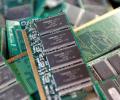
Even as India's passenger-vehicle sales touched a record high of 3.9 million units in 2022-23, growing 27 per cent over the previous financial year, the country's largest carmaker, Maruti Suzuki India (MSIL), said on Monday uncertainties in the electronic-component supplies might affect production in FY24. MSIL said the shortage of electronic components had some impact on production in FY23. "The company took all possible measures to minimise the impact.

Apple's newest phone iPhone 14 will be made in India as the global tech titan bets big on the manufacturing prowess of the world's second-biggest smartphone market after China.

'If the almost literally heart-stopping Suez block has any positive outcome, it is to be hoped that it will accelerate the setting up of a fab (perhaps Taiwanese) in India,' asserts Rajeev Srinivasan.

The new iMac, two iPads and iPhone 12 and 12 Mini will be open for ordering starting April 30, just like in the US, the UK, China and Japan.

Tata Motors recently cut the sales forecast of its luxury car brand, JLR, due to chip shortages, scaling down its production numbers from the earlier 120,000 units to 60,000-65,000 units by September, and leading to an almost 10 per cent fall in the company's stock. In May this year, Bosch India, too, had stated that chip shortfalls would impact its production, as supply chains were getting disrupted.

IIT Kharagpur gets more than 1,000 job offers in a record five days, with 144 companies visiting the campus till Dec 5

IIT Kharagpur officials said the salary package was among the 163 offers made by 27 visiting companies on Monday on the first day of campus placements.
