

Tracking losses in the broader market that has seen the Nifty Smallcap 250 index and the Nifty Midcap 100 indices slip 9 per cent 6.1 per cent in the last three sessions, the frontline Nifty 50 index has remained resilient and registered a fall of 2.2 per cent during this period. Going ahead, can the nervousness in the mid- and small-cap universe spread to the large-cap peers? Most analysts do not think so. They expect a minor dip and a sharp recovery as investors flock to the large-caps in search of safety and value buying as the mid-and small-caps falter.
Wannabe telecom operators will take a while to know whether they have passed the Telecom Regulatory Authority of India's test. But that hasn't stopped them from taking the next step: tying up with infrastructure providers such as tower operators for rolling out their nation-wide operations.

In its report tabled in Parliament, the CAG said the Swan Telecom's application was 'in effect against the intent and spirit' of the Unified Access Service Licencing guidelines as it was among those beneficiaries which 'suppressed facts, disclosed incomplete information and submitted fictitious documents' to the department of telecommunication.

Since the last few years, the telecom sector has been affected by regulatory uncertainty which has hurt the investor sentiment.
Credible growth in new users was not matched by revenue as the all-India blended Average Revenue Per User per month for GSM remained almost at the same level of Rs 297 as compared with Rs 298 for the previous quarter.The ARPU for postpaid GSM service has shown an increase of 7 per cent from Rs 613 in January-March to Rs 655 in April-June quarter.

The SC had reserved its verdict on a bunch of similar petitions.
What's happening in the telecom sector are classic bullying tactics - do the wrong thing, threaten to do worse, get the threatened party to sue for peace, and walk away smelling of roses after a "compromise".
Leading Chinese telecom equipment manufacturers, Huawei Technologies Co Ltd and ZTE Corporation, have launched an aggressive 'Indianisation' drive. The two companies are replacing Chinese nationals with Indians on their board of directors. The move is seen as an attempt by the companies to change the public perception in India, where Chinese firms are often viewed with suspicion. This would also make it easy for the firms to do business in India.

Debt-ridden telecom operator Vodafone Idea on Tuesday approved the allotment of equity shares worth Rs 16,133 crore to the government, which post-allocation has become the largest shareholder with a 33.44 per cent stake in the company. The shares have been allocated to the government in lieu of conversion of interest dues arising from deferment of adjusted gross revenue and spectrum auction payments, the company said in a regulatory filing. "...it is hereby informed that the board of directors of the company has, at its meeting held today approved the allotment of 16,133,198,899 equity shares of face value of Rs 10 each at an issue price of Rs 10 per equity share aggregating to Rs 161,331,848,990 to the Department of Investment and Public Asset Management, Government of India," the filing said.
The telecom foray is the second diversification outside its core business of developing residential and commercial real estate -- it is already in the Special Economic Zone space with five zones to be set up across the country.
Telecom Secretary R Chandrashekhar on Thursday said 100 per cent foreign direct investment (FDI) in telecom would not be possible before the 2G auction.

Taking a strong view of Google pulling out some apps from its Play Store, the government on Saturday said delisting of Indian apps cannot be permitted and that the tech company and the startups concerned have been called for a meeting next week. In an interview to PTI, IT and Telecom Minister Ashwini Vaishnaw said the startup ecosystem is key to the Indian economy and their fate cannot be left to any big tech to decide. The minister's comments assume significance as Google on Friday began removing some apps, including popular matrimony apps, from its Play Store in India over a dispute on service fee payments, even as apps and well-known startup founders cried foul.
China-based telecom equipment supplier Huawei Technologies, which has bagged a $200 million contract from Reliance Communications, is upbeat on India and expects to clinch other multi-million dollar outsourcing deals in the country.
Telecom operators pay 30 per cent of their revenue as levies like annual licence fee, spectrum charges, contribution to universal service obligation fund and the total burden adds up to 40 per cent along with service tax.

Sistema Shyam Teleservices on Wednesday said that it has no plans to acquire any telecom service provider and it will wait for the outcome of its curative petition filed before the Supreme Court.
The network sharing agreement is the start of a new era of partnership between the brothers. More deals on sharing towers and intra-city fibre network are likely.
During the proceedings, Spice Telecom's counsel Mukul Rohatgi contended that DoT decided not to allow the licence as the operator had a turnover of only Rs 1,100 crore (Rs 11 billion). The decision was discriminatory, he said. However, Telecom Dispute Settlement and Appellate Tribunal declined to pass any interim relief to the firm.

The telecom and banking departments along with the railways accounted for the maximum number of public grievances among the various arms of the government in the last three years.

Reliance Industries' (RIL's) retail arm, Reliance Retail, is now valued at nearly twice the amount of its decades-old and lucrative oil-to-chemical (O2C) division. Bernstein's latest report on the conglomerate projects a valuation of $112 billion for its retail business, dwarfing the $57 billion valuation of its O2C division. In addition, the research firm valued Jio Platforms, the company's telecom arm, at $77 billion and the renewable energy business at $17 billion.

Justice Dinesh Kumar Sharma said the parties shall file brief written submissions not exceeding five pages.

Adani group opened a $1.2 billion copper plant, bought a port in Odisha, raised stakes in a cement company and stitched an alliance with rival Mukesh Ambani's Reliance Industries, all in a matter of one week in signs that the apples-to-airport conglomerate has shrugged off the Hindenburg effect and is back to rapid expansion spree. In the last one week, Adani group has through regulatory filings and press statements announced expansions and investments in its mainstay ports business, diversification into metal refining, fund infusion into a two-year-old cement foray and continuing progress in the commissioning of its mega solar project.
Within days of revoking a non-compete agreement that his group had with his younger brother Anil, Relianec Industries Ltd chairman Mukesh Ambani is believed to have held a long-drawn-out discussion with telecom czar Sunil Mittal.
The telecommunications industry in India is one of the fastest growing sectors in the world. The booming telecom industry has been attracting large amount of investments in the country.
The phone will work on both 2G, 3G as well as 4G networks seamlessly.

This investment, up from $20 billion seen last year, would be for continuing the development of 3G, Broadband Wireless Access and expansion of existing networks, said R K Pathak, secretary of the Telecom Equipment & Services Export Promotion Council, in Singapore at the CommunicAsia 2010, a Singapore exhibition for global telecom industries.

Telecom Minister A Raja said on Friday that he has met Home Minister P Chidambaram over the issue of import of telecom equipment, especially from China, and hoped the issue would be resolved "in a couple of weeks".

While Ambani, 66, drew nil salary from the company since the 2020-21 fiscal year, other executive directors including his cousins Nikhil and Hital are paid a salary, perquisites, allowances and commission. His three children - twins Akash and Isha (both 31) and Anant (28 years) - will get only a sitting fee and a commission on the profit earned by the firm.
After falling 11 per cent over the past six months, shares of Bharti Airtel gained over three per cent on news that the Telecom Disputes Settlement and Appellate Tribunal (TDSAT) had given a split verdict on inter-circle 3G roaming arrangements between Bharti, Idea and Vodafone.
The government on Friday reduced the rate of interest and penalty for delayed payments for telecom companies having unified access licensees, including basic companies migrating to UASL, national long distance and international long distance players,

According to data released by the telecom regulator, the wireless subscriber base increased from 601.22 million in April to 617.53 million by the end of May 2010, registering a growth of 2.71 per cent.

This move gives Airtel and Chinese major immense benefits.

The government takes pragmatic steps on telecom.
The 2G judgment and Trai spectrum pricing have led to a policy that makes sense for only one survivor.

The industry had seen a robust growth of 20 per cent in revenues at Rs 1,55,683 crore (Rs 1,556.83 billion) in 2008-09.

A day ahead of the interim Budget, India slashed import duty on spare parts, like battery cover, lens and SIM socket, used in mobile phone manufacturing to 10 per cent, from 15 per cent. The duty cut is aimed at boosting local production and exports, as well as reducing prices in local markets. The finance ministry on January 30, notified the cut in duty on all goods for use in manufacture of cellular mobile phones to 10 per cent.
GSM operators say upcoming auctions will be a dud, while govt hopes to rake it in.
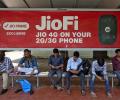
In the latest move, the telco has reduced validity for its Rs 309/509 packages from 84 days to 56
