
After a year of modest returns, equity investors may anticipate gains of 10-15 per cent in Samvat 2082, which began on October 21. Although valuations have moderated from their peaks a year earlier, they remain above long-term averages, potentially limiting sharp upsides.
Among major Sensex gainers Bajaj Finserv rose the most by 1.42 per cent, Axis Bank gained 0.80 per cent, Infosys by 0.72 per cent, Mahindra & Mahindra by 0.60 per cent, Tata Motors by 0.55 per cent, Bajaj Finance by 0.53 per cent and Tata Steel by 0.52 per cent. Kotak Mahindra Bank, ICICI Bank, HCL Technologies, Bharti Airtel, Maruti Suzuki India, Trent Ltd and Tata Consultancy Services were the losers.

Among Sensex firms, Tata Consultancy Services, Tech Mahindra, Axis Bank, Bajaj Finance, Eternal, Infosys, Kotak Mahindra Bank and Bajaj Finserv were the major gainers. However, Tata Steel, Adani Ports, Power Grid and Titan were among the laggards.

'What will matter in 2024 from the market standpoint is the direction of interest rates globally, as well as in India.' 'The results of the general elections will also be keenly watched.'

'A balanced portfolio mix of domestic and international equity, fixed income, and precious metals is recommended.'

The strong domestic flow offset selling by foreign portfolio investors who pulled out $23.3 billion (Rs 2.03 trillion) from domestic equity markets in CY25.
Among Sensex firms, Tata Steel, HCL Tech, UltraTech Cement, Bharat Electronics, Sun Pharma and Tata Consultancy Services were the major gainers. However, Axis Bank, Titan, Maruti and Tata Motors were among the laggards.

The recent rally in small and midcap (SMID) stocks is not backed by fundamentals and is a case of irrational exuberance, analysts at Kotak Institutional Equities said in a recent report. The fundamentals of most of these companies have, in fact, worsened over the last few months, they noted. Yet, some analysts expect the bull run in these stocks to continue amid intermittent corrections.

The S&P BSE Midcap and the S&P BSE Smallcap indices have managed to stay afloat in a volatile January that saw the frontline indices hit their respective 52-week high levels and then slip. While the S&P BSE Sensex has lost over 2 per cent thus far in January, the S&P BSE Midcap and the S&P BSE Smallcap indices have gained nearly 2.5 per cent and 4 per cent, respectively during this period.

'We are cautious only on sub-sectors that have seen massive melt-up during the past six months.'

'It takes time and the experience of a few market cycles to develop awareness about one's true risk appetite.'

Equity trading volumes, both in the cash and derivatives segments, dropped in March amid wild swings in stock prices. The average daily trading volume for the cash segment (National Stock Exchange, or NSE, and BSE combined) fell by 16.3 per cent to Rs 1.07 trillion - the lowest since November 2023. Market players said the drop could have been sharper if not for the large block deals in companies such as ITC, Tata Consultancy Services, and IndiGo seen during the month.

'The frenzy for gold is primarily due to the uncertainty surrounding the tariff war.'
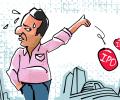
'The primary market's rhythm mirrors investor confidence. While sentiment may appear cautious, it reflects maturity, not weakness.'

'We continue to view India as a standout within EM.'

Net inflows into equity mutual fund (MF) schemes scaled a record high in July as the market correction and a raft of new fund offerings (NFOs) lifted lump-sum collections. Active equity schemes raked in a net Rs 42,702 crore in July, going past the previous high of Rs 41,156 crore in December 2024. Systematic investment plan (SIP) inflows continued to scale new highs, rising over 4 per cent month-on-month (M-o-M) to Rs 28,464 crore.

From the Sensex firms, HCL Tech, Infosys, Power Grid, Tata Consultancy Services, HDFC Bank, Hindustan Unilever, Bharti Airtel and ICICI Bank were among the major laggards. However, Titan, Larsen & Toubro, Maruti and Axis Bank were among the gainers.

Among Sensex firms, NTPC, Axis Bank, Power Grid, Bharti Airtel, Eternal and Sun Pharma were the major gainers. However, Infosys, Titan, UltraTech Cement and Hindustan Unilever were among the laggards.

As the rally in precious metals takes centre stage in 2025, most analysts recommend a larger allocation to gold over silver despite the latter's outperformance this year. In the current calendar year (CY25), spot gold prices in dollar terms rallied
Among Sensex firms, Mahindra & Mahindra, Asian Paints, Infosys, Titan, Sun Pharma, Tata Consultancy Services, Tech Mahindra and Power Grid were the major laggards. However, Bajaj Finance, Eternal, UltraTech Cement and Reliance Industries were among the gainers.

'It will dictate the flow of funds into the index. We will maintain caution on mid/smallcaps.'

SOFs can be a diversification tool for investors seeking alternatives to conventional large, mid, or smallcap portfolios.

Hybrid mutual fund (MF) offers, expected to drive higher investor interest after the change in debt fund taxation, are set to end 2023 with the slowest account growth in the past three years. Investment accounts in hybrid funds are up 5.7 per cent so far in 2023 compared with 7.6 per cent in 2022 and 20 per cent in 2021, shows the data from the Association of Mutual Funds in India (Amfi). In 2020, the count had dipped 2.4 per cent.

'As long as Sebi maintains transparency and market stability, the Jane Street episode is unlikely to deter long-term foreign capital.'

Among Sensex shares, Adani Ports, Reliance Industries, Infosys, ICICI Bank, Eternal, BEL, HDFC Bank, Power Grid, ITC and Sun Pharmaceutical were the major laggards. However, Titan, Maruti, Trent, Bharti Airtel, Bajaj Finance, Tech Mahindra, State Bank of India, L&T, HCL Technologies and NTPC were among the gainers.

Equity benchmark indices Sensex and Nifty fell on Friday, extending their downward journey to the third day, as investors continued to reel under pressure caused by the imposition of high tariffs and relentless foreign fund outflows.
Among Sensex firms, Tata Motors rose the most by 3.5 per cent while Adani Ports gained 3.16 per cent. Reliance Industries rose by 2.82 per cent. Eternal, Tech Mahindra, Kotak Mahindra Bank, Hindustan Unilever and Maruti were also among the gainers. However, Bajaj Finserv, Power Grid, Mahindra & Mahindra and HCL Tech were among the laggards.

Ask rediffGURU Reetika Sharma your insurance, mutual fund and personal finance-related questions.

'Exposure to small and midcap stocks exceeded desired levels in many portfolios, prompting rebalancing.'
The ratio of MF assets under management to total bank deposits has more than doubled in 10 years.

The ongoing weakness in the broader equity market is likely to weigh on primary market investor participation ahead, which has already begun showing signs of fatigue, analysts said. The spillover effect, they say, will continue as long as the midcap and smallcap segments remain volatile. "The effect will be felt in the IPO market. The subscription levels have come down in the last few days and recent 4-5 IPOs have not done well.

Domestic institutional investors (DIIs) poured in Rs 94,829 crore of fresh money into Indian equities in August, the second-highest monthly inflow after record Rs 1.07 trillion influx in October 2024.
'From tariff tensions and border skirmishes to unrest in West Asia.' 'The worst may be behind us. But any further upmove will now have to come from earnings.'
Majority of equity fund managers were able to squeeze in some extra returns over their benchmarks in 2024-25 (FY25). While some managed to do so by delivering outsized returns during the equity market rally in the first half of the year (H1FY25), others succeeded by limiting the downside during the market downturn.

Small stocks of Dalal Street grappled with turbulent times in 2022 as high volatility and higher interest rate regime sapped investors' appetite for these scrips but the horizon ahead seems less cloudy for the New Year. While the 30-share Sensex scaled multiple record peaks with bluechips glittering, small stocks underperformed and the BSE smallcap index declined more than 3 per cent this year. In comparison, the BSE Sensex climbed 2,673.61 points or 4.58 per cent till December 27.

Among Sensex firms, Bharat Electronics rose the most by 4.26 per cent. HCL Tech gained 2.57 per cent, Bajaj Finance by 2.19 per cent, TCS by 1.99 per cent, Tech Mahindra by 1.88 per cent and Infosys by 1.85 per cent. Gains in Axis Bank and State Bank of India also supported the rally. However, Mahindra & Mahindra emerged as the biggest loser, falling by 2.47 per cent. Maruti dropped 1.53 per cent and Tata Motors by nearly 1 per cent due to profit-taking. UltraTech, Eternal and Power Grid were also among the laggards.

Ask rediffGURU and PF expert Nitin Narkhede your mutual fund and personal finance-related questions.
Notwithstanding concerns about lofty valuations, smallcaps recorded their most significant monthly gain in nearly three years in November. The National Stock Exchange Nifty Smallcap 100 finished the month with a 12 per cent gain, the most since February 2021 when it rose by 12.2 per cent. After declining by 4.1 per cent in the preceding month, the Nifty Midcap 100 rose by 10.4 per cent, the most since July 2022.

New-age stocks to buy: Most new-age stocks have turned out to be wealth destroyers in stock markets, so far, in calendar year 2025. Shares of Ola Electric Mobility, for instance, have plunged nearly 50 per cent in the first half of CY 2025, while those of Swiggy, PB Fintech, Paytm, and Eternal (Zomato) have crashed between 6 per cent and 25 per cent, ACE Equity data shows.

Among Sensex firms, Tech Mahindra, HCL Tech, Eternal, Axis Bank, Maruti, Tata Steel, HDFC Bank and Asian Paints were the gainers. However, Adani Ports, Trent, Tata Motors, Hindustan Unilever and NTPC were among the laggards.
