

The company expects Bournvita Crunchy to strengthen its presence in the cookie segment.

The Bengaluru-based company had registered a net profit (after minority interest) of Rs 5,197 crore a year ago, a regulatory filing said. Infosys' revenue grew 22.9 per cent to Rs 31,867 crore in the quarter ended December 2021 from Rs 25,927 crore in the year-ago period, it added.

Investors must, however, be prepared for volatility in ELSS, cautions Sanjay Kumar Singh.

Market leader Maruti Suzuki is putting finishing touches to its plan of finding its feet in what is being hailed as a battle of epic proportions in India's fastest-growing passenger vehicle segment, reports Arindam Majumder.

ICICI Bank was the top gainer in the Sensex pack, rising around 3 per cent, followed by Axis Bank, HDFC twins, SBI, L&T, ONGC and Infosys. On the other hand, Sun Pharma, Asian Paints, Nestle India, UltraTech Cement and HUL declined. NSE Nifty rose by 79.60 points or 0.67 per cent to 11,914.20.

Investors who cannot manage an asset-allocated portfolio or rebalance regularly, or do not have an advisor, may opt for these funds, but only after a detailed study of their strategy, suggests Sanjay Kumar Singh.

Mid- and small-cap indices have outperformed the frontline benchmarks - the S&P BSE Sensex (up around 10 per cent) and the Nifty50 (13 per cent) - in the first half of calendar year 2021 (H1-CY21) by rallying 26 per cent and 39 per cent, respectively. The trend, analysts believe, is likely to continue in H2-CY21 as well. The outperformance in H1-CY21 comes on the back of improved earnings and strong inflows from the foreign portfolio investors (FPIs) in Indian equities. However, good monsoon so far, gradual opening up of the economy and the pick-up in the pace of vaccination provides support to the market.
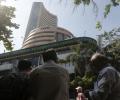
Yes Bank was the top gainer in the Sensex pack, soaring 24.03 per cent, after the lender said it had received a binding offer for $ 1.2 billion funding from an overseas investor. SBI, Infosys, Tata Motors, Bharti Airtel, HCL Tech and HDFC too rallied up to 7.69 per cent.

Analysts see a buy opportunity as gap with peers is now at 37% compared to 13% historically.

Many of them are housewives looking to increase income in households struggling with the economic devastation caused by COVID-19.

'Trading is about psychology; 75% of it is about keeping your emotions in check.'

SBI was the top gainer in the Sensex pack, rallying over 10 per cent, followed by Kotak Bank, Dr Reddy's, UltraTech Cement, ITC and HDFC Bank. On the other hand, Axis Bank, Bharti Airtel, ICICI Bank, Maruti and HCL Tech were among the laggards.

All Sensex components ended in the red. SBI was the top loser, followed by ONGC, Axis Bank, ITC, Titan, Bajaj Auto, TCS and IndusInd Bank.
With a 'yes' vote, there is a more foreseeable outcome, while a 'no' could result in greater uncertainty, for which retail investors may not have the appetite.

In the mid-tier space, clients with weak balance sheets are likely to ask for price revision apart from delay in payment.

Yes Bank and Tata Motors were the biggest losers in the Sensex pack, slumping 8 per cent.

Overall market breadth was extremely positive as 1,695 stocks advancing while 831 were declining.

Top Indian IT firms, such as TCS, Infosys, and Wipro, have signalled taking aggressive cost take-out measures, including reduction in sub-contracting costs, travel expenses, freeze in salary hikes, and holding back variable payments, among others.

Top laggards in the Sensex pack included Kotak Bank, ICICI Bank, HDFC Bank, Tata Motors, L&T, SBI, Tata Steel and Axis Bank, falling up to 3.46 per cent.
Experts believe that though the fastest-growing economies of China and India have suffered some moderation, they are showing much more endurance than the other two countries in the BRIC pack -- Brazil and Russia. India's GDP growth has contracted from a quarterly peak of 9.7 per cent in the fourth quarter of 2006-07 to 5.3 per cent in the third quarter of the current fiscal, pulled down by decline in manufacturing and farm production.

Axis Bank was the top laggard in the Sensex pack, plunging more than 5 per cent, followed by HDFC, Bajaj Finance, ICICI Bank, Tata Steel, Bajaj Auto, HDFC Bank and IndusInd Bank. On the other hand, M&M, Infosys, Asian Paints, UltraTech Cement and Tech Mahindra were among the gainers.
'The market was expecting the Budget to do more, given the domestic economic slowdown and global uncertainty. Over the next few days, the market is expected to absorb the volatility.'
Domestic brokerage Sharekhan's last month's analysis of buy and sell transactions by mutual funds shows that the fund houses purchased stocks from sectors such as infrastructure, IT, telecom and healthcare, while offloading shares from oil and gas and banking sectors. Domestic mutual funds are lapping up the buying opportunity present in the bear gripped stock market and made net purchases worth Rs 3,179 crore (Rs 31.79 billion) in equities in June.

Among IT services firm, Cognizant witnessed over 60 per cent of its initial applications rejected, followed by Capgemini, Accenture, Wipro, and Infosys. In 2018, the top six Indian firms got just 16 per cent or 2,145 H1B work permits.

Overall, the domestic FMCG market bounced back to levels of 98 in June compared with 75 in May and 101 in March before the nationwide lockdown was announced. The pre-Covid March index for foods was 103, and for non-foods, it was 99.

Of the Rs 13,957.4 crore (Rs 139.57 billion) lying with the existing MFs, Rs 912 crore (Rs 9.12 billion) has been mobilised through new fund offerings.
While Geojit Financial Services and Kotak Securities are already managing large NRI portfolios in West Asian countries, Sharekhan, yet another local brokerage outfit, recently launched a broking platform called India First in Bangkok for NRI clients.
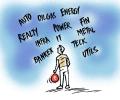
Top losers in the Sensex pack included M&M, SBI, Yes Bank, Asian Paints, HDFC, Tata Steel and L&T, shedding up to 2.55 per cent. The broader NSE Nifty settled 79.80 points, or 0.72 per cent, down at 10,996.10.
The rupee had depreciated against the dollar in the last quarter after continually appreciating for the past three quarters, this reversal is likely to help the revenue growth this quarter, domestic brokerage Sharekhan said in its IT earnings preview. The rupee had depreciated against the dollar in the last quarter after continually appreciating for the past three quarters, this reversal is likely to help the revenue growth this quarter.

The biggest gainers in the Sensex pack were Sun Pharma, Bajaj Finance, Vedanta, Yes Bank, ICICI Bank, HDFC, Tata Motors, HCL Tech, IndusInd Bank and Axis Bank, rising up to 2.98 per cent.

The biggest gainers on both bourses were Bharti Airtel, HDFC duo, L&T, Bajaj Auto, Kotak Bank, Reliance Industries, Axis Bank, ICICI Bank, SBI, ITC and Bajaj Finance, rising up to 4 per cent.
Mutual funds are sitting on a huge cash pile of Rs 22,908 crore (Rs 229.08 billion). The absolute cash levels for all existing equity funds rose by 17.4 per cent to Rs 16,642 crore (Rs 166.42 billion) in February 2008 from Rs 14,176 crore (Rs 141.76 billion), in January 2008. Even the cash as a percentage of the total corpus increased to 8.7 per cent in January 2008, from 7.6 per cent in December 2007. The rising cash levels indicate the cautious outlook of the fund managers.

Corporate revenues will decline for a third consecutive quarter in March on a YoY basis - one of the worst shows by these companies in many years.
Ajit Motwani of Sharekhan picks some smallcap stocks with potential. Motwani likes Ratnamani Metals, WS Industries and Transport Corporation of India.

If one compares returns, the two public-sector ETFs have done better over the past year, but the ELSS category has done better over the trailing three and five years.

Morgan Stanley Sales & Trading, US, believes the stock is better value for money than others and has a upside as high as 73 per cent. A slowdown in the economy has hit demand and led to a fall in overall consumption in an auto market which till recently was one of the fastest growing in the world.

ITC was the biggest gainer in the Sensex pack, rallying 3.14 per cent. Maruti Suzuki, Axis Bank, Hero MotoCorp, Vedanta, Asian Paints, M&M, HUL, Bajaj Auto and PowerGrid were among the other top gainers, rising up to 2.13 per cent.
Surya Narayan Patra of SSKI & Sharekhan discusses his picks from the pharma space
