
IndusInd Bank was the top laggard, tumbling over 7 per cent, followed by Bajaj Finance, M&M, Tech Mahindra, TCS and Tata Steel.

HDFC twins were the top losers in the Sensex pack, shedding over 4 per cent, followed by ICICI Bank, Kotak Bank, Asian Paints, M&M, HUL, TCS and Maruti. NSE Nifty tanked 263.80 points to 14,631.10.
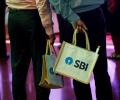
The Centre should privatise all public sector banks (PSBs), except the State Bank of India (SBI). This is because private banks have emerged as a credible alternative to PSBs with substantial market share. Also, government ownership hinders the ability of the Reserve Bank of India (RBI) to regulate the sector, according to a report by the National Council of Applied Economic Research (NCAER).

Axis Bank was the top gainer in the Sensex pack, rallying over 4 per cent, followed by ICICI Bank, UltraTech Cement, HUL, SBI, PowerGrid, Bajaj Auto and Reliance Industries. NSE Nifty jumped 143.65 points to 14,485.

The Reserve Bank is likely to maintain status quo on interest rates in its forthcoming monetary policy review but may change the stance in view of retail inflation piercing its upper tolerance limit, global uncertainties created by the ongoing Russia-Ukraine war, and the urgency to protect and boost growth, feel experts. The RBI governor-headed rate setting panel -- Monetary Policy Committee (MPC) -- will be holding its first meeting of the 2022-23 fiscal from April 6 to 8. The outcome will be announced on April 8.

Maruti was the top loser in the Sensex pack, shedding around 4 per cent, followed by Bharti Airtel, HUL, NTPC, Bajaj Finance, UltraTech Cement, ONGC and Reliance Industries. NSE Nifty declined 224.50 points to 14,324.90.
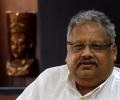
Ace investor Rakesh Jhunjhunwala on Thursday said real estate developers are afflicted with very low return on capital as compared to bluechip stocks. Jhunjhunwala, who runs RARE Enterprises and is set to be a major shareholder in an upcoming airliner, said only the affordable housing developers can look at listing because of the volumes which they can deliver. It can be noted that very few developers like Macrotech Developers formerly Lodha, and DLF are listed on the bourses. Jhunjhunwala cited the case of DLF, saying the stock price plummeted to Rs 80 from Rs 1,300 per piece to illustrate the risks associated.
'If Covid peaks at around 250,000 cases, I don't see the market fall much. If it becomes uncontrollable and goes up to 600,000 a day, then the market may fall.'
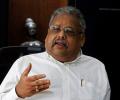
Rakesh Jhunjhunwala's holding value in Nazara Technologies crossed the Rs 1,000-crore mark. In the past one month, the market price of Nazara, a diversified gaming and sports media platform, has zoomed 78 per cent. In comparison, the Sensex was up 3 per cent during the same period.
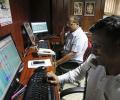
Among the gainers, RIL was followed by Sun Pharma, PowerGrid, Bajaj Finance, Nestle India and HCL Tech. On the other hand, Titan, L&T, ONGC, HDFC Bank and ITC were among the laggards.
Sebi on Monday barred total 85 entities, including Sunrise Asian Ltd, from the capital markets for up to one year for manipulating the company's share price. In its order, the regulator restrained Sunrise Asian and its then five directors from the capital markets for one year and the 79 connected entities for six months. The Securities and Exchange Board of India (Sebi) had conducted an investigation in the scrip of Sunrise Asian for the period from October 16, 2012 to September 30, 2015, based on a reference received from the Principal Director of Income Tax (Investigation), Kolkata.

The raids are underway at three locations, including her residence in Sainik Farm. Misa Bharti and her husband Shailash Kumar are involved in an alleged benami land deals case and were called for questioning by tax officials in June.

Bharatiya Janata Party MLA in Chhattisgarh and former state minister Brijmohan Agrawal has stoked a controversy as he said that those who call inflation a national calamity should stop eating food and using petrol.
Skills and democracy are the main drivers of sustainable growth, ace investor Rakesh Jhunjhunwala said on Friday, adding that he is bullish on the Indian market. "If you examine history, democracy creates chaos and forces people to think and act. "Therefore, skills and democracy are the main drivers of sustainable growth...It is most needed..," Jhunjhunwala said at the 'India Today Conclave 2021'. On markets, he said he is inherently bullish and India is coming to a phase economically that it has never seen before.

the I-T department attached a total of 12 plots of Bharti and her husband Shailesh Kumar, Bihar Deputy Chief Minister Tejaswi Yadav and ex chief minister Rabri Devi, and sisters Ragini and Chanda Yadav.

Madhya Pradesh Governor Ram Naresh Yadav's son Shailesh, who was recently named as an accused in the multi-crore Vyapam scam in MP, was found dead on under mysterious circumstances at his father's official residence in Lucknow.

Apart from the metropolis, several other parts of Maharashtra also reported a drop in night temperatures, resulting in chill and cool breeze in those areas.

Axis Bank was the top loser in the Sensex pack, falling around 3 per cent, followed by SBI, M&M, Bajaj Finance, ITC, HDFC Bank, HCL Tech and IndusInd Bank.
The country's largest lender SBI on Friday reported an 80 per cent surge in standalone net profit at Rs 6.450.75 crore for the fourth quarter ended March 2021, aided by decline in bad loans. State Bank of India (SBI) had registered a profit of Rs 3,580.81 crore during January-March period of 2019-20, the lender said in a regulatory filing. Total income of the bank during the March quarter of the last financial year rose to Rs 81,326.96 crore, from Rs 76,027.51 crore in the same period of 2019-20.
Reliance Jio has paid about Rs 10,700 crore to the telecom department towards outstanding amount for spectrum acquired in 2016 auction, sources said. The payment was made by Jio last week, sources added. With this, the company has made full payment with regard to spectrum bought in 2016 auction, and the outstandings now pertain to 2014, 2015 and 2021 auction.

Sebi has said investment banks should direct investors to original sources such as stock exchanges, where data is publicly available.
Total wireless subscribers increased from 1.1 billion, in January to 1.2 billion in February, thereby registering a monthly growth rate of 0.72 per cent.

Somaiya had on Sunday claimed he was barred from entering Kolhapur with the district authorities citing law and order as well as security concerns following his allegations of corruption against Maharashtra Rural Development Minister Hasan Mushrif.
