
The biggest headwind to the consumption story in FY23 is a sharp decline in government subsidies on food, fertiliser and fuel, and overall decline in revenue expenditure net of interest payments. This, analysts say, will adversely impact purchasing power of households at the lower end of the income pyramid, translating into lower spending on consumer goods and services.

Emerging markets such as India have always run higher inflation rates than developed economies such as the US and countries of Western Europe. But for the first time in the past 30 years, the US reported a higher consumer price inflation (CPI) rate than India in five consecutive months. The US reported a CPI rate of 7.5 per cent in January 2022 against 6.01 per cent in India and analysts expect the trend to continue for at least a few months more

Monsoon in August was almost 24 per cent below normal, which was the sixth driest August since 1901. It came on the back of a 7-per cent monsoon shortfall in July.

If the government cuts wasteful expenditure as it is trying now, the deficit would at most fall to 8 per cent, not less than that.

The rates of price rise in many services used by the common man, including hospital and nursing, cook, domestic help and bus (fare), among others, have also touched double digits during the last four years, putting a burden on disposable income.

The return of private investment now struggles with lack of funds and election-driven uncertainty.

'The effect will be seen two-three quarters down the line.'

Historically, there has been no correlation between growth in bank credit to industry and lower benchmark interest rate

If imputed inflation for April and May is used, then you have inflation of over 6 per cent for two consecutive quarters, which is a worrying signal for the RBI.
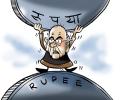
For the first eight months of the current financial year, the figure stood at Rs 7.17 trillion.

The prospect of India Post turning into a bank sounds like a capital idea, especially since we are talking about inclusive banking.

Cascading effect of rising raw materials will result in inflation, high rates, slow capex

On the basis of Budget projections, the Centre needs Rs 7.3 trillion revenue during December-March and its expenditure must be limited to Rs 6.7 trillion.

Most analysts expect the note ban to sharply hit GVA growth in Q3 and Q4, and the central bank's stance is being called into question.

Direct economic stimulus measures such as tax cuts for individuals and industry would have helped to prop up the Indian economy which was hit hard by the lockdowns across several states in India, say economists and corporate leaders. While the measures announced on Monday are focussed more on the supply side, these steps would take a lot of time to move the needle for the economy.

Infra segment, refinery product impacted the most, even as contraction narrows in latest month.
Forget urban vs rural, marketers need to start thinking about North and South.
It is generally felt that DCTs are a more efficient system than, say, physical subsidies. This does hold when conditions are ideal and back-end structures are in place.

However, the hike in salary for government officials may take some time as the Centre had earlier this year decided to put a freeze on any hike in the DA of its employees till July, 2021, owing to the Covid-19 pandemic.
While UPA has been more pro-farmer, and delivered better GDP growth while the NDA was steadier on the fiscal and industrial side.

Little indication of growth surge in either industry or services till well into FY14.

Completed projects saw an improvement of 29.2 per cent over the June quarter, which is valued at Rs 0.31 trillion.

Though it is likely gross domestic capital formation increased in the quarter ended June, against declines in the previous two quarters, a significant revival in investment might take a few quarters more, economists say.

The GDP has been estimated at Rs 126.54 lakh-crore (Rs 126.54 trillion).

As the growth figures relate to pre-Covid lockdown period it does not reflect the real picture of distress which unfolded from April onwards in the sector, when acute supply disruption led to sharp drop in prices of many commodities largely perishables impacting farmers.

'We will have to wait for one more year to cross the 7% mark, which should be possible in the absence of any disruptive reform,' points out CARE Ratings Chief Economist Madan Sabnavis.

If the fiscal deficit for the year can be maintained at Rs 7.04 trillion, the deficit as a percentage of GDP will slip to 3.44 per cent

No change in retail prices as oil marketing firms to absorb increase

With fuel being the main input cost for the transport sector, rise in cost of operations is a given. The sector is unsure on the extent of being able to pass this on through rentals or to absorb it with higher volumes.
Stemming from the default of IL&FS in September, on various debt instruments including commercial papers, bonds and loans, the financial sector has been facing a liquidity crunch for the last eight to ten weeks.
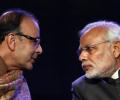
PM's announcement were focused on those most affected by the note ban.

The bigger worry is that its effects could linger well into the next financial year.

Customer centricity is about understanding the ecosystem in which a product is operating in the customer's life and working towards making every element of the ecosystem friendly and enjoyable to the customer.

There is a near consensus that at least a 25 basis points cut, if not 50, can be expected in the June policy.

Many are testing hybrid models including getting small batches to work, rotating staff every week, introducing shifts and allowing certain functions to operate from office in small numbers.

For many big brands, investment in advertising is as big as the amounts spent in setting up factories and other infrastructure.

A brand can move from creating affinity to inspiring awe and respect
While RBI is right to worry about the share of outstanding ECBs in our reserves, firms need these to finance investment -- some prudent limits need to be set, says Madan Sabnavis.

Stories that are able to multiply effect through word of mouth have a better chance to overcome clutter and cynicism.

The Sensex will then rally further and end 2016 at 28,000, according to the median forecast of 50 analysts polled in the past week.
