
India's net direct tax collection witnessed a robust 13.21 per cent increase, reaching approximately Rs 13.38 lakh crore between April 1 and October 14, primarily fuelled by a strong performance in corporate tax mop-up.

Indian stock markets witnessed a significant rebound, with the Sensex rallying 1,109 points and the Nifty closing above 22,720, driven by strong performances in IT and financial sectors, a recovering rupee, and Finance Minister Nirmala Sitharaman's comments on long-term capital gains (LTCG) tax.

The tax is collected by brokers on behalf of the government and forms a key component of the Centre's tax revenues.

Finance Minister Nirmala Sitharaman stated that the Reserve Bank of India (RBI) will persist in its efforts to prevent excessive volatility in the rupee, which has significantly depreciated against the US dollar due to global uncertainties, despite India's strong macro-economic fundamentals.

Indian equities trading activity saw a moderation in FY26, with cash market turnover declining and derivatives growth remaining subdued due to regulatory tightening and weak market performance. Further impacts are expected from new RBI norms and a hike in Securities Transaction Tax (STT).

Indian benchmark stock indices, Sensex and Nifty, closed lower due to profit-taking, a spike in wholesale price-based inflation, and firm crude oil prices, despite some support from easing intraday crude oil prices and rupee appreciation.

Sebi cautions investors against fake notices demanding Securities Transaction Tax (STT) payments and warns about fraudsters posing as account handlers promising risk-free profits.
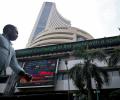
India's derivatives market experienced a significant 23 per cent fall in average daily contracts traded in August, reaching a 13-month low of 224 million. This decline is primarily attributed to regulatory changes, including a higher securities transaction tax (STT) and enhanced collateral requirements, alongside the introduction of a closing auction session.

India's net direct tax collection has surged by 13 per cent to over Rs 12.12 lakh crore by September 17 in the current fiscal year, driven by a significant increase in advance tax payments from corporates, according to CBDT data.

Finance Minister Nirmala Sitharaman on Sunday announced an increase in the Securities Transaction Tax (STT) on Futures and Options trade with a view to discouraging small investors from speculative trading in derivatives, which led to a sharp decline in the stock market.

Benchmark stock indices Sensex and Nifty dived sharply by nearly 2 per cent on Sunday after Finance Minister Nirmala Sitharaman proposed a hike in the Securities Transaction Tax (STT) on derivatives. Reversing the early gains, the 30-share BSE Sensex plunged sharply by 2,370.36 points or 2.88 per cent to slide below the 80,000-mark at 79,899.42 in afternoon trade as the finance minister announced a hike in STT on futures contracts to 0.05 per cent from the current 0.02 per cent.

Shares of brokerage-related companies nosedived 18 per cent on Sunday after Finance Minister Nirmala Sitharaman proposed raising securities transaction tax on commodity futures to 0.05 per cent from 0.02 per cent in the Union Budget 2026-27.
India's net direct tax collections have surged by 16.4 per cent year-on-year to 6.51 trillion as of July 13, primarily driven by robust growth in corporate tax receipts, according to provisional data from the Central Board of Direct Taxes (CBDT).

India's net direct tax collection has seen a robust 15 per cent increase, reaching approximately 5.21 trillion in the first two and a half months of FY27, as on June 17, driven by strong growth in both corporate and non-corporate tax segments.

The FM also said the government has proposed a joint panel of Corporate Affairs Ministry and CBDT for incorporation of income computation and disclosure standards.

India's net direct tax collections increased by 5.12 per cent to over Rs 23.40 lakh crore in the 2025-26 fiscal year, but this figure still fell short of the revised budget target of Rs 24.21 lakh crore, primarily due to income tax cuts implemented earlier in the year.

Brokers believe that the higher charges may not completely deter investors from taking bets in F&O but could help cool down some activity, as the threshold to break even rises.

India's market landscape is undergoing significant shifts, with bank-backed brokerages potentially regaining dominance over discount platforms due to regulatory changes and increased taxes, while the IPO pipeline faces a slowdown amid heightened global volatility.

Ambareesh Baliga's quick take on the markets after the increase in STT on futures and options trading...

'Once the market decides it wants to go up, it goes up -- no amount of bad news can really hold it back.'

Foreign Portfolio Investors (FPIs) remained in a selling mode in January, withdrawing nearly Rs 36,000 crore (about $3.97 billion) as global uncertainties persisted. Meanwhile, a higher securities transaction tax (STT) proposed in the Union Budget may weigh on overseas investor participation in the near future.
The market capitalisation of BSE-listed companies eroded by Rs 9,40,581.75 crore to Rs 4,50,61,658.60 crore (USD 4.90 trillion) in a single day.

'Given that India underperformed emerging markets by 28 per cent in 2025, the worst performance in over 30 years, the timing of the sharp STT hike could have been better.'

'For those in for the long haul, this is a God-given opportunity.' 'Your market is falling despite strong fundamentals, and such a clear roadmap has been announced.'

In the 15 Union Budget presentation days of the Narendra Modi government since it came to power in 2014, the BSE benchmark Sensex has ended in negative territory eight times.

'You set up your SIPs and you do not touch them. Not during COVID, not during a war scare, not when your neighbour tells you the market is finished. You let the noise pass over you.' 'The beauty of this approach is that it does not require courage or conviction in the moment. It just requires inertia -- keep the SIP running and do not look at your portfolio too often.'

Sometimes, the most powerful Budgets whisper and the wisest investors listen, notes Ramalingam Kalirajan.

Infographics break down the key numbers and decisions, making it quick and easy to understand what the Budget means for the economy.

The Union Budget for 2026-27, presented by Finance Minister (FM) Nirmala Sitharaman on Sunday, which was a first, had an excellent domestic macro backdrop. According to the first advance estimates, gross domestic product (GDP) in constant prices is projected to grow 7.4 per cent in the current financial year, against 6.5 per cent in 2024-25.

The Budget emerges as a measured, credible and forward-looking policy document that reinforces India's commitment to remaining a stable, reform-oriented economy amid an increasingly fragmented global landscape, says A Balasubramanian.

Net direct tax collection grew 8 per cent to over Rs 17.04 lakh crore this fiscal till December 17 on slower refunds and higher advance taxes from corporates, the income tax department data showed on Friday.
Capex, infrastructure development, and prudent fiscal management are the key focus areas in the Budget, says Nilesh Shah.

This single amendment, unfortunately, overshadows much of the Budget's promise, explains Harsh Roongta.
Adani Ports, NTPC, Infosys, Hindustan Unilever, HCL Technologies and Sun Pharma were among the other big gainers. However, Larsen & Toubro, Bajaj Finance, State Bank of India, Axis Bank and HDFC Bank were amonh the major laggards.

CA Sumeet Mehta analyses the Union Budget 2026-2027, identifying key positives and negatives.
Net direct tax collection grew about 8.82 per cent to over Rs 18.38 lakh crore in the current fiscal till January 11 due to slower refunds and better corporate tax mop-up.


Bharat Electronics, Reliance Industries, Mahindra & Mahindra, Larsen & Toubro, InterGlobe Aviation, ICICI Bank and UltraTech Cement were among the other major gainers. Axis Bank, Infosys, Tata Consultancy Services, Trent and Titan were the laggards.

'When markets go into a budget with excessive optimism, the risk of disappointment is higher.'

This Budget positions India's taxation ideology as not merely a revenue source but as a strategic catalyst for growth, inclusion and long-term confidence.
