
The Kerala model is crucial as SMA patients in India had a long wait for a viable treatment option.
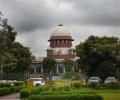
The Supreme Court has directed registrar generals of all high courts to furnish details to their chief justices on verdicts reserved but not pronounced for three months, expressing concern over delays in judgment delivery.

The Supreme Court of India strongly condemned the terrorist attack in Pahalgam, Kashmir, that killed at least 26 people, mostly tourists. The court observed a moment of silence in tribute to the victims and expressed condolences to their families. The attack was described as an affront to the values of humanity and the sanctity of life. The Supreme Court Bar Association and other legal bodies also condemned the attack and expressed solidarity with the victims and their families.

Markets regulator Sebi is actively working with the Ministry of Finance and other financial regulators on setting up a centralised KYC (Know Your Customer) system, chairman Tuhin Kanta Pandey has said. The Central KYC is an online database that maintains KYC records of customers in a centralised manner, aiming to streamline compliance across financial institutions.

The Centre told the bench that compensation to the beneficiaries was already paid and the land was acquired but subsequently, one person, on the strength of a power of attorney, filed a reference case.
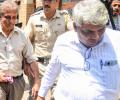
The court also directed YouTube and a Marathi news channel to forthwith remove the video of the press conference and also restrained them from uploading it in future.
A bench comprising Chief Justice B R Gavai and Justices Augustine George Masih and AS Chandurkar also directed that the offending video be immediately taken down and restrained the YouTube channel from republishing it or similar content.

The Supreme Court of India has directed its registry to call for a report from IIT Kharagpur and Kota, Rajasthan, after the suicides of a student and a NEET aspirant came to light. The court is seeking to ascertain whether FIRs were registered in both cases, highlighting the disturbing pattern of student suicides in educational institutions. The court has also previously ordered the formation of a national task force to address mental health concerns and prevent suicides in higher educational institutions.

Delhi high court ruling on numbers as trademarks could be a trendsetter.
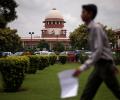
The Supreme Court has deleted its critical observation against Allahabad High Court judge Prashant Kumar, clarifying that it did not intend to embarrass or cast aspersions on him. The decision follows a request from Chief Justice B R Gavai to reconsider the matter.

An expert committee in Karnataka has concluded that there is no association between premature cardiovascular disease and a prior history of Covid-19 infection or Covid vaccination. The report suggests that common risk factors like hypertension, diabetes, and smoking are more likely causes.
The Supreme Court has initiated a suo motu case regarding investigation agencies summoning lawyers and will examine if they can be put to notice. The action follows the Enforcement Directorate summoning senior lawyers, which was condemned by bar associations.

However, under several external factors -- such as technological disruption or advancement, regulatory or policy changes, or economic shocks -- the gig workforce may grow only to 32.5 million by 2047, a report points out.

Industry lobby, Mobile Marketing Association, along with other industry bodies, is submitting a proposal to the Telecom Regulatory Authority of India (Trai), opposing the possibility of a 'do-call' registry.

If the 'Captain Cool' trademark goes through, it could trigger a wave of similar attempts by celebrities to trademark nicknames given to them by fans.

In a circular dated June 5, it said the Lokpal did not have the power to review its orders while noting "increasing instances of complainants desirous of a reconsideration of the verdict given by it".
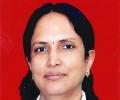
The Bombay High Court has ruled that Pushpa Ganediwala, the former HC judge who had faced criticism for a series of controversial judgments in POCSO Act cases, is entitled to receive pension on par with a high court judge. Ganediwala was demoted as district sessions judge at the end of her additional judgeship in 2022 following an uproar over some judgments passed by her on the interpretation of what constitutes a sexual assault under the Protection of Children from Sexual Offences (POCSO) Act. She had filed a petition challenging a communication issued by the HC registrar declaring that she was not eligible for pension of a HC judge. The court quashed the communication and directed the registry to fix her pension with 6% interest from February 2022.

As soon as one of the pleas came up for hearing on Friday, Solicitor General Tushar Mehta, appearing for the Centre, objected and said there can't be an "endless" filing of pleas challenging the Act.
The court, after taking suo motu cognisance of the matter, issued notice to the state, and tasked it to file a detailed status report by June 10.
The Supreme Court of India has ordered all high courts to ensure that civil courts under their jurisdiction decide execution petitions within six months, failing which presiding officers will be held accountable. The court cited the significant delay in resolving such petitions, which are filed to enforce decrees in civil disputes, and noted that this delay undermines the purpose of the decree itself. The verdict stems from a 1980 civil dispute from Tamil Nadu, highlighting the long-standing issue of delayed execution proceedings in India's legal system.

In 2025 alone, at least 50 suicides linked to online gambling losses have been reported across India. According to FIRs, the victims were addicted to betting, largely driven by cricket, rummy and poker.
'The Election Commission is conducting the National Register of Citizens in Bihar through the backdoor.'

This marks a 67% increase from the Rs 2,537 crore lost in scams in 2022-2023.

Satish Salian, the father of Disha Salian, former manager of actor Sushant Singh Rajput, has filed a petition in the Bombay High Court seeking a fresh probe into her death in 2020. The petition alleges that Disha Salian was brutally raped and murdered and that there was a politically-orchestrated cover-up to protect certain influential persons. The petition names Shiv Sena (UBT) leader Aaditya Thackeray and calls for the probe to be transferred to the CBI. The petition also claims that the Mumbai police hastily closed the case as a suicide or accidental death without considering forensic evidence. Salian's death occurred on June 8, 2020, after she fell from the 14th floor of a residential building. The city police had registered an Accidental Death Report (ADR) case at the time. The case has drawn renewed attention after Rajput's death on June 14, 2020, which was also initially ruled a suicide but was later handed over to the CBI. The petition has sparked reactions from various political figures, with some calling for Thackeray to resign and face the investigation.

Tax evaders, BEWARE! The Income Tax department is using AI data analytics to bust fake deductions, flag HRA fraud, and trace digital footprints.

The herculean effort and complexity involved in getting IT-BPO employees and employers to register - coupled with the high costs incurred in the process - is likely to force IT industry body Nasscom to miss its March 2008 target of 500,000 registrations for its National Skills Registry (NSR) by a huge margin.

From the launch of the 'Startup India' initiative in 2016, to the abolition of angel tax and easing of reverse flipping norms, the startup ecosystem is evolving.
The Supreme Court of India has directed the directors general of police (DGP) of all states and union territories (UTs) to strictly adhere to safeguards available to persons in custody. The court made these observations after a man alleged he was held by Haryana Police in violation of the law on arrest and subjected to physical abuse. The court emphasized that even a 'criminal' enjoys certain legal protections and that police officers must be held accountable for any transgressions. It further directed its registry to send a copy of its judgment to all DGPs as a reminder to adhere to these safeguards.
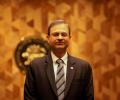
Reserve Bank of India (RBI) Governor Sanjay Malhotra on Wednesday said regulations should not create unintended barriers to financial inclusion while emphasising that the impact of regulations on individuals and businesses should be considered.
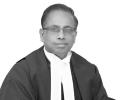
Justice Vishwanathan said he was in "the Common Cause (the NGO which had filed the PIL in coal scam cases). This case was of the ED (Enforcement Directorate), but still...".

The Delhi High Court has ruled that the right to privacy includes the "right to be forgotten," and ordered the masking of an acquitted man's name from online records. The court reasoned that no public interest is served by keeping information alive on the internet after criminal proceedings are quashed. It also directed portals and search engines to comply with the order.
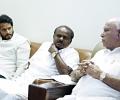
The Supreme Court referred to a larger bench the legal issues stemming from a plea of BJP leader B S Yediyurappa, including the question whether a prior sanction to prosecute is needed under the Prevention of Corruption Act after a magisterial court order of inquiry. The questions revolve around the interplay between the provisions of the Prevention of Corruption Act and the Code of Criminal Procedure on the issue of prior sanction to prosecute a public servant.
Reserve Bank has almost finalised the structure of Central Fraud Registry.

A three-judge Supreme Court bench will hear petitions challenging the constitutional validity of the Waqf (Amendment) Act, 2025, on April 16. The petitions, including those by politicians and the All India Muslim Personal Law Board (AIMPLB) and Jamiat Ulama-i-Hind, were filed in the top court challenging the validity of the newly-enacted law. The Centre has filed a caveat in the apex court, seeking a hearing before any order is passed.
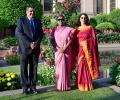
Four days after the top court cleared 10 bills, which were stalled and reserved by Tamil Nadu Governor R N Ravi for the president's consideration, and set a timeline for all governors to act on the bills passed by the state assemblies, the judgement running into 415 pages was uploaded on the apex court's website at 10.54 pm on Friday.
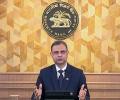
'In this age of competition, we will not survive long if we do not provide quality service to our consumers'
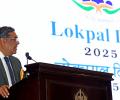
The Supreme Court of India will examine the jurisdiction of the Lokpal, India's anti-corruption ombudsman, in entertaining complaints against sitting high court judges. The court is considering a suo motu proceeding initiated over the Lokpal's January 27 order on the issue. The case involves two complaints filed against a sitting additional judge of a high court, alleging that he influenced a judge of the subordinate judiciary and a judge of the same high court set to deal with a suit filed against the complainant by a private company.
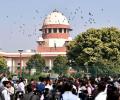
The Supreme Court of India has stayed a Lokpal order that allowed complaints to be filed against a sitting high court judge. The court termed the order "something very, very disturbing" and a concern for the independence of the judiciary. The bench issued notices to the Centre, the Lokpal registrar, and the complainant, directing them to keep the identity of the judge confidential. The court will hear the matter again on March 18.
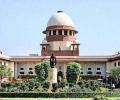
The Supreme Court of India has scheduled a hearing on February 19 for pleas challenging the appointment of the Chief Election Commissioner and Election Commissioners under the 2023 law. The court emphasized the potential consequences if any action is taken before the hearing. The pleas argue that the 2023 law, which excludes the Chief Justice of India from the selection panel, undermines the independence of the Election Commission and allows for undue influence from the executive branch. The court's earlier verdict in March 2023 called for an independent selection panel comprising the Prime Minister, Leader of the Opposition, and the Chief Justice of India to ensure the integrity of the Election Commission. The case highlights concerns about the independence of India's electoral process and the potential for political influence in the appointment of key election officials.
