
Sports Minister Mansukh Mandaviya launched the Extramural Research Grant Policy of the National Dope Testing Laboratory (NDTL) at the WAADS meeting in New Delhi. This policy aims to promote advanced research in doping detection and prevention, reinforcing India's commitment to clean sports ahead of major international events like the 2030 Commonwealth Games and 2036 Olympics.

Educationists and policy experts at the Indian Statistical Institute (ISI) in Kolkata emphasised the critical need for developing a robust database, leveraging modern technology and artificial intelligence, to enhance effective policymaking. The two-day conclave, featuring prominent speakers like Prof S Mahendra Dev, highlighted the ongoing transformation in official statistics and the importance of public trust and research.

Niti Aayog has launched the India Science and Technology (S&T) Scoreboard, highlighting state-wise performance in research publications and patent applications. Tamil Nadu, Uttar Pradesh, and Maharashtra are the top three states in research publications, with Tamil Nadu also leading in patent filings. The interactive platform aims to help states benchmark progress and formulate better S&T policies.
Researchers have outlined five crucial actions to help the world prepare for a potentially strongest-on-record El Nino, aiming to reduce its severe health consequences like infectious diseases, malnutrition, and heat-related conditions. These recommendations, published in The Lancet, emphasise a comprehensive risk overview and early preparatory measures.

Global companies like LG Electronics, Smartworks, Microsoft, and HCL Technologies lauded Uttar Pradesh's investor-friendly policies, infrastructure, and talent at the GCC Innovation Summit 2026. They shared positive experiences, highlighting the state's swift decision-making and commitment to fostering a conducive environment for Global Capability Centres, leading to significant investments and job creation.

A new report from Cambridge University Press & Assessment highlights the critical need for Indian policymakers to collaborate with teachers in developing AI education policies. The study emphasizes investing in teacher professional learning and involving educators and learners in the design and evaluation of AI tools to ensure policies are grounded in classroom realities and promote critical AI literacy.

A joint report by OPPI and EY reveals that India's pharma Global Capability Centres (GCCs) contribute an estimated USD 10.5 billion in GVA and employ 120,000 professionals. These centres, operated by 80% of top biopharma companies, are expanding beyond delivery to global mandates in science, technology, and business, leveraging India's talent, cost advantage, and digital strength. The report highlights their role in India's transition to a global pharma powerhouse driven by research and innovation, with AI becoming central to operations.
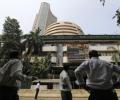
Analysts predict that the US midterm election results, which saw Democrats gain control of Congress, will primarily influence Indian markets through changes in global financial conditions, trade policy expectations, and geopolitical developments, with a keen focus on the US administration's actions in West Asia and their potential impact on crude oil prices.

Yuzvendra Chahal was appointed special invitee to the BJP's National OBC Morcha executive committee as party president Nitin Nabin announced a fresh organisational reshuffle involving key office-bearers.

Karnataka Chief Minister D K Shivakumar urged the Centre to expedite statutory clearances for the Mekedatu balancing reservoir project and withdraw recommendations of the Kasturirangan report on the Western Ghats. He also requested aligning CSR initiatives with state guidelines to upgrade 1,000 government schools. These demands were made during the inauguration of CoSMOS in Mysuru, attended by Prime Minister Narendra Modi, where Shivakumar also highlighted Karnataka's contributions to space technology and the importance of decentralising scientific infrastructure.

Sikkim's Education Minister Raju Basnet highlighted the potential of computational mathematics and artificial intelligence in predicting landslides and weather risks at an international conference. Experts discussed the role of mathematics in AI, scientific discovery, and the need for interdisciplinary research and international cooperation to develop reliable AI systems for real-world challenges.
Defence Minister Rajnath Singh advised students at Babu Banarasi Das University to not be confined by their academic degrees, encouraging them to follow their interests and adapt to emerging technologies like AI. He emphasised the importance of skills over qualifications, drawing examples from successful individuals who ventured beyond their initial fields. Singh also touched upon spirituality, India's cultural heritage, and the true essence of politics, urging students to contribute to national progress and secure borders.

Andhra Pradesh is developing a 25,000 crore space city near Sriharikota, aiming to create a robust ecosystem for private space technology startups and MSMEs, with major deals already signed for rocket engine manufacturing, testing, and R&D.
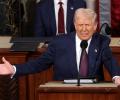
Experts suggest that a significant setback for US President Donald Trump in the midterm elections could compel him to pursue a swift trade agreement with India, as he seeks a quick foreign policy win amidst challenges with Russia, China, and Iran.
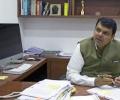
The Maharashtra government is setting up a ministerial task force, led by Minister Ashish Shelar, to ensure the effective implementation of its drone policy. Chief Minister Devendra Fadnavis announced this, emphasising the need for a "policy of policies" to integrate R&D, manufacturing, testing, and subsidies, and to strengthen the state's drone ecosystem, including developing a 'Drone City'.

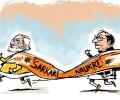
'Pranab-ji, had developed serious differences with P Chidambaram, and on one occasion, in 2010, I think, after expressing his frustration, he shocked me with the suggestion that perhaps it was time for a change at the top, which I understood as a hint of his long-held desire to become prime minister.'
The Delhi government is set to introduce a comprehensive drone policy aimed at creating over 1,000 jobs and regulating drone operations. The policy will focus on establishing research clusters, flight testing facilities, and providing subsidies, while also addressing drone usage for government purposes like traffic management and surveillance, considering the city's extensive 'no drone zones'.

Former US Secretary of State Antony Blinken stated that the US must respect India's right to self-defence and maintain a zero-tolerance policy towards terrorism, highlighting the "fundamentally different" nature of Washington's relationships with New Delhi and Islamabad. He described US-India ties as global and strategic, while US-Pakistan relations are regional. Blinken also touched upon cooperation in emerging technologies, India's ties with Russia, rapid global changes, US domestic politics, and the West Asia conflict, advocating for a two-state solution.

Indian benchmark indices, Sensex and Nifty, closed largely unchanged after a volatile trading session, influenced by persistently high crude oil prices, selling pressure in major bank stocks, and investor caution ahead of the US Federal Reserve's policy decision.

Indian stock markets are set to be influenced this week by a confluence of factors including quarterly corporate earnings, the US Federal Reserve's interest rate decision, fluctuations in crude oil prices, and ongoing geopolitical developments in West Asia.

Indian stock markets are set to be influenced by a confluence of factors this week, including escalating geopolitical tensions, particularly concerns over US-Iran conflict, volatile crude oil prices, and the ongoing quarterly earnings season. Additionally, the US midterm elections, foreign investor activity, and key macroeconomic data releases will also be closely monitored by investors.

Gold prices in India are projected to reach Rs 1.60-1.68 lakh per 10 grams over the next 6-12 months, driven by sustained investment demand, central-bank purchases, and global economic and geopolitical uncertainties, according to a report by Motilal Oswal Financial Services Ltd (MOFSL).

Karnataka IT Minister Priyank Kharge reviewed preparations for the 29th Bengaluru Tech Summit 2026, themed "AI & Beyond." The summit, scheduled for November 17-19, 2026, will feature over 1,800 exhibitors, focusing on AI, DeepTech, biotechnology, electronics, robotics, and startups, aiming to foster innovation and collaboration.

Indian benchmark indices Sensex and Nifty closed lower, primarily due to declines in Reliance Industries and IT sector stocks, coupled with rising crude oil prices and investor caution ahead of the US Federal Reserve's policy decision.

Indian benchmark indices Sensex and Nifty extended their winning streak in early trade, with Sensex jumping 614.66 points and Nifty rallying 149.80 points. This surge is attributed to a sharp correction in crude oil prices, continued foreign fund inflows, and positive Q2 results, creating an ideal environment for the market rally to continue.

India has banned the export of lithium-ion battery black mass with immediate effect to ensure domestic availability of critical minerals and strengthen its battery recycling industry. This move aims to address the underutilisation of domestic recycling capacity due to inadequate feedstock and reduce reliance on imports for essential minerals like lithium, cobalt, nickel, and manganese.
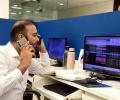
Indian stock markets extended their rally for the fifth consecutive day, with the Sensex climbing nearly 384 points to close above 77,000, driven by foreign fund inflows, easing crude oil prices, and improved global sentiment following the US midterm election results.

US Treasury Secretary Scott Bessent on Friday faulted the Commerce Secretary Howard Lutnick for stalling the designation of Nvidia client Megaspeed as a potential national security risk, bringing internal Trump administration friction into the open in the wake of Nvidia CEO Jensen Huang's departure.
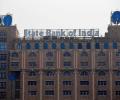
State Bank of India's latest report highlights a 'chalk and cheese' divide in the Reserve Bank of India's recent policy communications, with the Monetary Policy Committee minutes showing a hawkish tone while the Governor's statements are more data-dependent, leading to market uncertainty regarding future interest rate hikes.
The ministry of home affairs has suspended the Foreign Contribution Regulation Act (FCRA) licence of prominent public think-tank Centre for Policy Research (CPR) over violation of laws, officials said on Thursday.

American-born economists Robert E. Hall and Michael Woodford have been awarded the Nobel memorial prize in economics for their groundbreaking work on the microeconomic foundations of macroeconomic stabilisation, demonstrating how individual household and business actions influence the broader economy.

Chief Economic Advisor V Anantha Nageswaran stated that 2026 marks an inflection point for India, akin to 1991, necessitating the country to become globally indispensable in carefully chosen sectors to build strategic leverage for accessing geopolitically contested resources amidst a series of external shocks.
Indian stock markets witnessed a significant rally, with the Sensex soaring 905 points and the Nifty topping 22,900, primarily driven by strong buying in banking and FMCG shares, coupled with easing crude oil prices and a US Fed rate pause.

Sivakasi, India's fireworks capital, is eyeing global markets as green crackers, rising demand and interest from overseas buyers offer a chance to challenge China's dominance.

Temple, a wearable startup by Zomato co-founder Deepinder Goyal, is facing significant scientific scrutiny from doctors regarding its Rs 85,000 forehead-worn device. Critics question the evidence behind its claims of measuring brain blood flow and providing insights into ageing, with prominent hepatologist Cyriac Abby Philips calling it a "scam." Goyal has defended the technology, stating it's a fitness and wellness device, not medical, and that metrics await clinical validation, while also addressing pricing and scientific methodology.

Indian benchmark indices, Sensex and Nifty, experienced declines in early trade due to persistently high crude oil prices and significant selling pressure in IT stocks, with global factors like US bond yields and upcoming Federal Reserve decisions also contributing to cautious investor sentiment. Track Sensex, Nifty on October 27.
Researchers from Goa Institute of Management (GIM) and Goa Business School conducted a study analysing over 1.31 lakh posts on social media platform X using machine learning models. They found that indirect aggression is most common during major social, financial, sporting, and political events in India. The study classified aggression into overt, covert, and non-aggressive forms, noting that overt aggression remained relatively low but peaked during events like India's T20 World Cup loss. The findings have significant implications for online moderation and communication policies.

India's Indo-Pacific approach has traditionally emphasised strategic autonomy, ASEAN centrality, freedom of navigation, respect for international law and an inclusive regional order. Its growing defence and maritime partnerships with Australia, Japan, Indonesia, Vietnam and other Southeast Asian countries provide additional depth to this approach, point out Dr Kumar and Dr Jasmeet Kaur.

Indian benchmark stock indices, Sensex and Nifty, rebounded significantly after a four-day losing streak, driven by value buying and strong performance in metal, telecommunication, and healthcare sectors.

Finance Minister Nirmala Sitharaman announced that the Goods and Services Tax (GST) Council's October 7 meeting will focus on 'GST 2.0' process reforms, including e-invoicing and input tax credit rules, while also addressing complex issues surrounding the taxation of the digital economy and cryptocurrency.
