
HDFC Equity, the largest equity fund, also managed by Prashant Jain, with a corpus of Rs 10,445 crore, has 9.4 per cent of its assets in SBI.

'Let's walk on two legs: Facilitate better resolution under the present system and set up PARA as well by transferring loans amounting to, say, Rs 1 lakh crore.'
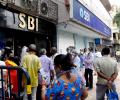
Amendments would be required in the Banking Companies (Acquisition and Transfer of Undertakings) Act, 1970 and the Banking Companies (Acquisition and Transfer of Undertakings) Act, 1980 for privatisation, sources said.

SBI remains a favourite of most brokerages in the PSB segment.

While the formation of a holding company will not outright privatise State-owned banks, officials believe it will help the Centre deflect criticism arising out of the latest banking scams.

Initially, private buyers will be able to make bulk purchases on Government e-marketplace, it will subsequently be broadened to small-ticket buying as well.

Laggards yet, a number of smaller PSBs in the category have balance sheets which do not give much comfort.
Laggards yet, a number of smaller PSBs in the category have balance sheets which do not give much comfort.

The Cabinet on Wednesday gave in-principle approval for strategic disinvestment along with transfer of management control in IDBI Bank in line with the Budget announcement earlier this year. The central government and LIC together own more than 94 per cent equity of IDBI Bank. LIC, currently the promoter of IDBI Bank with management control, has a 49.21 per cent stake. The Cabinet Committee on Economic Affairs chaired by Prime Minister Narendra Modi approved the strategic sale of IDBI Bank, an official statement said on Wednesday.

The evolving RBI-government relationship, a reversal in the interest rate cycle and return to profitability will dominate bankers' conversation this year, says Tamal Bandyopadhyay.

Stocks of public sector companies, especially the oil refining and marketing companies (OMCs) - Bharat Petroleum Corporation Limited (BPCL), Hindustan Petroleum Corporation Limited (HPCL) and Indian Oil Corporation Limited (IOC) - logged gains on Tuesday in a weak market. While the Nifty lost nearly 1 per cent in trade on Tuesday, the Nifty CPSE index - a gauge of performance of central public sector enterprises on the National Stock Exchange (NSE) - gained over 3 per cent in intra-day trade. The rally in PSU stocks comes on the back of the BPCL chairman, Arun Kumar Singh suggesting in the company's annual general meeting (AGM) on Monday that the government intends to complete the divestment process in the OMC by March 2022.

PSB executives said loans to group holding company IL&FS and entities might still be treated as "standard".

The most common complaint of financial consumers is cumbersome processes, complicated products, usurious charges, and mis-selling of products, which finally don't deliver what is promised or as expect, notes Debashis Basu.

Addressing the 74th Annual General Meeting of the Indian Banks' Association (IBA), she said the industry needs to imagine how Indian banking has to be in the immediate and long-term future. As far as the long-term future is concerned, she said it is going to be largely driven by digitised processes and there is a need for seamless and interconnected digital systems for a sustainable future for the Indian banking industry.

Instructions were issued on holding loan camps in the last week of September.
Report points out corporate vulnerability indicators remain elevated.

IndusInd Bank, Kotak Bank, ICICI Bank, Sun Pharma, Bajaj Finance and Ultratech Cement were prominent gainers. NSE Nifty rose 176.65 points to 14,867.35.

Leading bankers on Friday welcomed the Union Budget 2010-11, in particular the measures on farm loan repayment, capital infusion into PSBs and interest rate subventions to needy sections, saying that these would make the system healthier.

The Budget kept away from mood dampeners such as an increase in taxes (capital gain taxes) and even the much-feared introduction of Covid cess and wealth taxes, says Nimesh Kampani, chairman, JM Financial.

Bank employees are planning to go on strike on December 16 during the Parliament Session against banking sector reforms such as privatisation of public sector banks (PSBs) and closure and merger of associate banks/other PSBs with State Bank of India.

Centre took Rs 1,002 bn from here in 2017-18, sharply up from Rs 904 bn a year before and Rs 123.6 bn in FY14

BoB now has over 9,500 branches, 13,400 ATMs, 85,000 employees to serve 12 crore customers.

The government on Friday approved a capital infusion of Rs 15,000 crore (Rs 150 billion) in public sector banks (PSBs) in the current fiscal, a move that will increase the lending capacity of the banks by Rs 1.85 lakh crore.

Finance Minister Nirmala Sitharaman on Friday announced a slew of measures to boost economic growth and address distress in various sectors

Bankers seem to be pleased with the government for keeping its promise of not interfering in operational matters, but are apprehensive about the intense scrutiny of their functioning.

The divestment target remaining unchanged, from the 2019-20 interim Budget, this year means the Centre will now have to depend on non-tax revenue sources like dividends from the RBI, PSBs and PSUs, as there are real concerns of a tax revenue shortfall. The fiscal deficit target of 3.4% of GDP for 2019-20 is likely to be retained as well.

'The snakes and ladders game will continue till the consolidation process is complete simply because we don't know how bad the scene is, with some of the banks being merged,' says Tamal Bandyopadhyay.

'The concern that the bad bank may create a moral hazard for the system is extremely valid.'

At the retreat, PSBs had suggested the government cut its stake in these entities to less than 51 per cent over a period of time and empower the boards of individual banks.

Public banks face slowdown heat.

Many PSBs are in the process of rationalisation of ATMs

Multiple organisations of different kinds with overlapping goals would be a dream situation for those who believe in competition and innovation.

'We can't have the best of both worlds -- large, efficient, world class government-owned banks, doing social banking and making profits. 'Why not set them free from the shackles of such obligations and run them as business units?' says Tamal Bandyopadhyay.
Last year, the government had announced to infuse Rs 70,000 crore in PSU banks.
The payments industry is at a crossroads with the banking regulator on two pressing issues, neither of which seems headed towards an amicable solution. Depending upon which side accommodates the other, customers in India will have to choose between convenience and ironclad safety. In the end, the Reserve Bank of India (RBI), which regulates both banks and all payments services providers, will prevail. But the question is: will it do so by bending a little or by sticking to its firm stand? The two issues - one concerning payment facilitators storing customers' card details and the other about auto-renewal of payments - appear similar but aren't.

With certain quarters demanding privatisation of public sector banks in the aftermath of the alleged fraud at Punjab National Bank (PNB), Economic Advisory Council to the Prime Minister chairman Bibek Debroy tells Sanjeeb Mukherjee, Ishan Bakshi and Indivjal Dhasmana that reducing government equity even to zero would not mean giving up of government control over these banks.

All banks are eligible for privatisation. A committee of secretaries will decide which banks will be privatised, says Financial Services Secretary Debasish Panda.

Very gradual fiscal consolidation glide path with looser-than-expected fiscal policy; good quality spending mix and reasonable assumption on fiscal math; and focus on privatisation, asset monetisation and long-term funding for infrastructure investments, according to Morgan Stanley, are the three key themes from the Budget 2021.
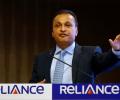
Finance ministry advises banks to invoke personal guarantees of all promoters whose companies have gone to NCLT for debt resolution.

Reserve Bank of India Governor Shaktikanta Das tells Anup Roy, Raghu Mohan and Niraj Bhatt that it is time for banks to lower interest rates and start lending to cash-starved finance companies after due credit appraisal and proper risk assessment.
