
Ola Electric is making a renewed push into the electric motorcycle market with aggressive pricing and in-house battery manufacturing, aiming to replicate its earlier success in electric scooters while addressing past quality and service issues.

Shares of electric vehicle (EV) maker Ola Electric Mobility fell nearly 7 per cent to a fresh low on Monday after its revenue growth in the third quarter (October-December/Q3) of 2025-26 (FY26) slowed, with analysts warning that any turnaround could be prolonged.
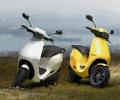
Driven by improved customer experience, Ola Electric is witnessing "clear outcomes" in market share from its focused service transformation programme, the company said, as it registered 9,020 units in December, lifting its month-on-month share to 9.3 per cent from 7.2 per cent in November.
Driven by improved customer experience, Ola Electric is witnessing "clear outcomes" in market share from its focused service transformation programme, the company said, as it registered 9,020 units in December, lifting its month-on-month share to 9.3 per cent from 7.2 per cent in November.
Ola Electric Mobility Ltd is redirecting 575 crore from its initial public offering (IPO) proceeds, originally earmarked for research and product development, towards debt repayment and organic growth initiatives, signalling mounting pressure on the electric-vehicle maker.
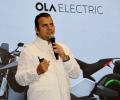
Ola Electric could gain market share in the near term with relatively less disruption expected due to rare earth magnets shortage, according to a report by Goldman Sachs. The company has successfully developed heavy rare earths (HRE) free motors which are scheduled for production deployment in Q3 FY26.
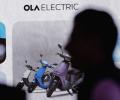
Ola Electric's latest MoveOS 5 upgrade delivers sharper performance on its Gen 3 platform due to an optimised in-house Motor Control Unit that enhances range and responsiveness.

The production-linked incentive (PLI) scheme for the automobile sector has created market distortions, excluded innovation-led electric two-wheeler (e2w) makers, and failed to convert cost advantages into export competitiveness, with 77 per cent of export volumes driven by non-PLI models, said a report released by the Centre for Domestic Economy Policy Research (C-DEP) on Friday.

Clearly, some of the bullishness of the early days has gone missing. Ola's market share is slipping amid rising competition from incumbents like Bajaj Auto and TVS.
South Korean automaker Hyundai Motor Company on Tuesday exited Ola Electric Mobility by selling its entire 2.47 per cent stake in the company for Rs 552 crore through an open market transaction. According to the bulk deal data available on the NSE, Hyundai Motor Company sold more than 10.88 crore shares or 2.47 per cent stake in Bengaluru-based Ola Electric Mobility.

Kerala has overtaken more industrialised states in personal electric vehicle adoption, driven by strong middle-class uptake, policy support, and charging infrastructure.

Addressing an event after launching the service, Shah said the rival ride-hailing platforms have reduced commission and are offering many other incentives, including free rides to customers, seeing the success of Bharat Taxi during the pilot operation.
Amid the ongoing controversy in Maharashtra over Ola Electric stores operating without a trade certificate, sources at the Bengaluru-based electric two-wheeler manufacturer said the company is currently transitioning from a centralised warehouse model to a retail-focused approach. They emphasized that Ola Electric is ensuring all regulatory compliances are being met during this shift.

Ola Electric share price strategy: The meteoric rise of Ola Electric share price has left analysts and investors bewildered. Yet, they suggest investors hold on to the stock as it remains a pure "momentum" play. Since its listing on August 9, the stock has surged 92 per cent (till August 19) over its issue price of Rs 76, taking its market capitalisation to a little over Rs 63,000 crore.

GSM, which is potentially eyeing a Hong Kong listing and was recently valued at $20 billion, operates on a distinct model -- it owns the e-taxis and employs the drivers, while also supplying cars to independent drivers or fleet operators.

The Bharat Taxi platform is already positioning itself as the world's largest driver-owned mobility network, with more than 51,000 drivers across cars, autos, and bikes registered in New Delhi and Saurashtra, Gujarat.
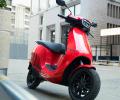
Ola Electric on Tuesday clarified that its February sales figures reflect genuine customer orders after full payments, and not just preliminary bookings with a token amount, stating that "nearly 90 per cent" of these orders were paid in full at the time of placement. "To be clear, the sales figures for February 2025 represent genuine customer demand backed by financial commitment, not token-amount bookings.
Ola Electric has eliminated its regional warehouses across India, and will now leverage its 4,000 retail stores nationwide for maintaining vehicle inventory, spare parts, accessories, and last-mile deliveries. The strategic move is expected to boost EBITDA margins by almost 10 percentage points, besides improving inventory management and faster customer deliveries, sources directly familiar with the matter said.

With India's gig economy projected to double in size, reaching over 10 million workers in the coming years, Ola Electric unveiled its new line of budget-friendly e-scooters, starting at under Rs 40,000. The market responded positively, with Ola Electric's stock rising by 5.67 per cent, closing at Rs 73.47 on the BSE.

Market regulator Sebi has warned Ola Electric Mobility for violating listing norms by sharing store expansion plans on social media before informing stock exchanges, according to a regulatory filing by the company. In a letter to the company by Sebi, shared on BSE by Ola Electric Mobility, the market regulator took exception to the dissemination of information regarding plans for a four-fold expansion of the company-owned store network by December 20, 2024.

New-age stocks to buy: Most new-age stocks have turned out to be wealth destroyers in stock markets, so far, in calendar year 2025. Shares of Ola Electric Mobility, for instance, have plunged nearly 50 per cent in the first half of CY 2025, while those of Swiggy, PB Fintech, Paytm, and Eternal (Zomato) have crashed between 6 per cent and 25 per cent, ACE Equity data shows.

Among Sensex firms, Bharat Electronics, Eternal, Mahindra & Mahindra, Kotak Mahindra Bank, Tata Motors and Power Grid were the gainers. However, Adani Ports, ITC, UltraTech Cement and Titan were among the laggards.
Ola Electric, India's largest electric vehicle company, has achieved a significant milestone by becoming the first two-wheeler automotive electric vehicle (EV) manufacturer in India to receive incentives under the Production Linked Incentive (PLI) Scheme for Automotive and Auto Component (PLI-Auto Scheme). The company has been granted a total incentive of Rs 73.74 crore for the Determined Sales Value of FY 2023-24 under the scheme, according to a stock exchange filing by the company.
Under regulatory scanner, Bengaluru-based Ola Electric has witnessed an uptick in its sales after facing a decline during the last few months. The company's daily average sales rose to 1,154 units in October, according to Vahan data from the Ministry of Road Transport and Highways (MoRTH). With sales reaching 17,315 units between October 1 and October 15, the company has also boosted its market share to 34 per cent, up from 27 per cent in September, in the electric two-wheeler (e2W) segment.

Ola Electric is conducting an restructuring exercise which is expected to affect over 500 employees across various roles within the organisation, according to sources. This would be over 12 per cent of staff at the firm which has about 4,000 people. "This is a restructuring exercise ongoing for the last few months and is expected to conclude by next month," said a person familiar with the development.
The Softbank-backed company has set a price band of Rs 72 to Rs 76 per share for the maiden share sale and is expected to test the appetite for new-age loss-making companies.
The launch of a range of electric motorbikes (e-bikes) by Bengaluru-based Ola Electric, a first for the company, has disconcerted the industry because the low price the firm claims to be offering has the potential to disrupt the market. On August 15, Ola unveiled its Roadster series e-bike with a starting-price at Rs 74,999. This new pricing undercuts the previous lowest price in the category, which was Rs 110,000.
The Rs 6,145-crore initial public offer of electric two-wheeler company Ola Electric Mobility got fully subscribed on the second day of bidding on Monday, driven by demand from retail investors and non-institutional investors. The initial share sale received bids for 49,43,63,610 shares against 46,51,59,451 shares on offer, translating into 1.06 times subscription, according to the NSE data.

Electric passenger vehicle (PV) retail sales jumped more than twofold in September with Tata Motors (TaMo) leading the pack having over 6,000 registrations and a 40 per cent market share.

Bajaj Auto has become the top player in India's electric vehicle market by monthly volumes, across all categories, with over 25,000 sales and registrations in September. This comes on the back of a big push in expanding distribution by the company and steady demand of electric three-wheelers. In September, the company - according to the latest Vahan data - recorded sales of 17,570 electric two-wheelers, 4,575 three-wheelers, and 3,000 Yulu low-speed electric bikes (based on company sales numbers), which do not require a licence and are not registered on Vahan.
Electric two-wheeler company Ola Electric Mobility will float its initial public offering (IPO) on August 2, and a significant part of the proceeds will be used for capacity expansion of its cell manufacturing plant and revving up R&D. The initial share sale will conclude on August 6, and the bidding for anchor investors will open for a day on August 1, according to the red herring prospectus (RHP).

India's 25 venture capital and private equity backed "new-age" companies, that listed between May 2020 and June 2025, reveals a sobering reality behind the hype: barely a third have delivered sustained outperformance against the market.

Ola commits to invest $100 mn in Vogo, to bring scooter-sharing to its app, reports Alnoor Peermohamed.

Retail sales of electric passenger vehicles (ePVs) nearly doubled in July 2025, surging 93 per cent year-on-year (Y-o-Y) to 15,528 units, even as overall passenger vehicle (PV) retail volumes declined marginally. In contrast, electric two-wheeler (e2W) sales dropped by 4.3 per cent to 102,973 units, according to the Federation of Automobile Dealers Associations (Fada) data.
The Indian entrepreneurship success story will soon see one more company debuting on the public markets. Ola Electric, the electric vehicle (EV) company, has become the first such firm that has filed its draft red herring prospectus (DRHP) with the Securities and Exchange Board of India for its initial public offering (IPO). This is a fresh issue of equity shares of up to Rs 5,500 crore and an offer for sale (OFS) of more than 95 million equity shares at a face value of Rs 10.
Ola Electric, the SoftBank-backed electric vehicle (EV) maker, is likely to pursue a valuation of approximately $4.5 billion in its upcoming initial public offering (IPO), marking about 18 per cent decrease from its last funding round valuation of around $5.5 billion, according to industry sources. The Bhavish Aggarwal-founded firm aims to file for the IPO by next month, according to people familiar with the matter. "The strategy is to price the IPO attractively for investors, fostering long-term growth and wealth creation," said a source.

There's a hint of new competition riding into a sector that has attracted attention for being in a duopoly-like situation. Rapido, a commute app known for its budget-friendly bike-taxi services, on Tuesday announced its entry into the cab market, which is currently dominated by marquee brands Uber and Ola. Rapido's cab foray will be enabled by a software as a service (SaaS)-based platform.
'Through volume numbers and unit sales one can see, we are not making a loss'

Layoffs, corporate restructuring, governance and most importantly profitability: The 14 Indian startups that plan IPOs this year are pulling out all the stops to ensure successful market debuts.

Ola Electric's initial public offering (IPO), of Rs 5,500 crore, is essentially aimed at ensuring the company maintain its top position in the electric two-wheeler segment, with incumbent players TVS and Bajaj Auto giving a fight to the number one player in market share. Most experts and competitors say the amount being raised is in line with the investment required to expand the electric-vehicle (EV) business. There are two discernible trends in the competitive electric two-wheeler market.
 © 2026 Rediff.com - Advertise with us - Disclaimer - Privacy Policy - Sitemap - Feedback - About us - Terms of use - Grievances