
A total of 415 million people moved out of poverty in India within just 15 years from 2005/2006 to 2019/2021, the United Nations said on Tuesday, highlighting the remarkable achievement by the world's most populous nation.
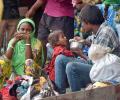
The data, released by the United Nations Development Programme (UNDP) and the Oxford Poverty and Human Development Initiative (OPHI), shows that 65 out of 75 countries studied significantly reduced their multidimensional poverty levels between 2000 and 2019.

Amidst acute poverty across South Asia, the five states of Delhi, Kerala, Goa, Punjab and Himachal Pradesh have the least number of poor people in India, according to a new measure of global poverty developed at the University of Oxford for the UNDP.

Bihar, Jharkhand and Uttar Pradesh have emerged as the poorest states in India, according to Niti Aayog's first Multidimensional Poverty Index (MPI) report. As per the index, 51.91 per cent population of Bihar is poor, followed 42.16 per cent in Jharkhand, 37.79 per cent in Uttar Pradesh. While Madhya Pradesh (36.65 per cent) has been placed fourth in the index, Meghalaya (32.67 per cent) is at the fifth spot. Kerala (0.71 per cent), Goa (3.76 per cent), Sikkim (3.82 per cent), Tamil Nadu (4.89 per cent) and Punjab (5.59 per cent) have registered the lowest poverty across India and are at the bottom of the index.
The number of poor people in India fell by about 415 million between 2005-06 and 2019-21, a "historic change" and a demonstration that the Sustainable Development Goal target of reducing at least by half the proportion of men, women and children of all ages living in poverty by 2030 is possible to achieve, even at a large scale, according to the UN.
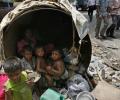
India lifted 271 million people out of poverty between 2006 and 2016, recording the fastest reductions in the multi-dimensional poverty index values during the period with strong improvements in areas such as "assets, cooking fuel, sanitation and nutrition," a report by the United Nations said.
