Countries with spare capacity, including UAE, have made additional crude available to international oil companies requiring extra volumes for their refining needs.

The Organisation of the Petroleum Exporting Countries (OPEC) has decided to cut its daily oil production by about 2 million barrels. OPEC's daily output target is 27.3 million barrels.
The organisation of oil producing and exporting countries on Monday ruled out any increase in oil output to cool the high international oil prices.

India, the world's third largest oil importing and consuming nation, is likely to save as much as Rs 1.8 lakh crore on import of crude oil and LNG if the trend of softening international energy rates continues, Icra said Wednesday. India, which meets over 85 per cent of its crude oil needs through imports, spent $242.4 billion on buying crude from overseas in the fiscal year ended March 31, 2025.

OPEC agrees to keep pumping as oil glut fears persist.

These countries are feeling the heat from the US shale oil producers.

'The US is strongly placed to expand its crude supplies to India.'

Oil marketing companies (OMCs), paint manufacturers, tyre producers, and aviation stocks witnessed significant gains as Brent crude oil prices slipped below $70 per barrel. The price drop came after a double blow: The US imposed tariffs on Canada and Mexico, including energy imports, and OPEC+ - the group of major oil-producing nations including Russia - announced an output increase of 138,000 barrels per day, the first such hike since 2022.
US strikes on Iran's three main nuclear facilities have once again raised concerns that Tehran might shut down the Strait of Hormuz - one of the world's most critical chokepoints, through which a fifth of global oil and gas supply flows.
OPEC expects an additional daily average output growth of 1.2 million barrels or a daily average oil output of 87 million barrels in 2008. The OPEC output quota this year will be less than 32 million bpd and non-OPEC output would be about 50.3 million bpd, according to a report . OPEC's actual production will be higher than the quota but that will not be sufficient to coverup the demand-supply imbalance in the international market.

From the 30-share blue-chip pack, Mahindra & Mahindra, Zomato, Tata Motors, IndusInd Bank, Reliance Industries, Larsen & Toubro, UltraTech Cement, HDFC Bank, Adani Ports and Bajaj Finserv were among the major laggards. On the other hand, Hindustan Unilever, Tech Mahindra, Nestle, Bharti Airtel and ICICI Bank were among the gainers.
With crude oil flirting with the $100 a barrel mark, world's largest oil producer Saudi Arabia is emulating marketing savvy West to showcase oil cartel Organisation of Petroleum Exporting Countries in a new light when it organises the third OPEC Summit in Riyadh this week.

Indian companies place orders worth $600 million for US crude, which is likely to increase by nearly $2 billion in the near future.
The UAE will comply with the Organisation of Petroleum Exporting Countries' directive to reduce its output by 1 million barrels a day, from the official quota of 28 million barrels, Minister of Energy Mohammed bin Dhaen Al Hameli said.
India to urge OPEC to hike oil production
India has asked oil cartel Organization of the Petroleum Exporting Countries to raise crude oil production to stem the relentless rise in international oil prices that have threatened to derail import dependent economies such as India.

A resurgence in Saudi Arabian supplies of crude oil to India coupled with an attack on an Iraqi tanker in August carrying crude to Europe may result in improved bargaining power for India with West Asian and Russian suppliers for winter supplies. Shipments of Saudi oil rebounded in September from August, surging to the highest since March while Russian oil shipments rose marginally as Saudi Arabia tried to claw back market share in Asia, according to industry sources and ship tracking data.

US President Donald Trump on Thursday addressed the World Economic Forum where he offered business leaders low taxes if they manufacture their products in the US, while threatening them with tariffs if they don't. Addressing the forum's Annual Meeting in Davos through video conferencing, Trump also said he is going to ask Saudi Arabia and OPEC to bring down oil prices and asserted that if prices come down Russia-Ukraine war will end immediately.

The oil industry experienced three upheavals between 1973 and 1991, which seem to be etched in the memory of the industry's decision makers. Naturally, at the sign of a new crisis, the decision makers like to dip into those tumultuous decades to find ways to deal with the new shock, in addition, of course, to expert reports and forecasts. So, the industry bigwigs turned the pages of history to get a peek into the future of oil price movements after Russia invaded Ukraine in 2022, Israel attacked Gaza in 2023, Iran-linked Houthi rebels pounded tankers crossing the Red Sea in support of Palestine the same year, and Iran rained missiles on Israel in 2024.
The wide-ranging sanctions imposed by the US on the Russian oil sector have started to dent near-term oil flows to India with state-owned Bharat Petroleum Corporation Ltd (BPCL) saying not enough cargoes are available for March.

'As the markets are expected to remain jittery in the near term, we advise investors to use this opportunity to enter quality largecaps from a long-term perspective.'
Crude oil prices could dip to the low $60s by the end of 2025 after rising to $80 a barrel in the last quarter (October-December) of 2024 - up nearly 10 per cent from current levels, suggest analysts at JP Morgan. The main players in West Asia, including Saudi Arabia and the UAE, have a strong incentive to keep the conflict contained, according to the JP Morgan report.

'The hacker replaced original emails and planted fraudulent emails with a request letter and invoices to be paid to fraudulent bank accounts.'

Global head of equity strategy at Jefferies, Christopher Wood, has cut his exposure to Indian equities by one percentage point in the Asia-Pacific ex-Japan relative-return portfolio, and Australia and Malaysia by half a percentage point each in favour of China, which has seen a hike in exposure by two percentage points. The rally in China has been fast-forwarded by the approach of a seven-day holiday with the CSI 300 Index up 8.5 per cent on Monday, and 25.1 per cent in five trading days, he said.

Carter was in politics, but not a politician, certainly not a transactional politician, points out Shreekant Sambrani.
Escalation of the conflict in West Asia between Israel and Iran has had a direct impact on the energy markets, and more broadly on the financial markets as well as the global economy.
After a spike in crude oil and gas prices in October following the Hamas terror attack, prices eased down 9 per cent month-on-month in November. The Organization of the Petroleum Exporting Countries (Opec) and Opec+ agreed to a further voluntary production cut in January-March 2024 to try and support global crude prices. The best guess here is that crude prices (currently at $75/barrel, or bbl) will not likely cross significantly above $80, and gas prices are also likely to remain subdued unless there's a further escalation in the Israel-Hamas conflict.
Trends in the global energy markets are crucial if India's growth outlook is to remain healthy. Prices for the Indian crude basket were averaging around $86.2 per barrel through Q1FY25 and then moderated to $84 in July and to $78-79 in August (so far). But global crude supply may outpace weak global demand in the short term.
The ministry of finance is likely to assume crude oil price to remain within $85 per barrel while estimating subsidies for the Interim Budget 2024-25 (FY25), to be presented on February 1. Brent crude prices moved up on Thursday, ending at $78.9 per barrel. Crude oil and cooking gas prices, which move in tandem, impact fertiliser and cooking gas subsidies, constituting 53 per cent of the government's total subsidies.

India's crude oil imports are coming in from a changing mix of countries, with the top three accounting for around 60 per cent of total imports. Russia emerged as the largest source of crude oil imports for India in June, as per the latest available data from the Organization of the Petroleum Exporting Countries (OPEC). The data which is released with a lag, showed that Russian imports accounted for 24 per cent of the total crude imports into the country.

The latest flashpoint in West Asia has derailed India's preliminary plans to resume crude oil imports from Iran, officials said. In January, officials of the Ministry of Petroleum and Natural Gas had told Business Standard that the government had been studying proposals for the same, given that India was trying to expand sources of imports. "We are always monitoring the situation when it comes to crude flows.

Global financial markets are wrong in hoping that the worst is over in geopolitical crises such as the Iran-Israel conflict and the Russia-Ukraine war, wrote Christopher Wood, global head of equity strategy at Jefferies, in a recent note to investors called 'GREED & fear'. While most investors and the media are focused on United States (US) Federal Reserve policy and the "endless chatter" of Fed governors, Wood believes the news flow in the financial sphere "pales into complete insignificance" compared with the "tectonic shifts" going on in geopolitics.

Brent crude oil prices may rise to $110 a barrel in 2023, up nearly 33 per cent from the current levels, said analysts at Morgan Stanley, in a recent note. This is, however, lower than the peak level of nearly $127 touched earlier in 2022 as geopolitical concerns took centre stage amidrising demand. "Looking ahead, Brent oil price growth will decelerate even more in the coming quarters. "This comes even as our global oil strategist expects a rise in oil prices back to $110 a barrel by the second half of 2023.

India's import of cheap Russian oil scaled another record in May and is now more than the combined oil bought from Saudi Arabia, Iraq, UAE and the US, industry data showed. India took 1.96 million barrels a day from Russia in May, 15 per cent more than the previous high in April, according to data from energy cargo tracker Vortexa. Russia now makes up for nearly 42 per cent of all crude oil India imported in May.

While prices sustaining lower levels is crucial, Govt actions are also a key monitorable given the forthcoming elections in 2024.

Equity markets would take cues from domestic inflation data announcement, global trends and trading activity of foreign investors in a holiday-shortened week ahead, analysts said. Markets would remain closed on Tuesday for 'Diwali Balipratipada'. "As we enter a truncated week with Muhurat trading on Sunday, global cues will play a pivotal role in shaping the market direction.
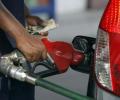
India's demand for petroleum products like petrol and diesel will grow by 7.73 per cent in 2022, the fastest pace in the world, an OPEC report said. India's demand for oil products is projected to rise from 4.77 million barrels per day (bpd) in 2021 to 5.14 million bpd in 2022, OPEC said in its monthly oil report. The growth in demand is the fastest in the world ahead of 1.23 per cent of China, 3.39 per cent of the US and 4.62 per cent of Europe.

Puri said the government has a moral duty to provide energy at affordable rates to consumers.
