
Bad loans in the peer-to-peer (P2P) lending industry more than doubled in financial year 2024 (FY24) to Rs 1,163 crore from Rs 472.1 crore in FY23, said a financial services company on Monday. Non-performing assets (NPAs), as such loans are officially called, were a modest Rs 14.7 crore at the end of FY19 when P2P lending was in its nascent stage, according to Capitalmind Financial Services that accessed data from the Reserve Bank of India (RBI) through a right to information application.

'I believe that the overall demand for commercial vehicles will improve, even though there is a slowdown in the GDP.'

Udaan, India's largest business-to-business (B2B) e-commerce company, has received approval from the National Company Law Tribunal (NCLT) for its internal corporate restructuring plan, according to sources. By consolidating into a single entity, the restructuring will enhance Udaan's agility and pave the way for various financing options, including the ability to pursue an initial public offering (IPO) in India by 2026, according to people familiar with the matter.

Fintech firm BharatPe is targeting an initial public offering (IPO) in the next 18-24 months with the company expecting profitability at an earnings before interest, taxes, depreciation and ammotisation (Ebitda) level for FY25, chief executive officer (CEO) Nalin Negi said.

Privately, many bankers admit their immediate goal is not growth but slowing the erosion of Casa deposits, reveals Tamal Bandyopadhyay.

Currently there are 26 licensed players in the P2P lending sector but only 10-11 are actively operating.

'If the markets correct further, PSU stocks could continue to decline.'

The stocks are largely from sectors such as chemicals, finance and cement, which struggled earlier but the worse seems to be behind them.
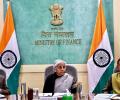
The Budget assumes significance as it comes on the back of lower-than-expected growth numbers during the second quarter and geopolitical uncertainty.

Bank credit growth is expected to moderate this financial year after a robust 16 per cent estimated for last financial year, driven by strong economic activity and retail credit demand. There are three reasons for this: a statistical high-base effect given the strong growth seen last financial year, revision in risk weights by the Reserve Bank of India (RBI), and relatively slower economic activity.

A day after his appointment as the 26th governor of the Reserve Bank of India (RBI), outgoing Revenue Secretary Sanjay Malhotra on Tuesday said one must understand the economic landscape and do what was best for the economy. "Let me first go, join, understand the turf ... Here it is a different role," Malhotra said, speaking to reporters in front of North Block.

Shares of Bajaj Finance surged over 6 per cent on Thursday after the diversified non-banking finance company reported an 18 per cent increase in consolidated net profit to Rs 4,308 crore for the December quarter. The stock rallied 6.33 per cent intraday to touch Rs 8,249.95 - a 52-week high -- on the BSE.

The ideal time to invest in sector funds, is during a downturn so that investors can capitalise on a turnaround in 1.5 to 2 years.

In 2025 banks are in for challenges such as pressure on margins and slowing credit growth. With the likelihood of a repo rate cut in February or April, external benchmark-linked loans of banks will be repriced immediately. However, deposit rates are expected to adjust more gradually, which could impact the net interest margin (NIM) - a key measure of profitability for banks.

As RBI governor, Sanjay Malhotra will have to give the highest priority to the interest of the economy while deciding on the growth-inflation trade off at Mint Street.

Mint Road, on December 21, 2023, flagged the role of self-regulatory organisations (SROs) in strengthening the compliance culture in regulated entities (REs) and providing a consultative platform for policymaking. It also decided to issue an omnibus framework for SROs.

HDFC Bank on Wednesday reported a 2.3 per cent year-on-year rise in its consolidated net profit to Rs 17,657 crore for the October-December quarter, restricted by slower loan growth. On a standalone basis, the largest private sector lender's net profit came at Rs 16,735.50 crore for the period, up from Rs 16,372.54 crore in the year-ago period, but marginally down from the preceding quarter's Rs 16,820.97 crore.

10 largecaps stocks which stand to gain from the Budget.

The government on Friday doubled the limit of Mudra loan amount under the Pradhan Mantri Mudra Yojana (PMMY) to Rs 20 lakh from Rs 10 lakh under a new 'Tarun Plus' category to promote entrepreneurship in the country.

The finance minister, in her Budget speech, should focus more on what she is directly responsible for, rather than on programmes where her role is largely supportive, notes Nitin Desai.

The Reserve Bank of India (RBI) on Wednesday issued a draft framework for alternative authentication mechanism for digital payments, wherein it has mandated that all digital payment transactions would have to be authenticated with an additional factor of authentication (AFA), except small value contactless card payments for up to Rs 5,000 at point of sale terminals, e-mandates for recurring transactions, and small value digital payments through offline mode, among others. Additionally, it has said that all digital payment transactions, other than card present transactions, have to ensure that one of the factors of authentication is dynamically created, i.e., the factor is generated after initiation of payment; is specific to the transaction; and cannot be reused.

After a brutal selloff since October, foreign portfolio investor (FPI) flows for the year-to-date (YTD) in 2024 have turned negative. In early September, YTD FPI investments peaked at a record Rs 22,000 crore ($2.6 billion). This wave of selling has also pulled down benchmark indices, with the Nifty's YTD returns declining to 11 per cent from their high of 21 per cent in September.

Alternative investment funds (AIFs) have crossed Rs 5 trillion in terms of funds raised, while the investment commitments have surpassed Rs 12 trillion for the first time as of September, according to data released by the Securities and Exchange Board of India (Sebi).

The Fintech Association for Consumer Empowerment (FACE), the only self-regulatory organisation for financial technology/fintech (SRO-FT) companies, is aiming to secure membership from at least 75 per cent of players across all key fintech categories within the next three years, according to a senior executive. The total number of members in the organisation has increased to 110, up from around 60 when it received approval from the Reserve Bank of India (RBI) to operate as an SRO-FT in August.

In the Union Budget for Financial Year 2023-24 (FY24), Finance Minister Nirmala Sitharaman had held forth on the need for better governance and investor protection in the banking sector. She had proposed certain amendments to the Reserve Bank of India Act (RBI Act), 1934; the Banking Regulation Act (BR Act), 1949; and the Banking Companies (Acquisition and Transfer of Undertakings) Act, 1970.

Flipkart-backed super.money is on an expansion spree and plans to expand its range of offerings in credit and wealth management after launching its operations in July this year. The Bengaluru-based fintech company is on track to roll out credit products such as credit on Unified Payments Interface (UPI), unsecured credit cards, and personal loans within the first half of the next calendar year (2025).

The sharp pullback in mid and smallcap stocks signals a cooling-off period in segments that previously attracted considerable investor interest.

The Hongkong and Shanghai Banking Corporation is in the process of setting up a non-banking financial company to cater to new market segments

Sanjay Malhotra takes charge as the 26th RBI governor at a time when headline retail inflation has shot up to 6.2%.

Indications are that the Tata Sons stand on listing of the company may come up for a discussion even if it's not part of the agenda

'I think today RBI supervision is much sharper than what it was earlier.'

The RBI has changed the way it approached supervision in the past. Having seen a couple of collapses in the NBFC sector and the near-collapse of a few banks, it is focusing on regular drills to prevent a fire from breaking out, explains Tamal Bandyopadhyay.

The Reserve Bank of India (RBI) has barred four non-banking finance companies (NBFCs), including two microfinance institutions (MFIs), from sanctioning and disbursing loans for charging exorbitant interest rates to the borrowers. These four entities are Asirvad Microfinance, Arohan Financial Services (also an MFI), DMI Finance, which provides personal, consumption, and micro, small and medium enterprises loans, and Flipkart co-founder Sachin Bansal's Navi Finserv, which offers home and personal loans. The ban will take effect on October 21 to "facilitate closure of transactions in the pipeline", the regulator said in a statement.
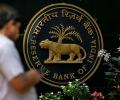
The Reserve Bank of India (RBI) has sought granular data from select non-banking financial companies (NBFCs) on their loan book growth. The details sought are on the outstanding product-wise portfolio and the annualised interest charged on them. The annualised interest slabs mentioned are as follows: less than 10 per cent, 10-20 per cent, 20-30 per cent, 30-40 per cent, 40-50 per cent, and above 50 per cent.

'Focus will be on smaller loan amounts to meet the needs of affordable homebuyers.'

'We found certain banks having lakhs of such accounts with apparently no valid reason.'

With new eligibility criteria for futures and options (F&O) coming into effect, Jio Financial Services and Zomato are strong contenders for inclusion in the derivatives segment, according to an analysis by Nuvama Alternative & Quantitative Research. The report suggests that these new F&O inclusions could also propel these two companies into the benchmark National Stock Exchange Nifty 50 during the March rebalancing.

In August, RBI allowed 11 business houses to start a payments bank.

These 10 stocks represent the best mix of value and growth, offering relatively low price-to-earnings and price-to-book ratios, a high return on equity, and sufficiently high potential from current levels.

The Rs 6,560-crore initial public offer of Bajaj Housing Finance Ltd received 63.60 times subscription on September 11, the last day of bidding, amid overwhelming participation from institutional buyers. The initial share sale had a price band for the offer at Rs 66-70 per share.
