
Following are comments from economists at leading financial institutions, banks and rating agencies on the interim Budget:

The third quarter (Q3) of 2023-24 (FY24) has proven to be pivotal, witnessing some startups turning profitable and others enhancing their performance as their businesses finally begin to deliver. Startups like Delhivery, Zomato, PolicyBazaar, Mamaearth, and Nykaa have either become profitable or improved their profit margins in Q3FY24. A renewed focus on profitability, supported by operational efficiencies, expense rein-in, and robust demand during the festival season, has empowered companies to strengthen their performance.

Brokerages believe that the Bharatiya Janata Party's (BJP's) stronger-than-expected showing in state elections reduces political risks for the domestic markets going into 2024. However, after the short-term excitement, the focus will soon shift to earnings, global liquidity conditions, and the interest rate trajectory. "BJP's win in the three state elections is much better than what exit polls suggested and reinforces the consensus expectations of a Modi win in the 2024 national elections with a greater likelihood of 300+ seats for the BJP.

Equity markets rallied after softer-than-expected inflation data in the US and UK rekindled hopes of the end of the rate-hiking cycle by major central banks. The soft inflation reading drove down bond yields and the US dollar, whetting the appetite for risky assets. The 10-year US bond yield fell below 4.5 per cent after topping 5 per cent less than a month ago.

The stock of the country's largest passenger vehicle maker, Maruti Suzuki India (MSIL) was down 1.06 per cent in trade on margin pressures in Q1FY24, mixed market share outlook, and earnings impact due to the buyout of Suzuki Motor Gujarat. While MSIL has decided to terminate the contract manufacturing agreement and acquire Suzuki Motor Gujarat, the quantum of payment and mode (cash/equity swap) has not been decided. If the cash option is opted for, there would be a 3.5-4 per cent hit to MSIL's FY25 earnings per share as the deal is expected to be completed by the end of the current financial year.

Higher for longer' may be the narrative in the developed markets, but interest rates might not stay high for very long in India, with a section of the market expecting rate cuts to begin this year. The six-member Monetary Policy Committee of Reserve Bank of India (RBI) decided to keep interest rates unchanged at 6.5 per cent in the April review - after hiking the policy repo rate in six previous meetings. RBI Governor Shaktikanta Das emphasised that the pause was only for the April policy and that the central bank was ready to act if the situation demanded.

After a sharp correction over the last few months, analysts seem to be turning cautiously optimistic on the information technology (IT) sector and suggest there could be trading opportunities in select counters despite revenue and growth concerns that still plague the sector. "IT stocks valuations have corrected 17 per cent-49 per cent and stock prices have corrected 9 - 42 per cent since mid-December 2021. Nifty IT index valuation has corrected by 27 per cent and price by 21 per cent. "About two quarters ago, we made a case that valuation drivers have peaked.
With the Big Four information technology services players having disappointed the Street, the focus is on mid-cap IT players who seem to have met expectations, according to analyst reports and management commentary on the demand environment.

There is no near-term respite for the country's largest fast-moving consumer goods maker, Hindustan Unilever (HUL), which is facing multiple challenges on the growth front. With demand showing no signs of improvement, especially in the rural segment, the October-December quarter (Q3) of 2023-24 (FY24) is likely to be similar to the previous quarter, with volume growth in the low single digits. The stock, which is down 7 per cent over the past year compared to the 11 per cent jump for the S&P BSE Sensex, could underperform the benchmark in the near term as well.

At a time when the market is betting on a 'higher for longer' global interest rate view, Accenture's (ACN) weak revenue forecast is a negative read-through for the Indian IT firms, according to analysts. The Dublin-based company sees its revenue growth at 2-5 per cent in constant currency (cc) for the financial year 2024 (FY24), below the pre-Covid levels of 5-8 per cent for FY17-20. The weak projection, thus, signals that slower demand is likely to persist this year, and any recovery is unlikely in the near-to-medium term, experts note.

Mutual funds (MFs) are betting on a turnaround in the healthcare sector to boost returns but are divided on the prospects of the information technology (IT) sector amid uncertain growth outlook. At the end of June, all of the top 20 fund houses were overweight on the healthcare sector vis--vis the sector's presence in the BSE 200 index, shows a report by Motilal Oswal Financial Services (MOFS). In the case of the IT sector, only six of the 20 fund houses had overweight positions.

With sentiment for the automotive (auto) sector turning positive, stocks of two-wheeler auto majors have been hitting their 52-week highs. Hero MotoCorp, Bajaj Auto, TVS Motor Company, and Eicher Motors recently reached their yearly highs on strong sales in the festival season and the expectation of faster growth rates ahead. Since the start of this month, listed two-wheeler majors have delivered returns in the 12-17 per cent range, compared to the 7 per cent gains for the S&P BSE Auto Index and 3 per cent for the benchmark S&P BSE Sensex.
The stock of LTIMindtree finished at Rs 5,001 a piece on Monday, which means it is down about 5 per cent from its all-time high as its June quarter results for the 2023-24 financial year (Q1FY24) missed estimates. A cautious note by the management, coupled with the fact that it will miss its double digit revenue growth target for FY24 weighed on the stock price. The company delivered revenues of just over a billion dollars in the quarter with constant currency growth of 0.1 per cent.

In August, the Reserve Bank of India Governor Shaktikanta Das held a meeting with chief executive officers/ managing directors (CEOs/ MDs) of large non-banking financial corporations (NBFCs). The discussions included diversifying borrowing sources for NBFCs and housing finance companies (HFCs) to contain increasing reliance on bank borrowing, risks associated with high credit growth in retail segment in unsecured loans, prioritising IT upgrades and cyber-security, improving provisioning, monitoring of stressed exposures and slippages, ensuring robust liquidity and asset-liability management, ensuring transparency in pricing, creating robust grievance redress mechanisms.

Irregular rainfall and a pick-up in commodity costs are expected to weigh on the demand and margins of fast-moving consumer goods (FMCG) companies. Most companies reported a sharp expansion in gross margins in the April-June quarter (first quarter, or Q1) of 2023-24 (FY24), given the lower prices of key raw materials and earlier price hikes. Furthermore, there were expectations that cost savings being passed on could reflect in volume growth going forward. However, these hopes could be dashed if demand recovery, especially in the rural segment, stalls, and gains on the raw material front start to recede.

Investors seem to be shying away from stocks of companies in the 'digital' space with most counters that comprise the Nifty India Digital index giving negative returns over the past year. The index tracks the performance of a portfolio of stocks that broadly represent the 'digital theme' within basic industries, such as software, e-commerce, IT-enabled services, industrial electronics, and telecom services. The fall in some of these stocks over the past year has been steep; the sharpest decline of around 60 per cent was seen in shares of PB Fintech (parent company of Policybazaar).
An increased brand fee paid by India-listed Vedanta, apart from record dividend, has helped Vedanta Resources (VRL) - the London-based holding company of Vedanta Group - to repay part of its debt. Vedanta paid a brand fee of Rs 2,632 crore ($325 million) for 2022-23 (FY23), according to Nomura report. This was after the Anil Agarwal-owned holding company raised the brand fee to 2 per cent of the turnover for its Indian businesses in 2021.

Since its results for the first quarter of the 2023-24 financial year (Q1FY24) earlier this month, the stock of auto component major Bharat Forge is up nearly 15 per cent and hit its all-time high in the process. The recent gains have extended the returns over the last three months to over 34 per cent. After a strong Q1 performance which beat expectations, brokerages had revised their earnings estimates upwards to factor in the improved outlook.

While India won't be immune to global spillovers, we need to create the macro preconditions for sustained growth. Policy agility, prudence, and resilience will be key, suggests Sonal Varma.

Input shortages and low inventories, according to Nomura, will likely lead to production cuts and delayed shipments in the September 2021 quarter.
Stocks of new-age companies have seen a mixed performance thus far in calendar year 2023 (CY23). While those of One97 Communications (parent company of Paytm), PB Fintech and Zomato have surged up to 63 per cent year-to-date (YTD), FSN e-commerce, the parent company of Nykaa, however, has dropped 14 per cent YTD. By comparison, Nifty50 and Nifty 500 indices have advanced 7 per cent and 8.7 per cent, respectively, during the period, ACE Equity data show.

The BSE Healthcare Index is up 19 per cent as compared to BSE Sensex returns of 11 per cent during this period. Nitin Agarwal of DAM Capital highlighted this trend in a report last month. "After a sustained period of underperformance over FY21-23, the BSE Healthcare Index has once again captured the spotlight. "The recent uptick in performance has been driven by hospitals and emerging green shoots in pharmaceutical exports, particularly to the US, along with sustaining momentum in domestic branded formulations," he said.
This will be the lender's first result after its merger with HDFC Ltd, effective from July 1, and will keep analysts glued to the management's earnings growth guidance for the merged financial behemoth.

Following a strong performance in the 2022-23 January-March quarter, publicly listed paint industry giants displayed a mixed performance in the 2023-24 (FY24) April-June quarter. While Berger Paints India outperformed its peers and reported results in line with expectations, market leader Asian Paints and Kansai Nerolac Paints fell slightly short of expectations.

Against an offer of 4.55 crore shares of Adani Enterprises Ltd, only 4.7 lakh were subscribed, according to information available from the BSE. Adani Enterprises fell almost 20 per cent to below the offer price of its secondary sale as all the seven listed companies of the conglomerate took a beating in the aftermath of Hindenberg Reserach alleged that the group was "engaged in a brazen stock manipulation and accounting fraud scheme over the course of decades".

As stringent sanctions imposed by the European Union and US are crippling business and trade, desperate Russian oil companies are offering huge discounts to India, provided a payment mechanism to bypass the SWIFT ban is quickly approved by the government. According to sources familiar with the development, Russian oil firms are offering 25-27 per cent discount to the dated Brent crude prices. State-run Rosneft is one the biggest oil companies that supply crude to India.

Despite a firm improvement in the operational metrics of new-age companies during the January-March quarter (Q4FY23), analysts remain cautiously optimistic about their outlook. This is because the shares of these firms are still not risk free, as per analysts, given the companies are yet to make profits. Kranthi Bathini, director-equity strategy at WealthMills Securities says that while the sentiment around these stocks, which includes Paytm and Zomato, has turned positive, it remains to be seen how soon these firms turn profitable and improve margins.

Trade generic drugs (medicines that are sold directly through distributors) are fast becoming a key segment for domestic pharma firms as volume growth slows in the overall market. Big companies like Cipla and Alkem have a significant presence in the segment but recently, players like Torrent Pharmaceuticals and Dr Reddy's Laboratories (DRL) have also entered this market. What is driving big pharma's focus on trade generics? The volume growth in the Indian Pharma Market (IPM) has come down from 5.6 per cent in FY16 to 0.1 per cent in FY23.

India is in favourable position to attract foreign firms planning to relocate their manufacturing bases due to trade tension between the US and China, says Nomura.
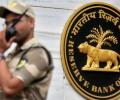
With retail inflation surprising on the upside, the six-member monetary policy committee (MPC) of the Reserve Bank of India (RBI) is expected to increase the repo rate by 35-50 basis points (bps) in the review scheduled for September 28-30. According to economists, the central bank will continue to focus on bringing inflation down even though economic growth has remained sluggish. Data released by the government on Monday showed that the consumer price index (CPI)-based inflation increased by 7 per cent year-on-year (YoY) in August, thus, staying above the upper tolerance limit of the central bank for all the eight months of 2022.

However, despite Covid, Indian markets registered their best financial year performance in a decade, with the Sensex and Nifty50 rallying 68 per cent and 71 per cent, respectively, in FY21.
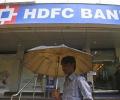
With the merger between HDFC Bank and HDFC Ltd complete, analysts said the next key monitorable for the Street would be successful resolution of merger-related hiccups, including employee-related churn and roll out of complete banking services across branches. At the bourses, they expect the stock to perform in-line with the benchmark indices in the near-term. "There's usually an initial period of consolidation after a merger as the entities work towards integration.

Finance Minister Nirmala Sitharaman will keep on the path of fiscal consolidation and opt for narrowing the FY24 fiscal deficit to as low as 5.8 per cent in the upcoming Budget, analysts said on Tuesday. The government may go for a fiscal deficit number which will be far lower than the 6.4 per cent of GDP budgeted for FY23, they said, pegging the Budget figure for the next fiscal in the range of 5.8 - 6 per cent. Given the fact that this will be the last full Budget of the present government, there may be a temptation to make it into an expansionist one.

India's largest two-wheeler maker by volume - Hero MotoCorp (Hero) - posted a better-than-expected operating performance in the January-March (fourth quarter, or Q4) quarter of 2022-23 (FY23). Riding on higher average selling prices which were up 5 per cent year-on-year (YoY) and volume growth of 7 per cent, the company registered a 12 per cent growth in revenue to Rs 8,306 crore. The company sold 127,000 units in the quarter, largely driven by domestic sales which were up 11.6 per cent, while exports saw a sharp fall of 57 per cent over the year-ago quarter.

In terms of stock selection, India continues to benefit from two phenomena - the big getting bigger and availability of quality stocks in relative abundance compared with its Asian peers.

The impact of the banking crisis in the US was visible in IT bellwether Tata Consultancy Services' (TCS) weak performance in the March quarter of fiscal 2023 (Q4FY23). The firm witnessed slower revenue growth in Q4FY23 and failed to meet its FY23 exit Ebit margin of 25 per cent as some clients, especially in the North American region, took to pausing projects and rising onsite costs offset utilisation gains. Sequentially, the company's revenue grew by just 0.6 per cent on a constant currency basis, which was one of the slowest paces in over 11 quarters.

Business activity has fallen by a fourth of the pre-COVID levels due to lockdowns imposed by states to contain the spread of the second wave of COVID-19, Japanese brokerage Nomura said on Tuesday. However, it said the falling activity levels will have a muted economic impact and maintained its growth estimates for the year, saying the lockdowns present "downside risks". As of April 25, the Nomura India Business Resumption Index (NIBRI) registered its steepest weekly fall in over a year of 8.5 percentage points to 75.9, which is 24 percentage points below pre-pandemic normal, the brokerage said in a statement.

Crowds carrying lighted candles in memory of those killed in the fire at an apartment block reported under COVID-19 lockdown in Urumqi in Xinjiang shouted slogans against the arbitrary lockdowns by the government to curb the spread of the virus and in solidarity with the weekend protests in Shanghai.

Organisers said last December that the entire cost of holding the Games would come to about $15.4 billion, including $2.8 billion in costs for the unprecedented postponement from 2020. Since then, the projected bill for postponement has risen to $3 billion.

Analysts say large firms in these segments don't need loan recast due to the efficient manner in which many of them operate.
