
India's Next-Gen GST reforms are proving instrumental in driving robust economic growth, simplifying tax compliance, and fostering a more inclusive business environment across the nation, aligning with the vision of a 'Viksit Bharat', writes Finance Minister Nirmala Sitharaman.

The proposed 'Next Gen GST' with sweeping reforms, lower tax rates, and just two slabs, aims to boost the economy amid tariff threats and set the stage for a single tax rate regime by the time India becomes a developed nation, government sources said.

The next generation GST reforms would 'absolutely' set an economy open and transparent with further reduction in compliance burden and benefiting small businesses, Union Finance Minister Nirmala Sitharaman said on Tuesday.
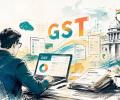
As India marks a decade of the Goods and Services Tax (GST), the focus is shifting towards enhancing efficiency through artificial intelligence, data sharing, and process simplification. The reform, which unified India's indirect tax system, has significantly broadened the tax base and boosted revenues, with future plans including a streamlined two-tier rate structure and continued technological integration to reduce compliance costs and combat evasion.

Union Finance Minister Nirmala Sitharaman on Wednesday said the Next Gen GST reforms have infused Rs 2 lakh crore into the economy, which has left people with more cash on hand, which otherwise would have gone to taxes.

The Centre has proposed exempting life and health insurance policies for individuals from GST, Bihar Deputy Chief Minister and convenor of insurance GoM Samrat Choudhary said on Wednesday. Currently, health and life insurance premium attracts 18 per cent GST.

Bharatiya Janata Party MP Kangana Ranaut on Monday, September 22, 2025, conducted a campaign in her Lok Sabha constituency Mandi in Himachal Pradesh to promote Prime Minister Narendra Modi's of Swadeshi message and raise awareness about Next-Gen GST reforms.

New lower GST rates kicked in from Monday, resulting in a slashing of prices of as many as 375 items ranging from toothpaste and shampoo to cars and television sets, a move seen as an attempt to boost consumption to cushion an economy facing tariff headwinds. Tax rates of 5, 12, 18, and 28 per cent have been clubbed into two rates of 5 per cent and 18 per cent, resulting in a reduced price of 99 per cent of daily use items.

Finance Minister Nirmala Sitharaman's biggest challenge will be to find a new growth driver, particularly against the backdrop of a global economy ravaged by heightened uncertainty and fragmentation, financial markets on a precipice, and global commodity prices on a continued uptrend.
'It was like rigorously preparing for a solid, good exam...' 'I don't know what marks I will get, but I felt the rigorous preparation of an exam.' 'You may sweat, but I feel rejuvenated.'

'I am doing the drive in making sure that people pass this on. So the drive is not with distrust. The drive is just in case.' 'Just in case it doesn't get passed on, I am here.'

From real estate to metals, what Sitharaman's Budget has in store.
