
India's main inflation measure, the Consumer Price Index (CPI), is set for another major update, even though it has been in its current form for only about 15 years.

With the dissolution of former chief statistician Pronab Sen-led Standing Committee on Statistics (SCoS) by the Ministry of Statistics and Programme Implementation (MoSPI), the National Statistical Commission (NSC) has regained prominence as the primary statistical body to address issues regarding results, methodology and questionnaire, among others. A MoSPI official in an email informed the 16-member SCoS about the decision to dissolve it, citing that its work was "overlapping" with that of the Steering Committee for National Sample Surveys (NSS), which was set up in June this year.

The creation and maintenance of a business register and directory are expected to be an economic data framework for various needed statistical surveys, including the Annual Survey of Industries and others of the National Sample Survey Organisation.

The Registrar General and Census Commissioner of India, Mritunjay Kumar Narayan, has reassured the public that individual data collected during the upcoming census will remain confidential and cannot be used for any purpose other than statistical aggregation.

The number of people averse to the surveys by the National Statistical Office (NSO) has more than doubled over the last five years between the 75th National Sample Survey (NSS) round (July 2017- June 2018) and the 79th NSS round (July 2022-June 2023), the Ministry of Statistics and Programme Implementation MoSPI) said on Friday in a conference organised to discuss the issue of 'non- responsiveness' to its sample surveys. The ministry said that nearly 6.9 per cent people in urban areas surveyed by the NSO for the 79th NSS round did not participate in the exercise, while the number of people in rural India that refused to participate in these surveys stood at 3.9 per cent.

'For the first time in this country, perhaps the first time anywhere, we are going to use backwardness index.' 'It is a fundamental shift in the discourse in the country's social justice.'

Employment data are currently estimated once in five years through a sample survey by the National Sample Survey Organisation.

India's urban unemployment rate declined in Q4FY23 to 6.8 per cent - the lowest in over four years -- after it stagnated at 7.2 per cent in the previous October-December quarter, reflecting improvement in the labour market, according to the Periodic Labour Force Survey (PLFS) released by the National Statistical Office (NSO) on Monday. The unemployment rate in current weekly status (CWS) terms for all ages in the March quarter was the lowest recorded in more than four years, from the time the NSO released India's first quarterly urban jobless rate for the December quarter in 2018. The jobless rate in urban areas had been on a continuous decline since the peak of 20.8 per cent in the April-June quarter of FY21.

India's unemployment rate fell to a six-year low of 3.2 per cent in the July-June 2022-23 period, down from 4.1 per cent in the same period the previous year, according to the latest annual Periodic Labour Force Survey (PLFS) report. The report, released by the National Statistical Office (NSO) on Monday, showed a decline in unemployment rates in both rural and urban areas during the 2022-23 period to 2.4 per cent and 5.4 per cent, respectively, from 3.2 per cent and 6.3 per cent in the 2021-22 period. The unemployment rate for rural women (1.8 per cent) was lower than that for rural men (2.7 per cent) in 2022-23; in urban areas, the rate was higher for females (7.5 per cent) compared to males (4.7 per cent).

While data can empower communities, it reinforces identities, making local politics more caste-centric, with decisions increasingly contested on the grounds of representation.
Such dynamics could lead to shifting alliances and, in the worst case, local governance getting paralysed as each group demands proportional power-sharing, explain Amitabh Kundu and Mehebub Rahaman.

Officials said several witnesses were heard on the impact of the pandemic. They added that this was the longest meeting of the panel without a break so far.

The number of fresh formal jobs generated in a month increased to a seven-month high in April, signalling a recovery in the formal labour market in the country, according to the latest monthly payroll data released by the Employees' Provident Fund Organisation (EPFO) on Thursday. In April, the number of new monthly subscribers under the Employees' Provident Fund (EPF) sequentially increased by 18.77 per cent to 887,438 from 747,146 in March.

'Mamata needs to address the anger and resentment among various sections of the Hindu community because low-scale communal violence has always paid richer electoral dividends for the BJP.'
Unemployment rate for persons aged 15 years or above declined to 3.1 per cent in 2023, the lowest in the last three years, as per a report of National Sample Survey Organisation under the statistics ministry. According to Periodic Labour Force Survey (PLFS) for calender year 2023, the unemployment rate came down to 3.1 per cent in 2023 from 3.6 per cent in 2022 and 4.2 per cent in 2021. Joblessness, or unemployment rate, is defined as the percentage of unemployed people in the labour force.

As a well-wisher of the Indian Statistical System and part of the system for more than 37 years, Sunil K Sinha, former DG and CEO of NSSO, offers suggestions to improve data quality.
Rediff.com's data journalists have visualised the National Sample Survey Office (NSS 66th round, July 2009-June 2010 and 68th round, July 2011-June 2012) data into an interactive map.
Rediff.com's data journalists have broken down the National Sample Survey Office 68 round (July 2011- June 2012) report data into a state-wise listing.

Fresh formal job creation cooled for the second consecutive month to decline to a six-month low in September, signalling a downturn in the labour markets this financial year. The number of new monthly subscribers under the Employees' Provident Fund (EPF) declined by 6.45 per cent to 891,583 in September from 953,092 in August, shows the latest payroll data released by the Employees' Provident Fund Organisation (EPFO). Besides, the net payroll additions -- calculated by taking into account the number of new subscribers, the number of exits, and the return of old subscribers -- increased by 14.9 per cent to 1.72 million in September from 1.49 million in August.
According to principal advisor with the Planning Commission and former chief statistician, Pronob Sen, there were 40-45 million more people in the age group of 15-59 between 2004-05 and 2009-10. The unemployment rate has correspondingly fallen from 2.3 per cent to 2 per cent of the labour force.

While the country's unemployment rate is falling, the quality of employment seems to have taken a hit. The pace of formalisation slowed in the five months of the current financial year (April-August) with more than half a million fewer formal jobs created in the period compared to the same period last year, according to data from the Employees' Provident Fund Organisation (EPFO). The payroll data showed that cumulatively 4.92 million new subscribers joined the social security organisation between April-August this year, compared to 5.51 million subscribers in the same period in the previous year, reflecting a 10.7 per cent decline in the number of new payrolls created.

A government panel examined the records of employees surveyed by Labour Bureau's quarterly enterprises surveys and mapped it with the EPFO's subscribers and found "unexplained variations" between the two.

108 economists, social scientists said it was imperative that agencies like CSO and NSSO are not subject to political interference.
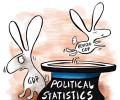
There has been criticism of the official statistics ever since MoSPI came out with new methodology to estimate the GDP on the base year of 2011-12 compared to earlier 2004-05.

In the jobs created in 2022, the share of those in the age group 18-25 increased to at least a five-year high of 56 per cent. A Business Standard analysis of the monthly Employees' Provident Fund Organisation (EPFO) payroll data shows in 2018 the share of youths among the new EPFO subscribers was 50.9 per cent. The National Statistical Office is releasing the monthly EPFO payroll data since April 2018 as part of the government's effort to track formal-sector employment by using payrolls as an instrument.
National Sample Survey Organisation, a division within the ministry of statistics, has been roped in to collect price data for the new series and a dry run is on the anvil in the next couple of months. The new series will have 2004-05 as the base year, as against 1993-94 in the present mode and will reflect a consumption basket that is relevant in today's scenario, thereby making inflation data more reliable. The new series will have 2004-05 as the base year.

Claims of a spike in poverty and inequality in India during the Covid-19 pandemic are patently false as such claims are based on uncomparable different surveys, according to a paper co-authored by eminent economist Arvind Panagariya. The paper also noted that inequality fell in the country during Covid years, both in rural and urban areas as well as nationally. Panagariya, Columbia University Professor and former vice chairman of NITI Aayog and Vishal More of Intelink Advisors, New Delhi have co-authored a detailed paper 'Poverty and Inequality in India: Before and After Covid-19'.

'I want to ask the Congress only one question: What is more important than election management in politics?'

Here is all you need to know about the National Population Register and worries over its links with NRC.
Most economists were of the view that the NSSO should release the data, as any move to withhold it will dent the image of country's statistical system.

The report highlights that India's population in 2036 is expected to be more feminine compared to the 2011 population, as reflected in the sex ratio which is projected to increase from 943 in 2011 to 952 by 2036, highlighting a positive trend in gender equality.
The Prime Minister's Office has decided to set up a panel, led by former chief statistician T C A Anant, to deliberate on whether the enterprise-level quarterly data, which is released by the labour bureau, should be discontinued.

Given the rapid changes in the Indian labour market, there is an urgent need to have current, accurate and publicly available data through regular, dynamic and comprehensive surveys. Indeed, this was the intention behind constituting the NITI Aayog Task Force on Improving Employment Data. The attempts by the government to "improve" labour data has actually made it worse, say Rosa Abraham, Janaki Shibu & Rajendran Narayanan.

India's unemployed, the report said, were mostly those with higher education degrees and the young.

The Economic Survey called for improving business environment.

The pace of retail price rise in January 2016 is the highest since 6.46 per cent in September 2014.

The forthcoming budget needs to delay fiscal consolidation, instead should focus more on supporting the pandemic battered-economy and boost consumption demand by offering income tax soaps and cutting fuel taxes, says a report. In a pre-budget report, India Ratings said it expects the new budget to consolidate and strengthen the plan set out in the last budget, rather than trying out new things by continue with the revenue and capital expenditure pattern of FY'22 to provide stability and consolidation to the past/ongoing efforts, and to focus on boosting demand by generating employment opportunities in areas/sectors that have been impacted more by the pandemic. The report therefore expects the finance minister to delay fiscal consolidation and make it to be a gradual and calibrated process, thus ensuring the necessary fiscal support that the economy needs is available till the recovery acquires its own momentum.

The NSSO had enumerated 79,306 households in rural areas and 45,374 in urban regions.

The substantially increased economic dualism may exert lasting negative influences which could include a reduced potential for economic growth; the persistence of a very weak employment and poverty situation; rising social and political discord; and heightened vulnerability to geopolitical challenges, cautions Shankar Acharya, former chief economic adviser to the Government of India.
