
The National Pharmaceutical Pricing Authority will monitor how companies are increasing prices of non-scheduled drugs.

For the consumer, there would be practically no impact on prices of essential medicines this year.

The government has been stringent with pricing changes. Prices of 651 essential medicines came down from April 1, 2023 by 6.73 per cent with the government capping ceiling prices of these drugs.
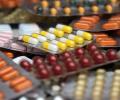
Notwithstanding the fact that the country's pharmaceutical (pharma) pricing regulator has allowed a 12 per cent price increase for medicines listed under the National List of Essential Medicines (NLEM) in 2023, analysts and industry insiders predict that the overall domestic pharma industry will only witness a price hike of 5-6 per cent. This is attributed to higher competitive intensity in the market. Krishnakumar V, executive director and chief operating officer (CEO) of Eris Lifesciences, a domestic-focused pharma company, noted that the NLEM segment experienced growth suppression of around 150 basis points due to price reductions during the January to July period this year.
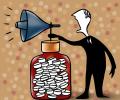
As many as 34 new drugs were added to and 26 dropped from an updated list of essential medicines on Tuesday, with the government saying this will reduce "patients' out-of-pocket expenditure". The National List of Essential Medicines (NLEM 2022) has 384 drugs, up from 376 in 2015. "Drafting this list is a lengthy process, and around 350 experts from across India have held over 140 consultation meetings to draft the NLEM 2022," Union Health Minister Mansukh Mandaviya said.
Anti-infectives like Ivermectin, Mupirocin and Meropenem have also been added to the list, taking the total drugs under it to 384.
Hospitals to recover from sluggish Q3; diagnostics' growth rate at pre-Covid levels.
Overall slowdown in the economy and growing volumes of unbranded generic medicines in the domestic market are behind poor sales.
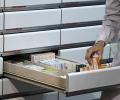
The impact from NELM on the Indian pharmaceutical sector is estimated to be around Rs 6,000 crore.

Eight commonly prescribed anti-cancer drugs will soon enter India's National List of Essential Medicines (NLEM).
In contrast with their strong performance in 2020 and 2021, pharmaceutical and healthcare funds experienced a decline in 2022, with returns plummeting by an average 9.8 per cent. This trend has continued in the current year, with year-to-date return remaining in the negative (-4.9 per cent). In the past three months, pharma funds have been hit hard, experiencing a 7.9 per cent decline.
NPPA suggests expanding the list of essential medicines whose prices are controlled

The eight-member expert committee, which is in charge of revising NLEM, plans inclusion of new drugs to the list and also do away with the current practice of including only specific strengths of medicines in NLEM.
The government said that "in exercise of extraordinary powers in public interest, conferred by paragraph 19 of the DPCO, 2013", the ceiling prices of 21 key formulations had been increased. These formulations include common medicines like BCG vaccines, penicillin, malaria and leprosy medicines (Dapsone), life-saving drugs like Furosemide (used to treat fluid build-up due to heart failure, liver scarring, or kidney disease), vitamin C, some common antibiotics, and anti-allergy medicines.

With these 18 drugs, the government now has brought in 467 medicines under the price control.

The drug pricing regulator on Tuesday said it will fix the ceiling prices of over 300 medicines by the end of this month, a move that will come as a major relief to patients.
The intention of the government is to cap prices of drugs that are essential and which the public widely uses.

The Union ministry of chemicals and fertilisers has initiated a move to bring all essential medicines sold in the country under a price cap.
While extending the National List of Essential Medicines will help patients, care has to be taken to ensure this does not lead to a slowdown of production as has happened in case of DPCO drugs.

Drug major Novartis has been slapped with a Rs 300-crore penalty by drug regulator NPPA for overcharging consumers on sale of Voveran, its best-selling painkiller medicine.

Increased price control over branded generic medicines has affected its profitability

In 2010, Abbott acquired both the pharmaceutical business of Solvay, which had a presence in India, and Piramal Healthcare Solutions, which was part of Piramal Group.
