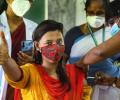
The government said it had been evaluating the implementation of the decentralised model of vaccination since its launch on May 1 and that the decision to centralise it again was taken after detailed deliberations and following requests by some states, amid claims by the Opposition that the policy change was due to the Supreme Court's intervention.

As the SARS-CoV2 evolves and mutates further, it is necessary to be prepared for new waves, Principal Scientific Adviser K VijayRaghavan cautioned on Wednesday, even as he said ferocity of the second wave of coronavirus in the country was not predicted.

Union Health Minister Harsh Vardhan on Monday said 28,252 cases of mucormycosis have so far been reported from 28 states/UTs in the country, of which 86 per cent cases have a history of COVID-19 and 62.3 per cent with a history of diabetes.
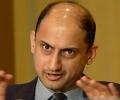
Today, with growth having slowed and macro-economic challenges in every direction, would the government have benefited from the advice of 'Harvard' economists? asks T N Ninan.

'A growth of above 7 per cent when the fundamentals of the economy are becoming stronger still makes India the fastest growing large economy.'

The minister further said state discoms should not give orders for supply of equipment to Chinese firms.
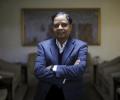
He said, clothing, footwear and electronic sectors are large job creators and need big reforms.

There are no regulations governing virtual currencies in India and the RBI has not given any licence to any entity/company to operate such currencies.

The standoff between the government and the opposition in Parliament has showed no signs of easing after it erupted on the opening day of the Monsoon session on July 19.

Arvind Panagariya heads the government's main economic advisory body.

In a statement, the PMO said three vaccines are in advanced stages of development in India, out of which two are in Phase II and one is in Phase-III. It further said Indian Scientists and research teams are collaborating and strengthening the research capacities in neighbouring countries such as Afghanistan, Bhutan, Bangladesh, Maldives, Mauritius, Nepal and Sri Lanka.

India annually spends Rs 4.5 lakh crore on importing petroleum products, and Transport Minister Nitin Gadkari feels methane is a cost-effective import substitution. But is it? Pallava Bagla examines the pros and cons.

From NITI Aayog to industry leaders to the Reserve Bank of India, all are apprehensive that any major increase in MSP, following the 2018-19 Budget announcements, would push up prices, if not immediately, in the next six to eight months after the decision is taken.

'With nearly double the market share of our nearest competitor, we are shaping the digital transformation journey of close to 1,000 clients in India.'
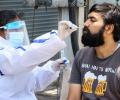
A steady decline in new COVID-19 cases has been recorded in India for the last 20 days, with 24 states witnessing a dip in active cases since the last week, the Union health ministry said.

The outcome ratio of COVID-19 -- the ratio of recoveries and deaths of closed cases -- was recorded at 90:20.
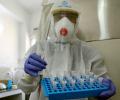
The Union health minister said a high-level expert group is going into all the aspects of vaccines and the health ministry is preparing a format in which states will submit lists of priority population groups.

'Water is not an economic resource, but we treat water as an economic resource meant for the benefit of human beings.' 'Water is more of a life source than an economic resource.'

"Despite the high number of cases reported so far, we have been able to contain the spread to under 2 pc of population," said Health Ministry Joint Secretary Lav Agarwal.
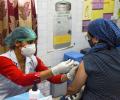
The CoWIN portal will be made available in Hindi and 14 regional languages by next week, while 17 more laboratories will be added to the INSACOG network to monitor the variants of COVID-19, the health ministry said on Monday.
