
This court artist sketch shows Mohammed Haneef, who was granted bail by the Brisbane Magistrates Court on Monday in Brisbane, Australia.

The Australian police orchestrated to have Mohamed Haneef, wrongly accused of involvement in the failed UK car bombings, indefinitely detained in the country despite their own intelligence revealing the case was weak. Documents released under freedom-of-information laws have revealed that at the time Mohamed Haneef was charged with a terrorism-related offence, the Commonwealth Director of Public Prosecutions was aware that the case against him was weak, a report said.
The 27-year-old, hailing from Bangalore, must provide a surety of 10,000 Australian dollars and report to the Southport police station three times a week.
Russo says his client is holding up well in the circumstances. "He's obviously made a request to me that he'd prefer to be in the community and rather than where he is," he said.
According to Queensland-based Indian diplomat Sarva-Daman Singh no further information about Haneef was received from Australian government.
According to the ABC radio report, Thomas criticised the Australian Federal Police for pursuing the lawyers who leaked the information that allowed him to write his award-winning articles. In his acceptance speech, Thomas thanked Haneef's lawyers Peter Russo and Stephen Keim for risking their careers to expose vital facts about the case.
Haneef's lawyers have released the full transcript of a secret second interview with the Australian Police
His lawyer Peter Russo said that the Indian doctor now wants to clear his name by releasing the full transcript of the interview.
Admitting their mistake, Australian government on Thursday formally apologised to Indian doctor Mohammed Haneef and said sorry for wrongly detaining him on terror charges.
Former Australian immigration minister Kevin Andrews did not notify the police and other senior officials before revoking Indian doctor Mohammed Haneef's visa, a move that 'spoiled' the investigations. Andrews' decision to revoke Haneef's visa caught the police and senior immigration officials completely by surprise. "If Haneef had been freed on bail, the police would have kept him under surveillance and gathered any evidence that might be out there," a source said.
Haneef has been charged with providing support to a terrorist organisation after he gave a mobile phone SIM card to a second cousin, who was later allegedly involved in the failed car bombings in the UK.
Haneef is charged with "recklessly" supporting a terrorist organisation with the Australian Federal Police alleging he supported foiled plans to detonate truck bombs in Britain.
The Australian police have said that Mohamed Haneef, who was wrongly accused of links to the failed UK terror plot, continued to remain under investigation despite the government ruling out an appeal against a court decision to reinstate his visa.
His lawyers argued in court that the immigration department's unwillingness to hand over the sensitive documents seemed like a cover-up.
The case for restoration of Haneef's work visa will be heard in the federal court which may give some indication of the strength of the alleged national security evidence.
The Australian Federal Police on Friday dropped charges against Indian doctor Mohammed Haneef, Australian Broadcasting Corporation reported.
"The whole case against Haneef undermines the presumption of innocence," Australia-based Amnesty spokeswoman Nicole Bieske said.
Sweets were distributed among friends and neighbours. There was a bustle outside Haneef's residence all through the night.

Indian doctor Mohamed Haneef, who was wrongly accused of involvement in a botched 2007 United Kingdom terror attack, on Thursday sued the Australian government for unlawful arrest and abuse of power and launched defamation proceedings against former immigration minister Kevin Andrews.
His lawyers, civil libertarians and legal experts have criticised the 'draconian' anti-terror laws under which police are operating and questioned whether they are doing enough to clear or charge him.
Lawyer Peter Russo expressed concern that the Gold Coast hospital where Haneef worked might not be able to hold his job for him due to the delays in returning his visa
Australian authorities have refused to release the documents related to the bungled case of Indian doctor Mohamed Haneef who was wrongly accused of having terror links in 2007 failed Glasgow airport attack. The Immigration Department, which blocked the release of large numbers of documents relating to Haneef's case under Freedom of Information, rejected any possibility of releasing them, The Australian said on Friday.
The Australian police were on Monday granted extension till Wednesday of the custody of Indian doctor Mohammed Haneef, detained last week in connection with the botched UK car bombings.
Andrews will tell the Rudd government-ordered inquiry into the bungled case, which opens on Wednesday, that the Australian Federal Police did not inform him of evidence debunking allegations against Dr Haneef's second-cousin Sabeel Ahmed - allegations that had led to the subsequent terrorism charge against the Gold Coast doctor. The inquiry, headed by former Supreme Court judge John Clarke, will probe if the AFP ignored the vital information.
Haneef's counsel Peter Russo said the 27-year-old got in touch with his wife over telephone about noon local time after the Indian consulate confirmed the phone number for security purposes.
"The minister's decision will mystify the great majority of Australian people," he said, adding, "It will make overseas people very suspicious about living and working in Australia and this negative perception will take decades to erase."
Haneef has said he wanted to tell the police that he had left a SIM card with a cousin who was implicated in the attacks.
Stephen Keim, who successfully defended Haneef last year after he was wrongly accused of terror charges by Australian authorities in connection with the failed UK car-bomb plot, was cleared of any disciplinary action by Queensland's Legal Services Commission.
Last month, Judge Jeffrey Spender overturned Andrews' decision to cancel the Indian doctor's work visa on character grounds citing "jurisdictional error" on the part of the minister
The revelation came hours after AFP chief Mick Keelty dismissed reports of Haneef's suspected involvement in a plot to attack the Gold Coast's tallest building.
The public inquiry panel probing the botched handling of the Mohamed Haneef case on Monday said it will not interview him as it was satisfied with the submission provided by the lawyers of the Indian medic who was wrongly accused of terrorism in Australia.
Indian doctor Mohamed Haneef, who was wrongly accused in Australia of involvement in the failed UK car bombings, will seek compensation for the "immense damage" to his career, reputation and family. As the Australian police dropped its 13-month probe into the bungled case on Frday, Haneef said the investigation had left his entire family "in darkness" and his reputation destroyed.
Indian doctor Mohammed Haneef, wrongly accused of terror links in Australia, is returning to the country next month for compensation talks, local media said on Monday.
Indian doctor Mohammed Haneef, who was wrongly accused of links with the failed UK bombings, on Monday said he will return to Australia only if authorities assured him that his family and he would be "safe" in the country.
Haneef's lawyers argued that the decision of Immigration Minister Kevin Andrews to cancel the visa was based on "a misconstruction of the word association".
"We need to have that independent judicial inquiry first to establish all the facts that are currently in the private possession of a number of minister" Rudd added.
The revelation has cast fresh doubts over handling of the Haneef case by the Australian Federal Police.
Computer records obtained by authorities reveal Haneef's close links to both Kafeel and his brother Sabeel continued right up until the failed bombings in Glasgow and in London's West End on June 29, a media report said.
The Courier-Mail newspaper reported Ali had been suspended after it was discovered his resume included up to 12 months of hospital work in India that he never performed.
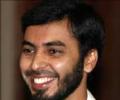
Indian doctor Mohamed Haneef, who was wrongly detained in Australia for alleged terror links, has cancelled his temporary Australian visa. Haneef is believed to have cancelled the temporary business visa on August 17 to unlock the superannuation contributions made before he was wrongly accused of supporting terrorism.
