
India's bank credit remains resilient and is showing no signs of systematic risk, Reserve Bank of India (RBI) Deputy Governor Michael Patra said on Monday. A copy of the speech was uploaded on the RBI website on Thursday. "Bank credit is monitored as a lead indicator of overheating. Our assessment, based on a menu of approaches, indicates that current rates of credit expansion are not pointing to systemic stress building up. Illustratively, the credit gap - the difference between the credit to GDP ratio and its trend - is currently negative," said Patra, while delivering a speech in Cambodia.

'I am sure Dr Patra will get the fullest cooperation from the finance minister who needs workhorses, not prima donnas constantly looking to improve their CVs,' says T C A Srinivasa-Raghavan.
Reserve Bank Deputy Governor Michael Patra on Wednesday said the central bank's views about cryptocurrencies might have delayed the government's proposed legislation on crypto assets. Emphasising that the Central Bank Digital Currency (CBDC) will be introduced in FY23 as announced by Finance Minister Nirmala Sitharaman in the Budget speech, Patra said India will proceed very gradually on the subject as there are concerns on privacy, its impact on monetary policy formulation and energy intensity. The government had plans to introduce a bill on cryptocurrencies like Bitcoin during the Winter Session of Parliament in November-December 2021 but did not introduce it.
The government has invited applications for the post of deputy governor of the Reserve Bank of India (RBI) from interested candidates with at least 25 years of experience and below 60 years of age as on January 15, 2025. One of the deputy governors, Michael Patra's current term will end on 15 January. The last date of submission of applications is November 30, 2024.

The sweeping economic sanctions on Russia - the second largest producer of crude oil - following its invasion of Ukraine late last month can cull global and domestic growth along with the added pains of higher inflation and currency depreciation, RBI Deputy Governor Michael Patra has said. And if the war lingers on, it can even lead to deglobalisation and even a recession, he added. The ongoing war has only added a whole new dimension to the outlook, and in fact, a weighty downside, Patra said in a lecture at the industry lobby IMC on Friday evening.

Deputy Governor Michael Patra warned about the spillover effects of food inflation.
The cumulative rate hikes of 2.5 percentage points by the central bank since May 2022 negatively impacted headline inflation by 1.60 per cent, a paper by senior RBI staffers said on Monday. "Policy rate increases have anchored inflation expectations and modulated aggregate demand, generating disinflationary responses," the paper by Deputy Governor Michael Patra, Indranil Bhattacharyya, Joice John and Avnish Kumar, said.
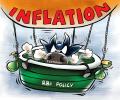
Reserve Bank Governor Shaktikanta Das on Friday said there is no plan to loosen interest rates as inflation continues to be the top priority for the central bank. Speaking to reporters at the central bank headquarters here, Das clarified that the inclusion of "over tightening" in his statement while announcing the fifth consecutive status quo in rates, should not be construed as anything else. A "loosening" in rates is not on the table, Das added.

The Reserve Bank of India (RBI) is expected to cut interest rates for the first time in nearly five years in Governor Sanjay Malhotra's first monetary policy committee (MPC) meeting on Wednesday. The meeting of the six-member MPC, which will culminate on Friday, aims to boost sluggish economic growth, which is seen falling to a four-year low. Malhotra took charge as the 26th RBI governor in December last year.
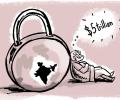
India is much better placed today to deal with future waves of the pandemic relative to the first wave, RBI deputy governor Michael Patra said.

Patra, as executive director of the central bank, was the principal advisor to the Monetary Policy Department since July 2012.

India is better positioned to face external shocks emanating from increasing geopolitical tensions, the aftermath of the COVID pandemic and the inevitability of climate change, Reserve Bank Deputy Governor Michael Debabrata Patra said on Monday. Relative to macroeconomic configurations in 2013 when India was described as one of the fragile five countries, he said, "India is better positioned currently, as its macroeconomic fundamentals have improved significantly, and external sector indicators point to the availability of enough cushions to manage external shocks." He was speaking at a conference on 'Growth And Development in the BRICS Economies' organised by the Delhi School of Economics (DSE) and the Indian Statistical Institute (ISI).
The RBI under former governor Shaktikanta Das resisted pressures to cut interest rates through 2024 as it kept its 'Arjuna's eye' trained on inflation, but the central bank under a new detail-oriented head will soon have to take a call if it can continue sacrificing growth. Das, a career bureaucrat who in 2016 oversaw Prime Minister Narendra Modi's highly disruptive demonetisation move, left a lasting legacy as he demitted office towards the end of 2024 after expertly navigating monetary policy for six years, the highlight of which was steering India's recovery through the pandemic.

Speaking to reporters after a cabinet meeting, the chief minister also announced a one-man judicial probe, headed by Justice Michael D'Cunha, a retired high court judge of Karnataka, into the tragic incident.

The Reserve Bank of India's (RBI's) state of the economy report observed that any durable alignment of headline retail inflation with the target of 4 per cent could recommence in the second half of FY25 and sustain until numbers closer to the target are seen during the course of FY26, dashing hopes of any reduction in the policy repo rate in the current financial year. The report, authored by RBI staffers, including Deputy Governor in charge of monetary policy Michael Patra, said though headline numbers may fall in July and August due to base effect, it is likely to reverse in September.

Even as the high inflation figure for October has ruled out any possibility of a rate cut by the Reserve Bank of India's (RBI's) monetary policy committee (MPC) in December, a rate cut in February also looks uncertain due to global uncertainties. Economists told Business Standard that unless domestic growth slows markedly, the outlook on rate cut remains unclear. India's headline inflation touched a 14-month high of 6.2 per cent in October, breaching the MPC's upper tolerance band of 6 per cent.
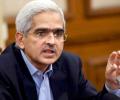
The December meeting of the Reserve Bank of India's (RBI's) six-member Monetary Policy Committee (MPC) will start on Wednesday even as there is no clarity on whether Governor Shaktikanta Das, the chair of the panel, will continue in office after his term ends next week. The outcome of the meeting will be announced on Friday by Das at 10 in the morning.
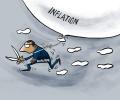
Most members of the Reserve Bank of India's monetary policy committee (MPC) decided to stick to the course on bringing retail inflation to the target of 4 per cent while voting for maintaining status quo in the April review, except external member Jayanth Varma who voted for a 25 bps cut in the repo rate. "I believe that the extant monetary policy setting is well positioned," RBI governor Shaktikanta Das said in the minutes of the policy review, which came out on Friday. "Monetary policy transmission is continuing and inflation expectations of households are also getting further anchored.

'The impact of CBDC on deposits and deposit insurance is largely unknown.'

Households are likely to remain the primary net lenders to the economy in the coming decades.
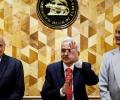
'The central bank has highlighted that the slowdown in growth has been limited to a few sectors and overall growth is expected to pick up in the second half of the year.'

The Indian economy is recovering from the slowdown in momentum witnessed in the September quarter, driven by strong festival activity and a sustained upswing in rural demand, according to a Reserve Bank of India (RBI) bulletin released on Tuesday. An article on the 'State of the Economy' in the December bulletin noted that the global economy continues to exhibit resilience with steady growth and moderating inflation.

Private consumption is back driven by festive spending, and the medium-term economic outlook remains bullish as the innate strength of the macro-fundamentals reasserts itself, the Reserve Bank Bulletin said on Wednesday. Global economic activity remained resilient during Q4:2024 amidst fragile confidence and rising protectionism, said an article on 'State of the Economy' published in the November Bulletin.

The members of the Reserve Bank of India's (RBI's) Monetary Policy Committee (MPC) voiced different views on the interest rate and stance, with two of them indicating they may not vote for further rate increases even if Governor Shaktikanta Das and Deputy Governor Michael Patra maintain bringing down inflation as their primary objective, the minutes of the December review of the monetary policy showed. The other two members remained neutral. The MPC increased the policy repo rate by 35 basis points (bps) - which was lower than the previous three hikes of 50 bps. The repo rate has been hiked by 225 bps to 6.25 per cent since May this year.
Admitting that credit growth is "very low" given the size and growth rate of the economy, the Reserve Bank on Wednesday said for both the numbers to match, "the very very wide output gap" has to close. The central bank also clarified that low credit growth does not necessarily mean low credit flow to the economy, or choking of credit to the system, as bank credit growth numbers that the central bank publishes regularly represent only the outstanding credit in the system. Output gap means due to poor demand conditions, companies are unable run their plant at full installed capacity or, in a larger sense, an economy is not producing optimally as the demand is missing.
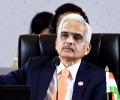
The Reserve Bank of India's (RBI's) job to bring down inflation is not over, and any premature move on the policy front could undermine the success achieved so far on the price situation, according to RBI Governor Shaktikanta Das. RBI's rate setting panel, Monetary Policy Committee (MPC), had met for three days from February 6-8. The panel decided to leave the key policy rate unchanged at 6.5 per cent for the sixth time in row.

The Indian economy continues to sustain the momentum achieved in the first half of 2023-24 and expectations of a fresh round of capex by the corporate sector is likely to fuel the next leg of growth, the Reserve Bank Bulletin said on Tuesday. "The likelihood of the global economy exhibiting stronger than expected growth in 2024 has brightened in recent months, with risks broadly balanced," said an article on 'State of the Economy' published in the bulletin.

Dr Nagesh Kumar, one of the three new MPC members, wanted the MPC to reduce the repo rate by 25 basis points to 6.25%.

An article on 'State of the Economy' in the monthly Bulletin also said the improvement in the outlook for agriculture and the revival of rural spending have turned out to be the bright spots in the evolution of demand conditions. Consumer price inflation ticked up in June 2024 after three consecutive months of moderation as a broad flare-up in vegetable prices halted the overall disinflation that had been underway, it said.
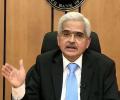
The Reserve Bank is unlikely to cut the benchmark interest rate in its forthcoming bi-monthly monetary policy review later in the week as retail inflation is still a cause of concern, and there is a possibility of the Middle East crisis deteriorating further, impacting crude oil and commodity prices, say experts.
The continuing global uncertainity has complicated the fight against inflation, opined Reserve Bank Deputy Governor Michael Debabrata Patra during the Monetary Policy Committee meeting held on February 8. According to the minutes of the MPC meeting released on Wednesday, RBI Governor Shaktikanta Das also mentioned that there is considerable uncertainty due to a host of global factors such as rising non-oil commodity prices. The RBI on February 8 hiked the key short-term lending rate by 25 basis points to 6.5 per cent, citing sticky core inflation.

Lead indicators suggest that domestic current account deficit (CAD) is likely to reduce in 2023, while macro-economic stability has received a boost from inflation being brought back to the official tolerance band, according to the Reserve Bank of India's (RBI's) January 2023 Bulletin. "With the merchandise trade deficit reaching an all-time high of $83.5 billion in a quarter, and a rise in net outgo from the income account, the current account deficit increased to 4.4 per cent of GDP in Q2FY23," the State of the Economy article in the bulletin said. "It is noteworthy, however, that the CAD for Q1 was revised down from 2.8 per cent to 2.2 per cent on account of downward adjustment in Customs data.
Most members of the monetary policy committee (MPC) argued for front-loading interest rate hikes in view of rapidly rising inflation during the off-cycle monetary policy review earlier this month - the minutes of the meeting published on Wednesday showed. In early May, the rate setting committee met unscheduled and unanimously decided to hike the repo rate by 40 bps. This was the first repo rate hike in four years, and an inter-meeting hike in more than a decade.

India is likely to grow by 7.5 per cent in the first quarter of the current financial year, driven by rising aggregate demand and non-food spending in the rural economy, according to an article in the RBI's May Bulletin released on Tuesday. The Indian economy has demonstrated marked resilience in the face of geopolitical headwinds impacting the supply chain, said an article on the state of the economy published in the May Bulletin.
Exactly a fortnight ahead of the Reserve Bank of India's (RBI's) next monetary policy review, a key market indicator of interest rates - the overnight indexed swap (OIS) - suggests that the central bank may tighten policy by 35 basis points and then refrain from further rate hikes. RBI Deputy Governor Michael Patra recently described the OIS as the primary instrument for hedging interest rate risk in India. The six-member Monetary Policy Committee (MPC) of the RBI will meet on December 5-7.
India can sustain 8 per cent annual GDP growth and the conducive macroeconomic configuration may become a launching pad for a step-up in the country's growth trajectory, said an article on the 'State of Economy' in the central bank's March Bulletin published on Tuesday. Over the period 2021-24, gross domestic product (GDP) growth has averaged above 8 per cent. The global economy is losing steam, with growth slowing in some of the most resilient economies and high frequency indicators, pointing to further levelling in the period ahead, said the article authored by a team led by RBI Deputy Governor Michael Debabrata Patra.
The RBI governor is focused on growth, and keeping rupee slightly depreciated is part of that 'Atmanirbhar Bharat' strategy.

Members of the Monetary Policy Committee (MPC) felt that though the Indian economy was resilient in the third wave, it, however, lost some momentum and with inflation likely to soften, there is room to continue with the accommodative stance and support revival, the minutes of the MPC meeting released on Thursday revealed. The six-member MPC voted to keep the policy rate unchanged and continued with the accommodative stance at its meeting on February 10. However, external member Jayanth Verma voted against the stance because he felt a switch to neutral was long overdue and the current stance has become counterproductive and deflects focus away from addressing recessionary trends that date back to at least 2019.

Minutes of the MPC meeting show Das felt economy needs more monetary stimulus as inflation outlook remains uncertain.

The year 2022 saw the Reserve Bank of India (RBI) start acting on the policy repo rate after a gap of two years. The six-member monetary policy committee of the RBI reduced interest rate sharply - by 115 bps - when Covid-19 struck in 2020. In March 2020, days after the nationwide lockdown was announced, MPC in an unscheduled meeting reduced the repo rate by 75 bps, followed by another 40 bps in May. Status quo was maintained for the next two years since the May repo rate hike.
