
Listed capital market companies in India delivered strong fourth-quarter earnings growth, with a universe of 12 firms posting 30 per cent year-on-year revenue growth and 19 per cent earnings growth in Q4FY26, despite mark-to-market (MTM) losses impacting headline profitability for some.

Indian banks are urging the Reserve Bank of India (RBI) to reconsider its new $100 million cap on net open foreign-exchange positions, warning that the directive could lead to significant mark-to-market (MTM) losses and force an accelerated unwinding of trades, potentially impacting FY26 earnings.

The Reserve Bank of India (RBI) has announced a record surplus transfer of Rs 2.87 trillion to the central government for FY26, driven by increased income and an expanded balance sheet, despite a reduction in the contingent risk buffer (CRB) to 6.5 per cent.

Importers are rushing to hedge their dollar positions amid the sharp depreciation of the rupee against the American currency and expectations of further volatility even as exporters are holding off after suffering mark-to-market (MTM) losses on earlier hedges.

Mutual fund assets surged 23 per cent or over Rs 12 lakh crore year-on-year to reach a record of Rs 65.74 lakh crore in FY25, propelled by robust net inflows and mark-to-market gains amid buoyant equity and debt markets.

HDFC Managing Director Keki Mistry said: "We entered into simple hedging transactions and not exotic derivative transactions. The MTM gain cannot be recognised, as these transactions have not yet matured. The gains or the losses will be realised only after these transactions mature and the loans are paid back." This is why the housing finance company has not recognised the MTM gain in its profit and loss account.

The State Bank of India has proposed to the RBI to allow it to charge mark-to-market losses on its balance sheet.

Net profit of 19 listed banks is likely to decline by 4 per cent year-on-year (Y-o-Y) for the quarter ended March (Q4FY25) mainly due to pressure on net interest margins (NIM) as a result of rate cut by the Reserve Bank of India (RBI), according to analysts' estimates. Additionally, loan growth is expected to further slowdown amid low demand in certain secured products, stress in the unsecured segment, and a high cost to deposit (CD) ratio across the system.

The country's largest airline IndiGo on Friday saw its profit after tax slide 18.3 per cent to Rs 2,448.8 crore in the three months ended December 2024 due to foreign exchange loss even as revenue jumped on higher capacity and passenger traffic. The carrier, which had a fleet of 437 planes at the end of December, is planning to induct wet leased planes for long range flights and expects the number of grounded aircraft to come down to 40s by the start of next financial year from the current level of 60s.

Although net inflows into equity mutual funds deteriorated month-on-month (M-o-M) in March 2024 to Rs 22,576 crore (excluding Hybrid), down 15 per cent M-o-M (up 12 per cent Y-o-Y), asset management companies (AMCs) had a great year with robust growth in assets under management (AUMs). AMCs are likely to report strong PAT growth (30-40 per cent Y-o-Y) in Q4FY24 on the back of AUM growth. In Q4FY24, domestic mutual fund (MF) industry's quarterly average AUM grew by 34 per cent Y-o-Y and 10 per cent quarter-on-quarter (Q-o-Q) to Rs 54 trillion ($652 billion).

Tactical investors should have an investment horizon of around six months to one year, long-term investors should stick around for 10 years or more.

With high credit growth and healthy asset quality, listed commercial banks are expected to report steady growth in earnings during the fourth quarter ended March 2024 (Q4 FY24). Profits are expected to grow at 9.6 per cent year-on-year (Y-o-Y) and net interest income (NII) by 8.7 per cent in Q4 FY24, according to Bloomberg analysts' estimates. According to Motilal Oswal Securities, while bank credit growth has been robust, deposit growth has also gathered pace.

Many banks' profits will take a hit and a few of them could even end up being in the red because of treasury losses, triggered by a sudden spike in government bond yields in the rising interest rate cycle, notes Tamal Bandyopadhyay.

Investors who decide to enter medium to long-duration funds should be cognisant of the risk.

Life Insurance Corporation of India (LIC) reported weak growth through H1FY24 but it witnessed a boost in embedded value (EV) due to equity-market performance. But concerns regarding its stock include loss of market share as it is outpaced by private sector rivals, sticky operating expenses (reduced slightly year-on-year but up in Q2FY24 versus Q1FY24), and high sensitivity of embedded value to equity volatility. Traders may also factor in the likelihood of another stake sale by the Government of India.

Public sector banks have raked in more profits in the three months ended June on the back of a persistent decline in bad loans and the trend may have a positive bearing on their balance sheets in the coming quarters. In the June quarter, Bank of Maharashtra (BoM) and State Bank of India (SBI) were in the lowest quartile as far as Gross Non Performing Assets (NPAs) and net NPAs were concerned, according to an analysis of the quarterly financial numbers published by the public sector lenders. Cumulatively, all the 12 public sector banks reported a profit of about Rs 15,306 crore in the three months ended June, registering an annual growth of 9.2 per cent. However, leading public sector lenders -- SBI and PNB -- posted lower profits in the June quarter.
Noting that Indian firms face a high risk of mark-to-market losses due to a volatile forex market, a brokerage firm has named telecom major Reliance Communications and auto giant Tata Motors among five blue-chip companies estimated to have suffered the most during 2008-09.

Experts say the impact on the schemes' NAVs may vary in the coming days, depending upon how fund houses treat the developments on VIL and whether there are any further rating downgrades or credit events.
Consolidated total income of the bank, whose share price recently tumbled on rumours of high exposure to overseas sub-prime loans, rose 12.56 per cent to Rs 15,590.46 crore during the quarter against Rs 13,850.57 crore for the same period last year.
The health of Indian banks continued to improve in 2021-22 with their balance sheet growing at double digits after a gap of seven years and their asset quality and capital position bettering, the Reserve Bank of India (RBI) said in its annual report on trend and progress of banking in India. At the same time, the banking regulator flagged the issue of slippages from restructured accounts. "Going forward, it is imperative that banks ensure due diligence and robust credit appraisal to limit credit risk," the report said.
Embedded redemption premium and 36 per cent depreciation in five years will realise forex losses worth Rs 67.2 billion.

This is not the first time that users of Zerodha clients have faced technical issues. As recently as February, 2019, the platform faced a connectivity issue that led to a pile-up of orders.

If the banks throw caution to the winds for building loan books, the hydra-headed bad loans may resurface and spoil the party, warns Tamal Bandyopadhyay.
The general elections could take a toll on the bottom lines of a host of Indian companies that have accessed overseas debt.

Shifting to floating rate deposits can work as an anaesthetic gel for some customers, points out Tamal Bandyopadhyay.

Worried over a spike in interest rates in the wake of steps to support the falling rupee, the RBI on Tuesday announced a slew of measures, including Rs 8,000 crore bond buyback, to ease liquidity and ensure adequate credit flow to the productive sectors of the economy.

Nomura analysts said the Reserve Bank of India and the government would need to segregate the potential solvency issue at DHFL from liquidity issues at other larger wholesale NBFCs and HFCs.

Customised tailoring: How Raymond, Aditya Birla Group are luring customers with bespoke services to fit the bill.

The RBI had in the past expressed its concerns about allowing foreign investors in short-term paper, because it attracted hot money.
With the 21 per cent depreciation this year making most hedging strategies redundant.

The evolving RBI-government relationship, a reversal in the interest rate cycle and return to profitability will dominate bankers' conversation this year, says Tamal Bandyopadhyay.
As many as 2,431 firms in manufacturing and services sectors post their biggest-ever net profit decline of 42.45 per cent.
Biocon has managed to heal the wound fast. India's largest biotechnology company, which straddles high-end drug research to generics, bet the wrong way on how the rupee will move against the dollar and paid a big price last year.
Companies are trying to clean up their balance-sheets and make provisions for forex losses as they think the disclosures will not have a major bearing on their valuations, which are already down.
The move comes even as Bank of India on Wednesday said its corporate clients will suffer mark-to-market losses of around Rs 125 crore. It has 34 clients with 74 derivative transactions. Last week, State Bank of India said its clients may incur MTM losses of up to Rs 700 crore at the end of March 2008.

'Waiting for a market correction and optimising entry time in the markets will be akin to missing the woods for the trees.'

It does feel like we are close to the end of the rupee's rally, says Jamal Mecklai.
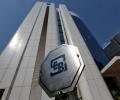
Senior officials in the MF industry say while the finance ministry and regulators communicate regularly, this is one of the very few instances in many years where an issue between the two has come out into the open.

As of December 2018, a total amount of Rs 51,513 crore has been infused into PSBs.

Experts expect a net loss of Rs 26.7 billion for IndiGo and Rs 10.1 billion for SpiceJet in Q1FY21 driven by low traffic volume, low fleet utilisation and poor coverage of fixed costs.
