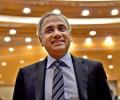
Infosys CEO Salil Parekh stated on Tuesday that the company's AI services, currently contributing over 8% of revenue, are growing rapidly and could account for almost half of its work within two to three years. He highlighted the strong demand for AI services, the company's hiring and training efforts for graduates in AI, and discussed potential risks like infrastructure challenges and societal backlash.

Infosys co-founder Nandan Nilekani has dismissed fears that artificial intelligence will lead to job losses in India's IT services sector, calling such concerns "hogwash" and "disaster marketing." Speaking at the Bloomberg New Economy Forum 2026, Nilekani argued that AI will actually increase demand for IT firms as it necessitates complex business transformations and creates new types of jobs, particularly in small businesses.

Indian benchmark indices, Sensex and Nifty, recovered early losses on Wednesday, driven by strong buying in IT stocks and HDFC Bank, sustaining the previous session's recovery despite FII outflows. Track Sensex, Nifty on October 14.

Indian benchmark indices Sensex and Nifty saw an early rebound, driven by strong performances from blue-chip HDFC Bank and major IT firms like HCL Tech, which reported a significant rise in net profit. Track Sensex, Nifty on October 13.

Indian benchmark indices Sensex and Nifty saw a sharp rebound in early trade, driven primarily by a rally in IT stocks and a decline in crude oil prices, even as global markets faced selling pressure due to US inflation concerns. Track Sensex and Nifty on

The US government has suspended eight major IT firms, including Microsoft, Tata, Infosys, and Wipro, from the Permanent Labour Certification Programme, which allows companies to apply for green cards for foreign workers. This action, announced by Vice President J D Vance, Labour Secretary Keith Sonderling, and Attorney General Todd Blanche, is part of an effort to prevent American workers from being shut out of the job market. The Department of Labour cited abuse of the system, particularly by Microsoft, and also initiated an investigation into the J-1 visa programme used by several universities.

Indian benchmark indices Sensex and Nifty saw a rebound in early trade, primarily driven by a more than 4 per cent surge in Tata Consultancy Services (TCS) shares following its robust Q2 net profit announcement. Track Sensex, nifty on October 9.
Nandan Nilekani, head of the task force on exam reforms, stated on Tuesday that technology and a systematic approach can solve the issue of question paper leaks. He suggested generating exam papers from a large question bank at the last minute to remove economic incentives for leaks and also proposed moving towards computer-based testing.

Indian benchmark indices Sensex and Nifty experienced declines in early trade, influenced by the Reserve Bank of India's (RBI) recent repo rate hike and its signal for continued monetary tightening, coupled with rising crude oil prices and foreign fund outflows. Track Sensex, Nifty on October 8.
Indian benchmark stock indices, Sensex and Nifty, closed lower due to profit-taking, a spike in wholesale price-based inflation, and firm crude oil prices, despite some support from easing intraday crude oil prices and rupee appreciation.
Nandan Nilekani, co-founder of Infosys, has urged for the expanded adoption of the Account Aggregator (AA) framework to facilitate formal credit access for self-employed individuals and gig workers. He highlighted its potential to enable cash-flow-based lending by leveraging diverse data streams, moving beyond traditional asset-based lending, and fostering a more inclusive digital financial infrastructure in India.

'Indian IT firms must hire and train more Americans while reducing dependence on sending employees from India to the US.'

'...but could demotivate employees seeking US residency.'

India's leading IT companies are anticipated to report subdued revenue growth and largely stable margins for the July-September quarter, as clients maintain tight discretionary budgets, with analysts closely watching the conversion of strong bookings into revenue and the impact of AI on traditional services.

India has strongly criticised the US decision to suspend the Permanent Labor Certification (PERM) program for eight major IT firms, including Indian giants like TCS and Wipro. New Delhi also condemned US Vice President JD Vance's description of foreign professionals as "indentured servants," calling it "unwarranted and deeply offensive." The move is expected to impact thousands of Indian tech professionals seeking permanent residency in the US and further strains bilateral ties.

Tata Consultancy Services (TCS) has stated that the recent suspension of eight IT firms, including itself, from a US green card programme will not impact its workforce strategy or customer engagements, citing its low number of applications and focus on local hiring.
Indian benchmark indices, Sensex and Nifty, extended their rally in early trade, driven by strong buying in bank stocks, Reliance Industries, and positive global cues, despite foreign institutional investors offloading equities.

Indian benchmark indices Sensex and Nifty saw a significant rebound in early trade, with the Sensex surging over 700 points, driven by a decline in crude oil prices, easing concerns over Federal Reserve tightening, and the appointment of Anup Bagchi as the new MD and CEO of HDFC Bank.

Indian benchmark indices, Sensex and Nifty, experienced a decline in early trade due to relentless foreign institutional investor (FII) outflows, although a drop in crude oil prices below USD 100 per barrel provided some cushioning. Track Sensex, Nifty on October 1.

Infosys has confirmed that Lax Gopisetty, chief of its subsidiary Infosys Public Services, is unreachable following devastating floods in Nepal. Gopisetty was visiting the region personally, and Infosys is working with agencies and his family to ensure his safety. The Ministry of External Affairs also reported hundreds of Indians missing or stranded due to the floods, with India offering assistance to Nepal.

Infosys Senior Vice President Vikram Meghal stated that India is experiencing a significant demand window in the semiconductor market and must evolve from merely engineering products to inventing complete systems. He highlighted the massive shifts driven by AI and supply chain challenges, urging a focus on "Invent in India" to capture higher value and leverage decades of investment in the ecosystem.

Infosys has revised down the upper end of its revenue growth target for financial year 2027 (FY27) to 1.5-3 per cent, from the earlier 1.5-3.5 per cent, attributing the change to persistent macroeconomic uncertainty and a one-time client impact.

Infosys, India's second-largest IT services firm, has appointed company veteran Ashiss Kumar Dash as CEO designate, with the leadership transition scheduled for April 1, 2027, after current CEO Salil Parekh completes his second term.
Infosys reported a 12.2 per cent year-on-year increase in consolidated net profit for the June quarter, reaching Rs 7,769 crore, but simultaneously lowered its full-year FY27 revenue growth outlook to 1.5-3 per cent, citing an uncertain macro-environment.
Indian benchmark indices Sensex and Nifty experienced volatile trading, influenced by elevated crude oil prices, high US bond yields, and selling pressure in IT stocks, despite an early rebound.

The Indian government has informed the Lok Sabha that the income-tax return (ITR) e-filing portal is functioning in a 'largely stable and efficient manner' despite a significant increase in traffic during the peak filing season. However, it acknowledged transient technical issues and disclosed that contractual penalties have been imposed on Infosys for project delays and service-level agreement failures.

Indian benchmark indices, Sensex and Nifty, saw gains in early trade, driven by a notable drop in crude oil prices and renewed buying interest from Foreign Institutional Investors (FIIs).

Indian equity benchmark indices Sensex and Nifty experienced a significant tumble in early trade, primarily driven by elevated crude oil prices due to ongoing West Asia uncertainty and substantial foreign fund outflows. Track Sensex, Nifty on September 29.
Nobel laureate Kailash Satyarthi's movement has launched the Satyarthi Fellowship, a year-long global leadership programme designed to train young leaders in compassionate action and drive social change. The fellowship focuses on immersive learning, grassroots engagement, and mentorship, building on the Satyarthi Summer School model.

Indian information technology (IT) stocks, led by Infosys, experienced a significant selloff, dragging the Nifty to a two-month low, primarily due to escalating West Asian tensions pushing crude oil prices higher, and concerns over upcoming large IPOs diverting funds from secondary markets. The sector is also grappling with the long-term implications of AI disruption.

The ministry of education is actively formulating a computer-based testing strategy to transition the crucial NEET medical entrance exam to an online format.
Indian stock markets experienced a significant downturn, with the Sensex plunging 1,124 points to a six-month low and the Nifty closing below 22,800, driven by surging crude oil prices, escalating geopolitical uncertainties, and weak global market trends.
Indian benchmark stock indices, Sensex and Nifty, rebounded on Friday, driven by value buying in banking, oil & gas, and auto shares following recent sharp losses. The Sensex climbed 315.20 points to settle at 73,895.74, while the Nifty rose 77.40 points to 23,140.50.
Indian benchmark indices Sensex and Nifty saw a rebound in early trade, driven by a moderation in crude oil prices, despite persistent selling by Foreign Institutional Investors (FIIs) and mixed global market cues.

Indian benchmark indices Sensex and Nifty opened higher, extending gains from the previous session, driven by a rally in global markets and a slight cooling in crude oil prices. Optimism around a potential meeting between US and Iranian presidents also contributed to positive sentiment.Later both indices pared gains and were trading in red. Track Sensex, Nifty on September 22.
Indian benchmark indices, Sensex and Nifty, experienced a significant downturn, with Sensex tanking 778 points and Nifty closing at a five-month low, driven by surging crude oil prices, geopolitical tensions, and fears of further interest rate hikes by major central banks.

Prominent individuals, including Infosys co-founder Nandan Nilekani and Zerodha founders Nithin and Nikhil Kamath, have appeared on a notice list during Karnataka's Special Intensive Revision (SIR) of electoral rolls due to various discrepancies. Authorities clarify that these notices are part of a verification process and officials will assist in resolving the issues without inconveniencing the individuals, also debunking reports about CM D K Shivakumar's mother receiving a notice.

The National Testing Agency (NTA) has moved to a new office and deployed CISF security to safeguard confidential areas, following a major controversy over the NEET paper leak and administrative lapses. This move aims to implement foolproof security arrangements and restore public trust in the examination system.

Indian stock markets, including the Sensex and Nifty, experienced a significant tumble in early trade, driven by escalating tensions in West Asia that pushed crude oil prices close to the USD 100-per-barrel mark, alongside selling in IT stocks and fresh foreign fund outflows.
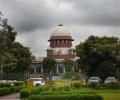
The Supreme Court has indicated that its judges may personally visit the National Testing Agency (NTA) to examine its upgraded facilities aimed at preventing recurring NEET paper leaks. This unusual move underscores the court's emphasis on institutional strengthening and permanent solutions. The NTA informed the bench that it has overhauled its system, while a high-powered panel is also working on structural reforms to ensure foolproof examination processes.
