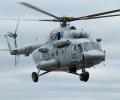
Mikheev said Russia and India are holding talks with a view to sign a contract for 48 (Mi-17V-5) helicopters.

The four pillars on which the relationship rests strategic congruence; defence and space partnership; nuclear power generation; and hydrocarbons remain biased in favour of Russia. Putin's visit gave little hope that this was about to change.
India, Russia to sign military IPR agreement in December
India, Russia for resolving Iran issue within IAEA framework
Soon there will also be joint land exercises between the two countries in Suratgarh in Rajasthan.

In the first interaction between India and the Russian Federation, External Affairs Minister Sushma Swaraj will meet visiting Russian Deputy Prime Minister Dmitry O Rogozin on June 18.
India is the second country with which Russia is holding a joint military exercise, following the one with China.

India and Russia underlined their determination to deepen their "time tested" relationship on Monday, as they inked a path-breaking civil nuclear agreement that will ensure transfer of technology and uninterrupted uranium fuel supplies to its nuclear reactors and signed three pacts in the defence sector.
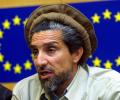
Ahmed Shah Massoud's assassination, 9/11 and the defeat and ejection of the Taliban suggested a break in Afghanistan's history, but the events of August 2021 and the Taliban's return shows how deeper continuities remained in place, points out T C A Raghavan, former Indian high commissioner to Pakistan.
Prime Minister Manmohan Singh on Saturday said both India and Russia are agreed that the Afghanistan problem is a "serious" issue, observing that whatever happens there is of deep interest to them and to all the neighbours of the strife-torn country.
Pious pre-summit homilies cannot hide the ugly truth that cooperation in energy security is going at snail's pace despite it being a strategic area for India. The high hopes raised 3 years ago during the visit by Vladimir Putin to Delhi remain unfulfilled, says M K Bhadrakumar.
'The two countries are committed to maintaining and consolidating bilateral strategic partnership,' he said.
India and Russia on Monday decided to extend the tenure of an inter-governmental commission for military cooperation by another 10 years to 2020. The two sides inched closer to resolving the Gorshkov aircraft carrier price and T-90 tanks technology transfer issues. New Delhi and Moscow also decided to form an apex body headed by the defence secretaries of the two countries to coordinate the operation of several working groups for military cooperation.
Buoyed by the remarkable success of the supersonic BrahMos cruise missiles, India and Russia are now mulling the joint development of a futuristic 'smart' battle tank, featuring higher speed and better firepower. "We put forward this idea (of developing the tank) at the turn of the 21st century. The Indian side has now come up with a similar proposal," Nikolai Malykh, director general of Russia's biggest tank producer Uralvagonzavod, said.

"We have decided to send officials from both sides to sit on table either in New Delhi or Moscow to remove the bottlenecks, including clinical trials of new drugs," Azad told the Indian media after meeting his Russian counterpart Tatiana Golikova.
"In situ chemical analysis and resource exploration is the main objective of Chandrayaan-II," said Mylaswamy Annadurai, Project Director of Chandrayaan-I. Annadurai visited Russia late last month to hold initial technical discussions on Chandrayaan-II, which is expected to be a much shorter mission than Chandrayaan-I, scheduled for launch on April 9, 2008.
"The joint development of the Fifth Generation Fighter Aircraft will mark the start of cooperation in the development of major state-of-the-art new technology weapon systems," Antony said, adding that both India and Russia would have equal financial and technological stakes and issues related to the intellectual property and specific requirement of the Indian Air Force have been resolved.
The cooperation will encompass collaboration in futuristic air-launched and ground-to-air missiles, fifth generation fighters, submarines and tightening up supply of spares for frontline Russian weaponry being used by Indian armed forces.
The war games codenamed INDRA-2007 are aimed at practising cooperative engagement in the fight against terrorism, Russian Pacific Fleet said in its press release. It is the third such joint exercise since 2003.

During the discussions attended by Simon Williams, Chief Economist at HSBC, Chirag Shah, Head of Strategy and Corporate Planning at DIFC Authority, and Yousef Bazian, Head of Corporate Finance at PwC in the Middle East, a consensus emerged that the Gulf region has achieved considerable non-oil economic growth.
'Russia is not out to violate what they see as their international obligations.' India's Ambassador to Russia Kanwar Sibal in an exclusive interview.
Dr Singh reminded that today, most of the equipment used by the three wings of the Indian armed forces is of Russian origin.
The deal to upgrade the MiG-29s comes after three of the jets crashed in India this year.
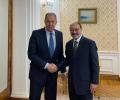
Foreign Secretary Harsh Vardhan Shringla on Wednesday had 'fruitful and productive' meetings with top Russian diplomats on bilateral issues as well as regional and global issues of mutual interest and the two sides discussed ways to further strengthen the bilateral Special and Privileged Strategic Partnership.
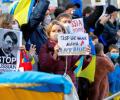
'The Indian activities at the UN are fully reflecting the merit of our special and privileged strategic partnership'
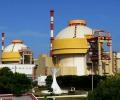
After years of deadlock on liability issue, India and Russia have signed an agreement for building units 3 and 4 of the Kudankulam Nuclear Power Plant project at a cost of Rs 33,000 crore.
Russia will build three stealth warships for India under a Rs 5,514-contract signed in New Delhi on Tuesday.

Russian traders have started asking for payments in ruble for their exports to India in a move that could derail trade between the two countries which gathered pace after the war in Europe. This is because Indian importers are unable to pay in ruble. The India-Russia trade gathered pace after Vladimir Putin invaded Ukraine in February this year. In the April-June quarter, India's imports from Russia were valued at $9.27 billion, up 369 per cent year on year.
India and Russia are expected to sign deals worth over $10 billion, covering defence and civilian nuclear sectors during the ongoing visit of Russian Prime Minister Vladimir Putin.
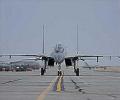
India and Russia are expected to sign the first of a series of agreements for the development of fifth generation fighter aircraft (FGFA) to meet futuristic requirements of the Indian Air Force during Russian Prime Minister Vladimir Putin's visit to New Delhi later this week.
"The Hypersonic BrahMos version of the cruise missile would be ready for flight testing in 2017", Sivathanu Pillai, chief executive officer of the Russian-Indian joint venture BrahMos Aerospace said here. The new missiles would be capable of flying at speeds of Mach 5- Mach 7.

China would be an influential player in the bank
India will be identifying and separating its civilian and military nuclear facilities and programmes in a phased manner.
India, Russia to develop aircraft version of BrahMos missile
