
With liquidity crunch hitting operations, many finance companies have put the brakes on sanctions in the third quarter in the aftermath of the IL&FS crisis.
Despite Indian economy recovering, there is very little room for loan growth, say bankers.

The commercial vehicle loans that were extended recently have shown higher tendency for default than old advances, according to a study by rating agency Icra. The large number of borrowers is being brought into the fold in a segment that is growing fast (buoyant) and there is certain lowering of credit criterion (read laxity in lending norms).

Average overall sales which used to be around 8,000 units a year ago has dropped to 7,000-7,500 units in a month. A lot of government projects have been announced but these are yet to translate to boost CV sales.

Bhogapuram international airport, Ramayapatnam and Bandar ports, the Muktyala lift irrigation scheme and a bridge across the Krishna river are some of the projects likely to be hit.

The overall volume at India's top four M&HCV makers - Tata Motors, Ashok Leyland, Volvo Eicher, and Mahindra & Mahindra - fell 59.5 per cent to 31,067 units during the month.

Most jewellery shops and establishments in the country are shut since March 2.

During the fourth quarter (January-March), banks step up the activity to meet annual targets. This leads to a race to raise funds from markets often by jacking up deposit rates. This time around, the market has not seen such trend yet.

Import growth moderated to a four-month low, owing to sharp decline in that of gold.

Financial planners advise against putting capital to work by anticipating what might go up or down.

The price of the Indian basket of crude oil jumped as much as 78 per cent to cross $50 a barrel last week, from a multi-year low of $28 in January.

Inflation in onion continued to rule high at 42.22 per cent and in potato at 43.25 per cent.

The auditors also said that the company is in the process of monetising its assets and has submitted a draft resolution plan to the consortium of bankers for restructuring its borrowings and also there have been discussions for stake sale by the promoters to a strategic partner with further equity infusion.
Although exports of gold jewellery have increased from Rs 5,220 crore (Rs 52.20 billion) during FY 2001 to Rs 23,516 crore (Rs 235.16 billion) during FY 2007 (source: Icra industry monitor), the export business has been constrained by an inability to compete in global markets on basis of price and superior design capabilities.

Build up inflation rate in the financial year so far was 2 per cent compared to a build up rate of 4.56 per cent in the corresponding period of the previous year. Inflation in food articles as a group rose to 11.08 per cent during the month as against 9.80 per cent in the previous month, mainly driven by exorbitantly high onion prices, the rates of which spiked by over 172 per cent from a year-ago. The annual rate of inflation, based on monthly wholesale price index was at 0.16 per cent in October.
Unlike bank FDs that are considered risk-free investments, NCDs do carry a certain amount of risk, primary among them is the risk of default, either servicing the interest payment or meeting their principal repayment obligations.

The Indian benchmark remained static in its last closing on May 28, while Brent prices dropped further to $75.71 a barrel. Less Brent crude in Indian basket makes prices sticky.

Economists, however, caution against interpreting the data as a broad-based revival
Historically, there has been no correlation between growth in bank credit to industry and lower benchmark interest rate

For the near term, Gill will have to improve relations with the Reserve Bank of India, which have been strained in recent times. He will also need to strengthen the bank's asset quality and improve governance standards and internal processes.

Economic affairs secretary S C Garg said that all macroeconomic parameters are performing well.
Govt squeezed capital expenditure, and also cut revenue expenditure, that does not go into creating assets, by 11% in H1
Unlike last year when private equity participants exited through strategic deals with third party investors, this year PEs are opting to exit via initial public offerings route.
An initial reading of the guidelines indicates two factors - potential rise in borrowing cost and lower returns on investment book - could hit the spread of NBFCs.

"Growth is expected to moderate gradually in China... pick up in India, and remain broadly stable in the Asean-5 region."

Common use products like hair oil, soaps and toothpaste will be charged with a single national sales tax or GST of 18 per cent instead of present 22-24 per cent

Exports rise for 8th month, albeit at lower pace

The calculation is based on annual usage of eight cylinders per household.
Global IT services spending is likely to increase at around 7-8 per cent over the medium term to $500 billion in 2007 from $470 billion in 2006.

Direct tax collections grew by a meagre 6.6 per cent during April-July of the current financial year against the Budget target of 14.4 per cent for 2018-19. Corporation taxes, in particular, grew at just 0.57 per cent, the lowest in the first four months in at least seven years.
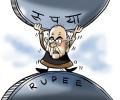
For the first eight months of the current financial year, the figure stood at Rs 7.17 trillion.

Will demonetisation lead to a rate cut, leading to higher quantum of lending?

Factors like dedicated recovery teams, centralised follow-up on bad loan accounts and resolutions via NCLT are driving the trend

All public sector banks have moved to such a regime voluntarily, while private banks are yet to. The state-run banks have introduced repo-linked products for floating-rate home and auto loans, but the RBI said loans to micro, small and medium enterprises (MSMEs) should also be linked to an external benchmark.

Private hospitals, especially smaller standalone ones, are staring at a crisis that they were not prepared for. Analysts say larger corporate chains have to brace up for at least six months for business to return to normal.
