
Analysts predict India will face oil price volatility and macroeconomic effects due to the escalating Iran crisis, though the country's oil supply chain is not yet structurally insecure.

Retail inflation rose to a three-month high of 1.33 per cent in December 2025 mainly due to higher prices of kitchen essentials, including vegetables and protein-rich items.

Only a limited set of investors should invest directly in corporate bonds.

US strikes on Iran's three main nuclear facilities have once again raised concerns that Tehran might shut down the Strait of Hormuz - one of the world's most critical chokepoints, through which a fifth of global oil and gas supply flows.

Moody's on Thursday upped India's growth projection for the next financial year beginning April 1, to 13.7 per cent, from 10.8 per cent estimated earlier, on the back of normalisation of activity and growing confidence in the market with the rollout of COVID-19 vaccine. For current fiscal, the US-based rating agency expects the economy to contract 7 per cent, lower than its previous estimate of 10.6 per cent contraction.

The output of eight core infrastructure sectors grew marginally by 0.1 per cent in January, mainly due to growth in the production of fertiliser, steel and electricity. The core sectors had expanded by 2.2 per cent in January 2020, according to the provisional data released by the commerce and industry ministry on Friday. Coal, crude oil, natural gas, refinery products, and cement recorded negative growth in January.

Equity-focused schemes may perform better in a bull market, while debt-oriented ones may offer greater stability during volatile periods.

The output of eight core infrastructure sectors contracted for the third month in a row by 1.3 per cent in December 2020, dragged down by poor show by crude oil, natural gas, refinery products, fertiliser, steel and cement sectors. The core sectors had expanded by 3.1 per cent in December 2019, according to the provisional data released by the Commerce and Industry Ministry on Friday. Barring coal and electricity, all sectors recorded negative growth in December 2020. During April-December 2020-21, the sectors' output declined by 10.1 per cent against a growth rate of 0.6 per cent in the same period of the previous year.

The government on Wednesday asked the Reserve Bank to maintain retail inflation at 4 per cent with a margin of 2 per cent on either side for another five-year period ending March 2026. To control the price rise, the government in 2016 gave a mandate to the RBI to keep the retail inflation at 4 per cent with a margin of 2 per cent on either side for a five-year period ending March 31, 2021.

Inflation in food articles during June stood at 2.04 per cent, as against 1.13 per cent in May.

As per commerce and industry ministry data, food inflation fell to 4.91 per cent in March from 7.79 per cent in the previous month.

Investment growth moderated slightly in the economy during the first quarter (Q1) of the current financial year (2023-24, or FY24), notwithstanding the front-loading of capital expenditure (capex) by the Centre. This was also the case despite a pick-up in demand during the period after two dismal consecutive quarters. Although growth in gross fixed capital formation (GFCF), representing investment, fell to a five-quarter low of 7.96 per cent, the comparison with the first two quarters of the previous year is a bit askew due to the low year-on-year (Y-o-Y) base of those periods.

Inflation in food articles during May stood at 1.13 per cent, as against 2.55 per cent in April.

Inflation in onion continued to rule high at 42.22 per cent and in potato at 43.25 per cent.

GST collections in March touched a record high of over Rs 1.23 lakh crore, a 27 per cent growth over the year-ago period, the Finance Ministry said on Thursday. "GST revenues crossed above Rs 1 lakh crore mark at a stretch for the last six months and a steep increasing trend over this period are clear indicators of rapid economic recovery post pandemic," the ministry said. Closer monitoring against fake-billing, deep data analytics using data from multiple sources including GST, income tax and customs IT systems and effective tax administration have also contributed to the steady increase in tax revenue over last few months, it added.

The next auction for bauxite blocks in Odisha may see heightened interest with Adani Group charting an entry into alumina refining and existing players looking to boost capacity. Hemant Sharma, principal secretary, Odisha industries department, said that three bauxite blocks have been scheduled for auctions this year. Adani Group - which will be setting up a 4-MMTPA alumina refinery and may enter aluminium production - is expected to bid for mines, though raw material linkages shall be available from Odisha Mining Corporation (OMC).

Welcoming the latest round of stimulus announced by Finance Minister Nirmala Sitharaman on Thursday, experts said the measures will support the economic recovery boosting demand, job creation and by providing funds to the MSME and stressed sectors. The fiscal impact of the stimulus is likely to be around 0.25-0.6 per cent of GDP in the current fiscal, they said.
During the month, inflation in vegetables shot up to 35.99 per cent, as against 26.10 per cent in October. Likewise, the prices of cereals and eggs grew at a faster pace of 3.71 per cent.

Direct tax collections grew by a meagre 6.6 per cent during April-July of the current financial year against the Budget target of 14.4 per cent for 2018-19. Corporation taxes, in particular, grew at just 0.57 per cent, the lowest in the first four months in at least seven years.

Reliance Power (RPower) has defaulted on payment of interest worth Rs 1.17 crore to DBS Bank India and Rs 44 lakh to IDBI Bank. It failed to pay up interest on October 30, 2021. The firm, part of the Anil Ambani-promoted Reliance group, in filing with BSE, said it has term loans and working capital arrangements with three lenders - YES Bank, IDBI Bank and DBS. Its stock closed 1.41 per cent lower at Rs 12.6 per share on the BSE on December 1. About exposure of YES Bank, there is a 'standstill' applicable till December 26, 2021.

RBI targets to keep inflation at 4 per cent, (+/- 2 per cent), and its rise beyond this comfort zone will put pressure on the central bank to hike rates.
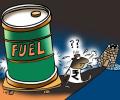
Inflation in 'fuel and power' basket rose sharply to 11.22 per cent in May from 7.85 per cent in April as prices of domestic fuel increased in line with rising global crude oil rates.

After unseasonal rains, supply disruptions and pandemic-induced woes pushed retail inflation well over the Reserve Bank's comfort zone in 2020, the scenario is likely to stay that way at least in the short term as economic recovery slowly gains foothold. For most part of this year, pricier food items pushed the retail inflation, based on Consumer Price Index (CPI), higher in the range of 6.58-7.61 per cent, except for March when the reading was 5.91 per cent. Experts believe retail inflation is likely to average around 6.3 per cent this fiscal and mostly will remain sticky going forward owing to pick-up in demand across sectors.

Among food articles, vegetable prices surged by 69.69 per cent mainly on account of onion, which witnessed 455.83 per cent jump in prices, followed by potato at 44.97 per cent.

After contracting for two quarters in a row, the Indian economy entered the positive territory with a growth of 0.4 per cent in the October-December quarter, mainly due to good performance by farm, services and construction sectors, official data showed on Friday. Trade and hotel industry registered a contraction of 7.7 per cent during the third quarter this fiscal, as the sectors continued to suffer on account of coronavirus pandemic. According to the data released by the National Statistical Office (NSO), the farm sector recorded a growth of 3.9 per cent, and the manufacturing sector output grew by 1.6 per cent in the quarter under review.

Beside manufacturing, deceleration was also witnessed in sectors like agriculture, construction and electricity, gas and water supply.

The sharp rise was also due to a statistical illusion -- low industrial numbers in November 2015, and sharp reversal of a 12-month declining trend in capital goods.

For the first time in 21 years, the Reserve Bank of India (RBI) will revise norms for investment portfolios of commercial banks to reflect changes in global standards on valuation and measurement, and progress in the domestic market. This could pave the way for banks to transition to the new accounting standards (Ind-AS). The outstanding investment portfolio of commercial banks was at Rs 45.84 trillion as of November 19 this year.

Build up inflation rate in the financial year so far was 2 per cent compared to a build up rate of 4.56 per cent in the corresponding period of the previous year. Inflation in food articles as a group rose to 11.08 per cent during the month as against 9.80 per cent in the previous month, mainly driven by exorbitantly high onion prices, the rates of which spiked by over 172 per cent from a year-ago. The annual rate of inflation, based on monthly wholesale price index was at 0.16 per cent in October.

The wholesale price-based inflation rose for the second consecutive month in February to 4.17 per cent, as food, fuel and power prices spiked. The WPI inflation was 2.03 per cent in January and 2.26 per cent in February last year. After witnessing months of softening of prices, the food articles in February saw 1.36 per cent inflation. In January it was (-) 2.80 per cent.

Officials from State-run refiners contend that savings from purchase of Russian oil are used to offset a part of the losses in revenues from selling transport fuels and LPG at State-set rates.

The output of eight core sectors declined by 4.6 per cent in February, the steepest contraction in the last six months which experts said could drag the overall industrial production in the month into the negative territory. All the key segments, including coal, crude oil, natural gas, and refinery products, witnessed a decline in production, according to the official data released on Wednesday. The growth rate of the eight infrastructure sectors -- coal, crude oil, natural gas, refinery products, fertilisers, steel, cement and electricity -- stood at 6.4 per cent in February 2020. Last time in August 2020, the sectors had recorded a negative growth of 6.9 per cent.
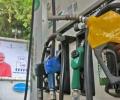
This may come as a surprise to many. Retail price inflation in petrol was the lowest at 10.21 per cent in March since November 2020. In diesel, it scraped the bottom of the barrel at 5.19 per cent in the last month of 2021-22 since February 2020. Even liquefied petroleum gas (LPG) was at a nine-month low of 9.97 per cent in the month.

Barring coal and fertiliser, all sectors -- crude oil, natural gas, refinery products, steel, cement and electricity -- recorded negative growth in August.

Contracting for the ninth consecutive month, the output of eight core infrastructure sectors dropped by 2.6 per cent in November, mainly due to decline in production of natural gas, refinery products, steel and cement. The production of eight core sectors had recorded a growth of 0.7 per cent in November 2019, data released by the commerce and industry ministry showed on Thursday. Barring coal, fertiliser and electricity, all sectors -- crude oil, natural gas, refinery products, steel and cement -- recorded negative growth in November 2020.


Infra segment, refinery product impacted the most, even as contraction narrows in latest month.

Barring fertiliser, all seven sectors - coal, crude oil, natural gas, refinery products, steel, cement, and electricity - had recorded negative growth in May.

Barring fertiliser, all seven sectors -- coal, crude oil, natural gas, refinery products, steel, cement and electricity -- recorded negative growth in July.

Over the past several months, the airline has struggled to pay vendors and staff salaries on time.
 © 2026 Rediff.com - Advertise with us - Disclaimer - Privacy Policy - Sitemap - Feedback - About us - Terms of use - Grievances