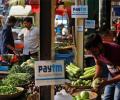
Digital payments firm Paytm is expected to seek shareholders' approval to raise up to Rs 16,600 crore through an initial share sale, giving it a valuation of over Rs 1.78 lakh crore, according to a source. The extraordinary general meeting of Paytm is scheduled for July 12 in which the company may seek approval to raise up to Rs 12,000 crore through issuance of fresh equity. Another Rs 4,600 crore is expected to be raised from the sale of equity shares by existing and eligible shareholders, according to the source.

Unprecedented bribery charges, farewells, separation, failed union, monumental mergers and record-breaking IPOs, along with a healthy dose of online happenings in the form of spat and lessons in customer care, corporate India saw it all in 2024.

Markets regulator Sebi has reduced the minimum lock-in period for promoters' investment post an initial public offering (IPO) to 18 months from three years, under certain conditions. The move comes at a time when many companies are looking to list on the stock exchanges. In addition, the Securities and Exchange Board of India (Sebi) has streamlined disclosures requirements of group companies.

The board of Reliance Industries Ltd on Thursday approved issuing 1:1 bonus shares -- the first bonus issue in seven years. Reliance, the nation's most valuable company, had last issued bonus shares in September 2017.

Ujjivan Small Finance Bank's initial public offering attracted heavy investor demand on the final day of bidding on Wednesday as the issue was subscribed a whopping 126.36 times.

For food aggregator platform Swiggy, quick commerce (qcom) is proving to be a better growth opportunity than food delivery. Its qcom arm Instamart is rapidly outpacing its core food delivery vertical across several key financial metrics, the company's recently filed draft red herring prospectus (DRHP) shows.

Equity supply may hit Rs 6 trillion soon.

Markets watchdog Sebi on Tuesday decided to tighten norms for utilisation of IPO proceeds by companies, introduce special situation funds to invest only in stressed assets and amend various regulations, including those on mutual funds and settlement proceedings. The board of Sebi, which met on Tuesday, also gave its nod for amending Foreign Portfolio Investor (FPI) regulations and introducing a provision for appointment or re-appointment of any person, including as a managing director or a whole time director or a manager, who was earlier rejected by the shareholders at a general meeting. Once the amended norms are in place, such appointments or re-appointments can only be done with the prior approval of the shareholders.

Many are now hoping the markets remain in good stead as they look to finalise the dates for IPOs, such as UTI MF, Computer Age Management Services, Happiest Mind, and Angel Broking. Most of the issues are expected to come to the market in the second half of September.

Ask rediffGURU and PF expert Milind Vadjikar your insurance, stocks, mutual fund and personal finance-related questions.

'Opportunity is there in each segment of the market. There is opportunity in affordable and specifically governed by government initiatives as well as for housing for all.'
Paytm's Rs 18,300-crore IPO -- India's largest public issue to date -- was subscribed only 18 per cent on the first day of bidding on Monday.

In addition to regulatory actions against small and midcaps, tighter liquidity conditions are another headwind that stocks are facing this month. Market observers say advance tax outflows and capital gains-related adjustments will weigh on the markets in the near term.

Edible oil major Adani Wilmar Ltd (AWL) on Monday filed the draft red herring prospectus with markets regulator Sebi for an initial public offer to raise up to Rs 4,500 crore. The company, which sells cooking oils under the Fortune brand, is a major player in the edible oil industry.

Allotment could be low, and expected listing-day gains can quickly morph into losses if sentiment takes a turn for the worse

The country's legacy two-wheeler giants - Bajaj Auto and TVS - are fighting a neck-and-neck battle for market share, with the former threatening to dislodging its rival soon. The Pune-based giant, which was trailing far behind TVS just two months ago in e-two-wheelers (e2Ws), has upped the ante. It has increased its market share based on Vahan registrations from 11.6 per cent in June (when it sold only 9,046 electric two wheelers) to 19.3 per cent (when it sold 14,977 this month till August 30).

After 'mutual funds sahi hai', it could be the turn of something like 'stock market sahi hai'. Ahead of what will be India's biggest initial public offering, expected later this year, the government and the insurance major are planning a high-decibel awareness campaign for retail investors to ensure their participation in large numbers. "It may be along the lines of the highly successful campaign on mutual funds," an official privy to the developments said. The campaign will mainly target investors in tier II and tier III cities, and will be organised through the vast network of LIC agents to make the policyholders aware about investing in stock markets.

The number of dematerialised (demat) accounts - required to hold shares and other securities in electronics format - crossed the 150-million mark for the first time in March. In March, 3.12 million new demat accounts were added despite a spike in market volatility, taking the total count to 151.4 million. The milestone has come 19 months after the total number of demat accounts hit the 100-million mark, a sign that more domestic households are taking to direct equity investing.

Around 70 companies have received IPO clearance from markets regulator Sebi, but are waiting for election results.

'Expect our food delivery business to deliver sustainable adjusted EBITDA margins of about 5 per cent in the medium term.'

'We have filed our draft red herring prospectus for a floating IPO for a net offer size of 86.6 million shares.'

Stock market investors became richer by a whopping Rs 77.66 lakh crore in 2024, helped by an overall optimistic trend in equities, where the BSE Sensex surged over 8 per cent. Analysts said the year witnessed a tug of war between the bulls and bears marked by volatility but, despite the uncertainties around the world, the Indian markets sustained the pressure and delivered impressive returns.

Capital markets are becoming more prominent in India's growth story, with an expanding share in capital formation and investment landscape on the back of technology, innovation and digitisation, according to the Economic Survey 2023-24 tabled in Parliament on Monday. Further, Indian markets are resilient to global geo-political and economic shocks, it added. "Despite heightened geo-political risks, rising interest rates and volatile commodity prices, Indian capital markets have been one of the best performing among emerging markets in FY24," the Economic Survey said.

In the past few days, many companies, including fashion e-tailer Nykaa, food delivery platform Zomato, logistics and delivery firm Delhivery, insurance discovery platform PolicyBazaar, eyewear retail chain Lenskart, and edtech and online tutoring firm Byju's, have openly spoken about their IPO plans.

The primary market is set for a bumper Rs 80,000-crore bonanza with 30 companies already filing IPO papers to raise Rs 55,000 crore, while around 10 more are lined up for this month itself, seeking to mop up another Rs 25,000 crore, say investment bankers. The market has been on a non-stop rally, hitting new records almost every week, on the back of an influx of investors -- a vast majority of them first-timers -- coupled with a flood of liquidity. Foreign funds alone had pumped in a record $35 billion into the market in FY21, while the trend has continued this fiscal as well. Domestic institutions led by LIC have also infused trillions of rupees, helping woo retail investors in troves -- the year saw over 20 million new investors coming to the market.

For the third month running, investors opened over four million new demat accounts in February, showing growing household confidence in stock markets and their increased risk appetite. Over 13.12 million new demat accounts have been opened in the last three months, taking the total count close to the 150-million mark. Demat accounts are needed for trading and holding shares electronically.

Gland Pharma, promoted by China's Fosun, has extended its gains, is up 40 per cent since its listing.

'Investors should be careful in getting carried away; although a reversal of IPO frenzy this time is taking longer than in the past.'

Ola Electric share price strategy: The meteoric rise of Ola Electric share price has left analysts and investors bewildered. Yet, they suggest investors hold on to the stock as it remains a pure "momentum" play. Since its listing on August 9, the stock has surged 92 per cent (till August 19) over its issue price of Rs 76, taking its market capitalisation to a little over Rs 63,000 crore.

Projections suggest online food delivery market should grow to $22 billion by 2025.

'Health and motor insurance will continue to be our two most important segments'

JM Financial on Wednesday said it had a "careful and detailed review" of the Reserve Bank's order imposing restrictions on the company's financing business and asserted that there was "no material deficiencies" in its loan sanctioning process. The Reserve Bank on Tuesday imposed restrictions on JM Financial Products Ltd after it found the company indulged in various manipulations, including repeatedly helping a group of its customers to bid for various IPOs (initial public offerings) by using loaned funds. "After careful and detailed review of the order issued by the RBI on the action against JM Financial Products Ltd, we strongly believe that there have been no material deficiencies in our loan sanctioning process.
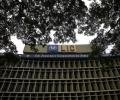
The government is working towards further review and simplification of the foreign direct investment (FDI) policy to facilitate the proposed initial public offering (IPO) of the Life Insurance Corporation (LIC), Department for Promotion of Industry and Internal Trade (DPIIT) secretary Anurag Jain said on Thursday. The final decision will be taken by the Cabinet. The industry department is working together with the finance ministry's department of financial services (DFS) and department of investment and public asset management (DIPAM) towards a successful listing of the life insurer on the domestic bourses, which is expected to be the largest in India.

A Competition Commission probe has found that food delivery platforms Zomato and Swiggy indulged in unfair business practices, including alleged preferential treatment to some restaurant partners, according to sources. The detailed investigation was ordered by the Competition Commission of India (CCI) in April 2022 and the probe report was submitted to the regulator earlier this year. Under the norms, CCI director general's report has been shared with the parties concerned and later, they will be called for hearings by the watchdog.

Retail investors may burn their fingers investing in them, especially if the markets correct, experts tell Sanjay Kumar Singh

Market players said NBFCs and HNIs are recalibrating their plans based on the changing dynamics.
2017 saw the highest-ever mobilisation by way of IPOs of close to Rs 700 billion. The momentum is expected to continue this year as well.
During the current financial year, 25 companies have raised Rs 28,220 crore through IPOs

With the stock market turning choppy, fintech start-up MobiKwik, which had filed a draft red herring prospectus (DRHP) to raise around $250 million through an initial public offering (IPO), is now looking to raise money from the private market. "We will raise private money but we are not in dire need. "The business was profitable for the first time in the December quarter on a top line of around Rs 150 crore and that will be maintained in the March quarter also. We are generating cash," said Upasana Taku, co-founder of MobiKwik.
Digital payments and financial services firm Paytm has filed a draft red herring prospectus for its proposed Rs 16,600-crore initial public offering (IPO) with the Securities and Exchange Board of India.
