
India's new national accounts will leverage new data sources and surveys to enhance the measurement of the country's informal economy, and introduce double deflation methods across sectors, replacing the current system that relies on a single deflation mechanism in Gross Domestic Product (GDP) calculations.

Among Sensex firms, Infosys, Bharti Airtel, Adani Ports, Sun Pharma, Tech Mahindra, Eternal, Axis Bank and Maruti were the major laggards. However, ITC, UltraTech Cement, Tata Steel and HDFC Bank were among the gainers.

The rupee witnessed a volatile trading session and settled for the day on a slightly lower note, down 1 paisa at 90.66 against the US dollar on Monday, as traders assessed the details of the India-US interim trade framework.

Uttar Pradesh Chief Minister Yogi Adityanath asserted that Uttar Pradesh enjoys a clean environment, unlike Delhi, which he likened to a 'gas chamber' due to its pollution levels.

Unless the primary market momentum slows, smallcap stocks will stay subdued.

India's services sector growth moderated in December, as the rates of expansion in incoming new work and output eased to the slowest in 11 months, and companies refrained from recruiting additional staff, a monthly survey said on Tuesday. The seasonally adjusted HSBC India Services PMI Business Activity Index fell from 59.8 in November to 58.0 in December, indicating the slowest rate of expansion since January.

Stocks of fast-moving consumer goods companies have taken it on the chin in calendar year 2026 (CY26) with the Nifty FMCG index falling over 6 per cent compared to the Nifty 50 dipping 0.8 per cent. Nifty FMCG is one of the worst-performing sectors on the NSE in CY26.

Following the successful release of the CSIR-NET results on January 30, lakhs of candidates can now check their scores to determine eligibility for assistant professorship, junior research fellowship (JRF) and PhD admissions.

India's manufacturing sector activity witnessed a slight recovery in January, amid faster increase in new orders, even as business confidence slipped to its lowest level in three-and-a-half years, a monthly survey said on Monday.

Betting big on India's AI potential, Google CEO Sundar Pichai on Wednesday announced new subsea cable routes to boost AI connectivity between India and the US, alongside major skilling initiatives, including training 20 million public servants and supporting 11 million students

The rupee appreciated 13 paise to close at 90.34 against the US dollar on Thursday, on trade deal optimism and overnight decline in commodity prices, even as the upside remained capped as investors look for more clarity on the India-US trade deal.

Among Sensex firms, Trent, HDFC Bank, Adani Ports, ICICI Bank, Bajaj Finserv, Bharat Electronics, Titan and Asian Paints were the major laggards. However, State Bank of India, Infosys, Axis Bank and Maruti were among the gainers.

Trade deals ease risks for Indian equities, but weak demand and stretched valuations raise questions over whether optimism -- especially in smallcaps -- can turn into a sustained bull run, points out Debashis Basu.

Among Sensex firms, Tata Steel, Eternal, UltraTech Cement, Larsen & Toubro, Maruti and Bharti Airtel were the major gainers. However, Hindustan Unilever, Sun Pharma, ITC and Asian Paints were among the laggards.

India's eight key infrastructure sectors registered a four-month high growth rate of 3.7 per cent in December last year, driven by a jump in the output of fertiliser and cement, according to official data released on Tuesday.

From the 30-Sensex firms, Tata Steel, Kotak Mahindra Bank, Reliance Industries, Axis Bank, Titan and Trent were among the biggest gainers. However, Tata Consultancy Services, Tech Mahindra, Infosys, Bajaj Finance and Sun Pharma, were the laggards.

Among Sensex firms, Sun Pharma, Tata Steel, Power Grid, Asian Paints, NTPC and Bharti Airtel were the biggest laggards. Tata Consultancy Services, Tech Mahindra, Infosys, Adani Ports, Axis Bank and HCL Tech were among the gainers.

From the 30-Sensex firms, Bharat Electronics, Power Grid, Tata Motors Passenger Vehicles, Asian Paints, Reliance Industries, and Bajaj Finserv were among the biggest gainers. However, HCL Tech, Kotak Mahindra Bank, ICICI Bank, and Sun Pharma were the laggards.

Domestic equities surged on Tuesday, posting their best single-day gains in more than eight months after a long-awaited trade deal between India and the US. The deal, which lowered tariffs on Indian goods to 18 per cent from 50 per cent, significantly improved investor sentiment and lifted a key overhang for the market.
From the Sensex firms, Mahindra & Mahindra, Maruti, Adani Ports, Bajaj Finserv, Titan, and HDFC Bank were among the major laggards. However, Hindustan Unilever, Trent, HCL Tech, Asian Paints, and Tata Steel were among the gainers.

Among Sensex firms, Axis Bank tanked the most by 5.03 per cent. Eternal, HCL Tech, Bajaj Finserv, Tata Steel, UltraTech Cement and Bajaj Finance were also among the laggards. However, Titan, Bharti Airtel, Mahindra & Mahindra and Asian Paints were among the gainers.
From the 30-Sensex firms, Trent, Infosys, Bharti Airtel, Tech Mahindra, Bharat Electronics and Maruti were among the biggest gainers. However, State Bank of India, Kotak Mahindra Bank, Larsen & Toubro and Titan were the laggards.

rediffGURU Vipul Bhavsar answers readers' personal income tax queries.

rediffGURU Komal Jethmalani, a nutritionist with nearly three decades of experience, suggests how to make the right diet and lifestyle choices to keep blood sugar under check.

The value of the rupee, which has slipped to the 92 per dollar mark, does not accurately reflect India's stellar economic fundamentals, the Economic Survey said on Thursday.
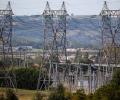
The government on Wednesday put out the draft of a new policy that projects the country's power sector will need Rs 50 trillion in investments by 2032 and Rs 200 trillion by 2047, proposing ambitious reforms in generation, transmission and distribution.

Foreign portfolio investors withdrew over Rs 22,530 crore ($2.5 billion) from Indian equities so far this month amid rising US bond yields and a stronger dollar, continuing their selling streak from last year. This came following an outflow of Rs 1.66 lakh crore ($18.9 billion) recorded in 2025, triggered by volatile currency movements, global trade tensions and concerns over potential US tariffs and stretched market valuations.

Among Sensex firms, Axis Bank, HDFC Bank, Reliance Industries, ICICI Bank, Bharat Electronics and Larsen & Toubro were the biggest laggards. However, Asian Paints, Maruti, Bharti Airtel and Bajaj Finance were among the gainers.

The European Union's (EU's) offer to slash tariffs on 97.5 per cent of Indian chemical exports to zero is set to give India's pharmaceutical and medical device firms preferential access to the European markets.

Retail inflation rose to a three-month high of 1.33 per cent in December 2025 mainly due to higher prices of kitchen essentials, including vegetables and protein-rich items.

Macroeconomic data announcements, global trends and trading activity of foreign investors would be major driving factors for market movement this week, analysts said. Unabated capital infusion by domestic institutional investors have supported the positive trend in the stock market last week, traders said.

The IMF on Monday raised India's growth projection to 7.3 per cent for fiscal 2025-26, up 0.7 percentage point from its October forecast, on the back of better-than-expected performance of the economy. The Washington-headquartered multilateral lending agency has also revised India's Gross Domestic Product (GDP) growth forecast to 6.4 per cent for fiscal year 2026-27 beginning April 1, 2026, from its earlier estimate of 6.2 per cent.

Through policy interventions, Indian cities need to be reimagined as a network of inter-connected assets and services which serve to strengthen the social contract between citizens and their cities by improving their quality of life, the Economic Survey has flagged.

From the Sensex firms, Bharat Electronics, Mahindra & Mahindra, Titan, NTPC, State Bank of India, Adani Ports, Tata Motors Passenger Vehicles and Bajaj Finserv were among the major laggards. Tata Consultancy Services, ICICI Bank, Infosys and HDFC Bank were among the gainers.

Business confidence in India Inc rose to a five-quarter high in December quarter of FY26, amid further reform expectations and steady domestic demand, a survey by industry body Confederation of Indian Industry (CII) showed. The CII Business Confidence Index (BCI) rose for the third consecutive quarter to 66.5 in the December quarter from 66 in the preceding September quarter.

Sectoral funds, focused exclusively on public sector banks (PSBs), have delivered the strongest returns among domestic mutual fund (MF) categories over the past six months. However, active banking funds have significantly lagged because of their heavy tilt towards private lenders.

Indian equities declined on Friday, with the benchmark Nifty posting its worst weekly fall since September, as foreign investor sentiment remained weak amid tepid earnings growth and little progress on the India-US trade front.

Gold has emerged as the most stable asset during episodes of geopolitical stress, and crude oil has been more sensitive than others when it comes to regional conflicts and sanctions, according to a report in the Reserve Bank of India's (RBI's) monthly bulletin. Silver and the United States Treasury have showed moderate reactions.

The 2025 contraction marks the steepest decline in both the number of billionaire promoters and their aggregate wealth since 2012.
From the 30-Sensex firms, InterGlobe Aviation, Sun Pharma, Asian Paints, Reliance Industries, Hindustan Unilever, and Tata Steel were among the biggest laggards. However, Trent, UltraTech Cement, Maruti, and Power Grid were among the gainers.
