
India's 500 MWe Prototype Fast Breeder Reactor (PFBR) at Kalpakkam in Chennai has achieved first criticality, marking a significant advancement in the country's nuclear energy capabilities and long-term energy security.

In many ways, this is only the beginning -- of a new chapter in India's nuclear story, and of a future where its vast thorium reserves could finally power its ambitions.

Prime Minister Narendra Modi and US President Donald Trump have vowed to move forward with plans to work together to build US-designed nuclear reactors in India. The decision was made during their meeting at the White House, where they also agreed to significantly expand energy cooperation. The move comes after India announced plans to amend its nuclear liability law and the Atomic Energy Act, which had previously been obstacles to the implementation of the US-India civil nuclear deal.
India on Saturday announced plans to amend its nuclear liability law and set up a nuclear energy mission, a move that came ahead of Prime Minister Narendra Modi's likely visit to the United States.
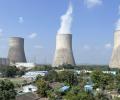
In a significant move, the United States on Wednesday removed restrictions on three Indian nuclear entities, over a week after National Security Advisor Jake Sullivan announced that Washington was finalising steps to 'remove' hurdles for civil nuclear partnership between Indian and American firms.

The Department of Atomic Energy invites applications for its one-year Orientation Course for engineering graduates at the Indira Gandhi Centre for Atomic Research Training School at Kalpakkam as part of the BARC Training School programme.
Two more fast breeder reactors of 500 mega watt electric capacity each would be set up here by 2020, a top official of the Indira Gandhi Centre for Atomic Research said on Tuesday.

'If not, we can become frighteningly chaotic, more chaotic than what we are today.' 'In today's environment in the country, we still have a window of opportunity.'
