
India's eight core infrastructure sectors recorded a two-month high growth of 1.7 per cent in April, primarily boosted by strong performances in steel, cement, and electricity production, according to government data.

India's core sector output contracted by 0.4 per cent in March, marking the first decline in five months, with coal, crude oil, fertiliser, and electricity production falling, according to official data.

Petrol and diesel prices in India have seen their fourth increase in less than two weeks, pushing cumulative hikes to nearly Rs 7.5 per litre since May 15, reaching their highest levels since May 2022. This surge, driven by global crude oil costs and the Iran conflict, is expected to exacerbate inflationary pressures and raise transportation costs across the economy.

Petrol and diesel prices have been increased by Rs 3 per litre each, marking the first hike in over four years, as state-run fuel retailers pass on some of the impact from surging global crude prices, which have been exacerbated by the Iran war.

Production growth in India's eight core infrastructure sectors slowed to a three-month low of 2.3 per cent in February, impacted by contractions in crude oil, natural gas, and refinery products output.

India's eight core infrastructure sectors experienced a slowdown in production growth, reaching a two-month low of 4% in January. Crude oil and natural gas output declined, while refinery products remained flat. Overall growth for the April-January period was also lower compared to the previous fiscal year.

India's eight key infrastructure sectors registered a four-month high growth rate of 3.7 per cent in December last year, driven by a jump in the output of fertiliser and cement, according to official data released on Tuesday.

India's passenger vehicle (PV) industry is projected to experience moderated growth in FY27, following a strong rebound in H2FY26, primarily due to the high base effect, absorbed pent-up demand, and the lingering impact of geopolitical tensions in West Asia.

India's eight key infrastructure sectors grew at a slower pace of 1.8 per cent in November against 5.8 per cent in the same month last year, amid a dip in production of crude oil, natural gas, refinery products, and electricity, according to official data released on Monday.

Aviation fuel prices for domestic airlines remain unchanged, providing stability for local carriers, while commercial LPG and 5-kg cylinders see a significant rate hike due to rising international energy costs.

Analysts predict India will face oil price volatility and macroeconomic effects due to the escalating Iran crisis, though the country's oil supply chain is not yet structurally insecure.

India's economy experienced a growth of 7.8 per cent during the October-December quarter of 2025-26, according to the new series of national accounts with 2022-23 as the base year.

Even as the benchmark and broader indices were down sharply on Monday due to escalating tensions in West Asia, the Nifty Defence index ended the session in the green.
India will restrict crude oil purchases from Russia as part of an agreement reached with the US in exchange for lower trade tariffs, sources said, adding imports will continue for now by refiners such as Nayara Energy, which have no other alternative source. US President Donald Trump announced overnight that the United States will cut the reciprocal tariff on imports of Indian goods to 18 per cent from 25 per cent under a broader bilateral understanding.

India's exports contracted 11.8 per cent to $34.38 billion in October, showed government data released on Monday. Imports jumped 16.63 per cent to $76.06 billion.

The output of eight key infrastructure sectors slowed down to an eight-month low of 0.5 per cent in April due to contraction in the production of crude oil, refinery products and fertiliser. According to official data released on Tuesday, these eight sectors -- coal, crude oil, refinery products, natural gas, steel, cement, electricity and fertiliser -- expanded by 6.9 per cent in April 2024.

The domestic aviation industry is expected to report a net loss of Rs 25,000-26,000 crore this fiscal with elevated jet fuel prices and fare caps continuing to pose a major challenge for the airlines' profitability, domestic rating agency ICRA Ltd said on Thursday. The domestic airlines, however, are likely to post a reduced net loss of Rs 14,000-16,000 crore in the next financial year on the back of a "notable recovery" in air passenger traffic and lower level of debt, ICRA said. The ratings agency also estimates that the industry will require an additional funding in the range of Rs 20,000-22,000 crore during FY22-FY24.

Domestic air passenger traffic touched 1.25 crore in January this year, an increase of 96 per cent compared to the year-ago period, according to rating agency Icra. However, it said the traffic remained around 2 per cent lower compared to the pre-Covid levels -- January 2020. The traffic stood at 64 lakh in January last year. Icra is maintaining a negative outlook on the Indian aviation industry, reflecting the view that the financial performance of Indian airlines is likely to remain under pressure in the near term, even though the recovery in domestic passenger traffic has been healthy.

The output of eight key infrastructure sectors expanded by 2 per cent in September, though the growth was slower than the 9.5 per cent registered in the same month last year, according to official data released on Wednesday. The output of these sectors had contracted by 1.6 per cent in August. Out of the eight key sectors, three -- crude oil, natural gas and electricity -- recorded negative growth in September.
The forthcoming public issue by rating agency ICRA Ltd will see State Bank of India diluting its stake in the company by a nominal 0.21 per cent, but the meagre divestment has larger implications on both the entities.

India's exports declined for the fourth month in a row in February to $36.91 billion due to volatility in petroleum prices and global uncertainties. The country's exports stood at $41.41 billion in the same month a year ago.
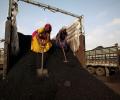
The growth in production of eight key infrastructure sectors entered a negative zone after three-and-a-half years, contracting 1.8 per cent in August 2024 due to decline in output of coal, crude oil, natural gas, refinery products, cement and electricity, according to official data released on Monday. The growth rate was 6.1 per cent in July. The growth of core sectors -- coal, crude oil, natural gas, refinery products, fertiliser, steel, cement and electricity -- was 13.4 per cent in August 2023.

Further relaxation in aircraft capacity deployment coupled with festive season air travel demand helped recovery in the domestic traffic with passenger volume seeing 22 per cent sequential growth in the previous month, ratings agency ICRA said on Wednesday. ICRA also said that the November domestic passenger traffic was close to 50 per cent of the domestic air travel demand in November 2019. The recovery in international passenger traffic, however, is likely to further get delayed in the wake of fresh travel curbs by select countries following the detection of a new virus strain in the UK, it said.
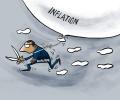
Wholesale price based inflation declined to a 3-month low of 1.89 per cent in November on cheaper food items, and experts predicted a 0.25 per cent interest rate cut by the RBI in the policy review in February. The Wholesale Price Index (WPI) based inflation was 2.36 per cent in October 2024. It was 0.39 per cent in November, last year. In August, 2024, it was 1.25 per cent.
The growth in production of eight key infrastructure sectors slowed down to a 20-month low of 4 per cent in June this year due to a decline in the output of crude oil and refinery products, according to official data released on Wednesday. The core sectors' production grew by 6.4 per cent in May 2024. The growth of core sectors -- coal, crude oil, natural gas, refinery products, fertiliser, steel, cement and electricity -- was 8.4 per cent in June 2023.
The growth of eight key infrastructure sectors rose to 5.2 per cent year-on-year in March due to improvement in the output of crude oil, cement and electricity, according to official data released on Tuesday. In 2023-24, the growth rate in the output of these eight sectors was 7.5 per cent, marginally down from 7.8 per cent recorded in the year-ago period.

In three separate but similarly-worded orders, Sebi said the default by IL&FS occurred due to "lethargic indifference and needless procrastination and laxity" of the rating agencies.
The eight key infrastructure sectors' growth rose by 6.3 per cent in May on healthy expansion in the production of coal, natural gas, and electricity, though the growth rate is lower than in April, according to official data released on Friday. The production of the eight sectors grew 6.7 per cent in April. The growth of these core sectors -- coal, crude oil, natural gas, refinery products, fertiliser, steel, cement and electricity -- was 5.2 per cent in May 2023.
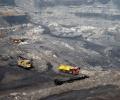
The 17 rare earth elements that are at the centre of the current crisis are critical components of everyday products -- from cars to jet engines to electronics like smartphones and flat-screen TVs.

Soaring vegetable prices pushed the retail inflation rate to a nine-month high of 5.49 pr cent in September, according to government data released on Monday. The consumer price index (CPI)-based retail inflation rate was 3.65 per cent in August and 5.02 per in September 2023. The previous high inflation rate was witnessed in December 2023 at 5.69 per cent.

The small finance bank model may still be testing the water some 10 years since its launch. According to banking experts, the regulator has taken a cautious approach in granting approvals. Unity Small Finance Bank was the last one to get a licence in the category in November 2021.

The growth of eight key infrastructure sectors slowed to a 14-month low of 3.8 per cent in December 2023, on account of poor performance of sectors like crude oil, electricity, steel and cement, according to the official data released on Wednesday. The core sector (coal, crude oil, natural gas, refinery products, fertiliser, steel, cement and electricity) growth in November was 7.9 per cent. It was 8.3 per cent in December 2022.

The growth of eight key infrastructure sectors slowed down to 4.3 per cent in May 2023 due to a decline in the production of crude oil, natural gas and electricity, according to the data released by the government on Friday. The core sector growth was 19.3 per cent in May 2022, while in April 2023, the key infra sectors recorded a growth rate of 4.3 per cent. During April-May this fiscal, the output growth of these eight sectors slowed down to 4.3 per cent against 14.3 per cent in the year-ago period, the data showed.

The government has slashed by up to 20 per cent the supplies of cheaper domestically produced natural gas to city retailers -- a move that may result in Rs 4-6 per kg hike in the price of CNG sold to automobiles, unless excise duty on the fuel is cut, sources said. Natural gas pumped from below the ground and from under the seabed from sites ranging from the Arabian Sea to Bay of Bengal within India is the raw material that is turned into CNG for sale to automobiles and piped cooking gas to households.

US strikes on Iran's three main nuclear facilities have once again raised concerns that Tehran might shut down the Strait of Hormuz - one of the world's most critical chokepoints, through which a fifth of global oil and gas supply flows.

India's economic growth slowed to near two-year low of 5.4 per cent in the July-September quarter of this fiscal due to poor performance of manufacturing and mining sectors, but the country continued to remain the fastest-growing large economy, data showed on Friday. The gross domestic product (GDP) had expanded by 8.1 per cent in the July-September quarter of 2023-24 fiscal. The previous low level of GDP growth at 4.3 per cent was recorded in the third quarter (October-December 2022) of financial year 2022-23.

The Reserve Bank of India on Wednesday decided to keep the policy rate unchanged for the tenth time in a row but changed its stance to 'neutral' that may lead to a cut in the forthcoming policies. RBI maintained status quo despite the US Federal Reserve lowering the benchmark rates by 50 basis points last month.
