
Among Sensex stocks, Kotak Mahindra Bank, Bajaj Finance, Axis Bank, Power Grid, IndusInd Bank, Maruti, Bajaj Finserv and NTPC were the biggest gainers. However, Eternal, ICICI Bank, Titan, Mahindra & Mahindra, Adani Ports, Tata Steel and Bharti Airtel were among the laggards.

Titan, HCL Tech and State Bank of India were also among the laggards. However, Hindustan Unilever, Asian Paints, ICICI Bank, Power Grid, HDFC Bank and ITC were the gainers.
From the Sensex firms, Bajaj Finance, Infosys, Hindustan Unilever, ICICI Bank, HCL Tech, UltraTech Cement, Bajaj Finserv, State Bank of India, Tata Consultancy Services, Reliance Industries, Axis Bank and Larsen & Toubro were among the major gainers. However, Trent, Tata Steel, Tech Mahindra and Maruti were among the laggards.
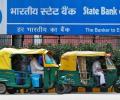
State Bank of India (SBI), the largest lender in the country, has launched a share sale to institutional investors to raise upto Rs 25,000 crore, the biggest qualified institutional placement (QIP) so far by an Indian firm, and has set a floor price of Rs 811.05, which is at a 2.5 per cent discount on Wednesday's closing price.
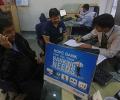
HDFC Bank on Tuesday said RBI has given approval to the group to acquire up to 9.5 per cent stake each in six lenders, including ICICI Bank and Axis Bank.

The top 20 fund houses held 6.8 per cent of their portfolios in cash as of May 31, down from a record high of 7.2 per cent in April 2025.

From the Sensex pack, HCL Tech, Infosys, Tech Mahindra, Reliance Industries, Bajaj Finserv, ICICI Bank, Tata Motors and Eternal were the lead gainers. Power Grid, Adani Ports, IndusInd Bank, Nestle, HDFC Bank and Hindustan Unilever were among the laggards.

Treasury gains helped ICICI Bank post a nearly 10 per cent increase in the consolidated net profit for the April-June quarter at Rs 11,696 crore on Saturday. Growth in the core income slowed for the country's second largest private sector lender, but the treasury operations helped it report a 14.62 per cent rise in its post-tax profit at Rs 11,059 crore on a standalone basis. The core net interest income (NII) growth came at a multi quarter low of 7.3 per cent to Rs 19,553 crore for the reporting quarter.

Many high-profile IPOs in India since 2021 have destroyed investor wealth due to overvaluation, weak business models, and post-listing disinterest, turning 1 lakh investments into as little as 3,500.
Bharti Airtel, ICICI Bank, Eternal, Mahindra & Mahindra, HCL Technologies, HDFC Bank, Kotak Mahindra Bank, Tata Consultancy Services and Bajaj Finance were also among the laggards.
IndusInd Bank, Nestle, UltraTech Cement, Mahindra & Mahindra, Power Grid, Asian Paints, Sun Pharma and Tech Mahindra were also among the laggards. Bajaj Finance, Bharti Airtel, ICICI Bank, Adani Ports and HCL Tech were among the gainers.
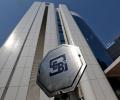
Sebi aims to stay proactive as HFT and quant firms like Citadel Securities, Optiver, Millennium, and IMC Trading are expanding rapidly in India, which is home to the world's largest derivatives market by contracts traded.

The combined market valuation of the top-ten most valued firms jumped by a whopping Rs 3,84,004.73 crore in the holiday-shortened last week, in-tandem with a smart rally in equities, with HDFC Bank and Bharti Airtel emerging as the biggest gainers. Last week, the BSE benchmark Sensex jumped 3,395.94 points or 4.51 per cent, and the NSE Nifty surged 1,023.1 points or 4.48 per cent.

From tackling visa woes to admission counselling, rediffGURU Dr Karan Gupta helps you choose the right course and country to study abroad.

Indian equity benchmarks rose nearly 2 per cent on Thursday, capping a truncated trading week with their strongest weekly performance in over four years. The rally was sparked by renewed risk-on sentiment following progress in trade negotiations and expanded tariff exemptions.

Among Sensex firms, Bajaj Finserv, Tata Steel, Sun Pharma, Tech Mahindra, Bajaj Finance, NTPC, Nestle, Tata Motors, Hindustan Unilever and Mahindra & Mahindra were the biggest gainers. IndusInd Bank, Kotak Mahindra Bank, Power Grid and ITC were among the laggards.
From Sensex firms, Eternal dropped the most by 4.10 per cent. Maruti, Mahindra & Mahindra, UltraTech Cement, Power Grid, Nestle, Bajaj Finance, Hindustan Unilever and Asian Paints were also among the laggards. HDFC Bank dropped by 1.26 per cent and index major Reliance Industries by 1.13 per cent. Tata Steel, Infosys and ITC were the gainers.

Early-bird results for the January-March 2025 quarter (Q4FY25) suggest a slowdown in earning growth for India Inc, despite a benign cost environment that has led to an improvement in margins. The combined net profit (adjusted for exceptional gains and losses) of 175 early-reporting companies rose by 3.8 per cent year-on-year (Y-o-Y) in Q4FY25, marking the slowest growth in 17 quarters.

From the Sensex constituents, Tata Steel, Bajaj Finance, Bharti Airtel, Adani Ports, Eternal, Bajaj Finserv, NTPC, HDFC Bank, Reliance Industries and Axis Bank were among the major gainers. In contrast, Trent, State Bank of India, Tech Mahindra, Maruti and Mahindra & Mahindra were among the laggards.

From the Sensex pack, ITC, Hindustan Unilever, Mahindra & Mahindra, HDFC Bank, Eternal, Kotak Mahindra Bank, State Bank of India and ICICI Bank were the major gainers. IndusInd Bank, Power Grid, Bharti Airtel, Infosys, and Bajaj Finserv were among the laggards.

'People are fed up with rising crimes and poor law and order.' 'Modi must have got feedback and decided not to touch the 'jungle raj' issue as it will backfire.'

The Central Bureau of Investigation (CBI) on Wednesday told a special court here that it received a sanction from the ICICI Bank's board to prosecute Chanda Kochhar, the former CEO and MD of the bank, in connection with a case of alleged cheating and irregularities in loans sanctioned by the bank to Videocon Group companies. The probe agency, represented by special public prosecutor A Limosin, told the court that the board of ICICI Bank in a resolution passed on April 22 this year gave its sanction to the prosecution (against Kochhar), accepting that there seemed to be quid pro-quo.
From the Sensex pack, HDFC Bank, Maruti, Tech Mahindra, HCL Tech, ITC, ICICI Bank, Kotak Mahindra Bank and Bajaj Finance were among the biggest laggards. NTPC, Adani Ports, Mahindra & Mahindra, Tata Steel and IndusInd Bank were among the gainers.

If nominees pass away, distribution is governed by succession laws of insured's religion.

HCL Tech, Adani Ports, Eternal, Maruti, Reliance Industries and Asian Paints were among the gainers. HDFC Bank, ICICI Bank, Bharti Airtel and Infosys added to the rally. IndusInd Bank emerged as the only laggard.

The Central Bureau of Investigation has arrested former ICICI Bank CEO and MD Chanda Kochhar and her husband Deepak Kochhar in connection with alleged cheating and irregularities in loans sanctioned by the bank to the group in 2012, officials said on Friday. The CBI had booked Chanda Kochhar, her husband and Venugopal Dhoot of Videocon Group, along with companies Nupower Renewables, Supreme Energy, Videocon International Electronics Ltd and Videocon Industries Limited, as accused in the FIR registered under IPC sections related to criminal conspiracy and provisions of the Prevention of Corruption Act, they said.
The Central Bureau of Investigation on Monday told a special court here that former ICICI Bank CEO and MD Chanda Kochhar misappropriated the lender's funds for personal use. The probe agency, represented by special public prosecutor A Limosin, made this argument while urging the special court to take cognizance of the chargesheet filed against Chanda Kochhar, her husband Deepak Kochhar and others in a case pertaining to cheating and irregularities in sanctioning of loans to Videocon Group firms. Chanda Kochhar was MD and CEO of ICICI Bank between May 2009 and January 2019 in which capacity she was entrusted with the Bank's funds, the CBI told court.
The CBI has filed a charge sheet against former MD and CEO of ICICI Bank Chanda Kochhar, her husband Deepak Kochhar and Videocon Group founder Venugopal Dhoot in a Rs 3,250 crore loan fraud case, officials said on Saturday. The agency has filed the charge sheet under sections 120-B (criminal conspiracy) and 409 (criminal breach of trust) of the Indian Penal Code (IPC) and provisions of the Prevention of Corruption Act, among others, they said. The Central Bureau of Investigation (CBI) has named nine entities, including companies and individuals, according to the officials.

The RBI on Monday said state-owned SBI, along with private sector lenders ICICI Bank and HDFC Bank continue to be Domestic Systemically Important Banks (D-SIBs) or institutions which are 'too big to fail'. SIBs are perceived as banks that are 'too big to fail (TBTF)'. This perception of TBTF creates an expectation of government support for these lenders in times of distress.

rediffGURU Jinal Mehta answers readers' financial planning and health insurance queries

Stock market benchmark indices Sensex and Nifty tumbled over 1 per cent each on Friday as tensions soared between India and Pakistan, fuelling fears of a wider conflict.
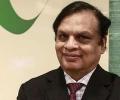
A special court here on Thursday rejected Videocon founder Venugopal Dhoot's plea which claimed that his arrest by the Central Bureau of Investigation in the alleged loan fraud involving former ICICI Bank CEO and MD Chanda Kochhar was illegal. The CBI court also rejected applications of Chanda Kochhar and her husband Deepak Kochhar for home food, beds, mattresses and chairs. The court directed jail authorities to provide them diet food in consultation with the medical officer.

The CBI on Monday arrested Videocon group founder Venugopal Dhoot in connection with the ICICI Bank loan fraud case, officials said. The 71-year-old Dhoot was arrested from Mumbai, nearly three days after former CEO and MD of the ICICI Bank Chanda Kochhar and her husband Deepak Kochhar were taken into custody by the CBI, they said.
ICICI Bank reported good results for the October-December 2023 quarter (Q3), with 24 per cent year-on-year (Y-o-Y) growth in profit after tax (PAT). Net interest margin (NIM) dropped 10 bps quarter-on-quarter (Q-o-Q) to 4.43 per cent. Credit growth was at 19 per cent Y-o-Y (4 per cent Q-o-Q), while deposit growth was at 19 per cent Y-o-Y (3 per cent Q-o-Q).

The claims will include three kinds of liabilities: Damage to the aircraft; loss of lives who were aboard the aircraft; including the crew members; and third-party liability because of loss of lives where the aircraft crashed; and cargo liability.

From the Sensex firms, Eternal, ICICI Bank, Bharti Airtel, Sun Pharma, State Bank of India, Bajaj Finserv, Kotak Mahindra Bank and Reliance Industries were among the biggest gainers. Tech Mahindra and Maruti were the laggards.

ICICI Bank was the biggest loser in the Sensex pack, slipping 2.81 per cent, followed by Mahindra & Mahindra, State Bank of India, UltraTech Cement, IndusInd Bank, Kotak Mahindra Bank, Tata Motors, Bajaj Finserv, Axis Bank and Power Grid. Tech Mahindra, Bharti Airtel, Infosys, Asian Paints, Hindustan Unilever, Larsen & Toubro and Titan were the gainers.

Corporate earnings from blue-chips like HDFC Bank, ICICI Bank, Donald Trump's swearing-in as the US President, and trading activity of foreign investors are the key factors to drive equity markets this week, analysts said. Trump will be sworn in as the US president for a second term on Monday. This week, several key Nifty-50 companies, including BPCL, HDFC Bank, Hindustan Unilever, Dr Reddy's, UltraTech Cement, JSW Steel and ICICI Bank are scheduled to announce their financial results.

Even if you have a comprehensive motor insurance policy, it may not provide sufficient protection against monsoon-related risks.

However, Tata Consultancy Services, Infosys, Tech Mahindra, UltraTech Cement, IndusInd Bank, Hindustan Unilever and ICICI Bank were the gainers.
