When dialogue fails, protest becomes inevitable.
In a democracy, protest is often the only language left once institutions stop listening, explains Ramesh Menon.

The July-September quarter (Q2) performance of consumer electricals and durables major Havells India in 2025-26 (FY26) was broadly in line with Street estimates. While the top line was supported by robust growth in the wire and cable, switchgear, and lighting segments, the consumer durables segment restricted overall gains.

Havells India, the country's largest listed consumer electrical company, reported a mixed performance in the 2024-25 (FY25) October-December quarter (Q3). While the top line benefited from festival demand, lower margins impacted operational performance.

Indian stock markets are set to be influenced by ongoing developments in the US-Iran conflict, fluctuations in crude oil prices, and the latest quarterly earnings reports from major corporates, with foreign investor activity also playing a crucial role.

The July-September quarter (Q2) results for 2024-25 (FY25) from the largest listed consumer electrical solutions companies, Havells India and Polycab India, followed similar trends, demonstrating robust revenue growth while falling short of profitability expectations. Both companies witnessed overall growth in the 16-30 per cent range, but margins declined by 130-290 basis points (bps) year-on-year (Y-o-Y). Although brokerages are bullish on long-term prospects and have raised revenue projections, earnings forecasts have been revised downward due to margin pressures.
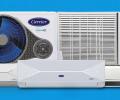
Sri City in Andhra Pradesh is dubbed the "Cooling City" of India, accounting for nearly 40 per cent of the air conditioners (ACs) manufactured in the country. On Tuesday, this industrial hub added one more feather to its cooling credentials. Carrier Air Conditioning and Refrigeration Ltd, the Indian arm of the oldest AC company in the world, Carrier Global, signed a deal to invest around ~1,000 crore for a new manufacturing unit at Sri City.

However, the Polycab share price is up by nearly 80 per cent while Havells' has risen by 39 per cent. The Sensex has gained 26 per cent in this period. The Q1FY25 results were in line for both companies.

Prices of televisions are expected to rise by 3-4 per cent from January next year on account of the rising cost of memory chips and depreciation of the rupee, which recently crossed the 90-to-a-dollar mark for the first time.

Electrical Consumer Durable (ECD) companies like Havells India have seen strong Q4FY24 sales and continuing seasonal demand across fans, air coolers, and room air conditioners (RAC) in addition to business-to-business sales of cables, switchgear, and professional lighting, among others. Havells India's Q4FY24 revenue rose 12 per cent year-on-year (Y-o-Y) to Rs 5,400 crore, in-line with consensus. Strong summer demand led to robust volume growth in fans and RAC and volume growth in cable and wires (C&W) due to infrastructure spending and real estate activity.

For LG Electronics India, the Rs 11,607 crore initial public offering (IPO) is not just a fundraising exercise. The company's senior executives describe it as a step towards becoming "future-ready", showcasing financial strength while preparing for the next phase of growth in a market they see as still underpenetrated.

The proposed reforms in goods and services tax (GST) announced by the government last week, coupled with the eighth pay commission dole-out, is likely to push consumption-driven stocks - such as air conditioners (ACs), select automobiles, fast-moving consumer goods (FMCG), retail, and counters of quick-service restaurants (QSRs) - into higher orbit over the next few months, believe analysts.

The appliance makers expect a good churn in the festive season, led by the government's proposal to reduce the GST slab on air-conditioners from the current 28 per cent to 18 per cent, which will reduce the price from Rs 1,500 to Rs 2,500 depending on the models.

Interview with Qimat Rai Gupta, who in 1958, began as an electrical goods trader in Delhi, with practically no capital. Today, his company is India's largest electrical products manufacturer, with facilities across India, Europe, Latin America and Africa.
Some of the key names include: Maruti, M&M, Ashok Leyland, Britannia, Ultratech, JK Cement, Havells, Voltas, Amber, Metro, Trent, LemonTree, Indian Hotels, Niva Bupa, HDFC Life, IGL, Acme Solar, Suzlon, Swiggy, Delhivery, ICICI Bank, HDFC Bank, Bajaj Finance, Shriram Finance," according to a report by Motilal Oswal Financial Services.

What has paid in the long run is the continuous investment in technology.

Power and electrical equipment company Havell's has announced to acquire $594-million SLI Sylvania lighting business at an aggregate purchase price of $300 million in an all-cash deal.
Havell's India Ltd, the power distribution equipment maker, on Monday said it has bagged two orders worth $6.5 million from a British and a Spanish company.

Havells will acquire the entire consumer business infrastructure, people and distribution network. Plus all intellectual property of the Lloyd brand, logo, trademark and attendant rights.
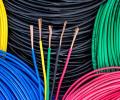
After cement, billionaire Gautam Adani's group and Kumar Mangalam Birla's Aditya Birla Group are set for a face-off in the wires and cable business with both conglomerates announcing forays into the high double-digit growth sector.
Former Czech Republic president Vaclav Havel, one of the leading anti-Communist dissidents of the 1970s and 1980s, died at the age of 75, Czech Television announced on Sunday.

10 largecaps stocks which stand to gain from the Budget.

Havells tries to pep up the low-key electrical products category with new ads.
QRG Enterprises, promoters of the leading electric and power distribution equipment maker Havells India, has forayed into healthcare service segment.
India's largest cable and wire manufacturer Polycab India ended financial year 2024-25 (FY25) on a high, delivering another strong quarter of double-digit growth and market share gains. This coupled with margin expansion, operating breakeven for its fast-moving electrical goods (FMEG) business, and steady exports outlook for FY26 is expected to support the stock, which is up 18 per cent over the past month. The stock is currently trading at Rs 5,765 a share.

The watchdog feels that the claims are not real.

Brokerages expect a further slowdown in Indian firms' revenue and earnings growth in Q4FY25, following low single-digit growth in the preceding three quarters, as factors like weak consumer demand and credit growth linger on.

As Ayodhya readies itself for the glittering, much-awaited consecration ceremony of the Ram Mandir on January 22, and as millions of pilgrims and devotees pour into the holy city for the momentous event, companies are rushing to do their bit and be a part of the mega celebrations. Some are offering a part of their profits as donations, telcos are beefing up the number of cellular towers to ensure better connectivity, and there are those distributing jalebis and food platters.
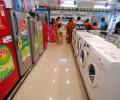
It's all eyes on the consumer durables sector during the festival season after a weak Q1FY24 and Q2FY24 was impacted by an erratic monsoon. Traditionally, this period sees the highest number of purchases. Dealers and manufacturers are complaining about low business-to-consumer (B2C) off-take during the first half.

Nearly 90 per cent of the stocks comprising the National Stock Exchange Nifty 500 Index and 49 of the 50 stocks that make up the Nifty50 are trading above their respective 200-day moving averages (DMAs). The 200-DMA is considered one of the most relevant trend indicators by investors and traders. They believe that stocks and indices trading above this key level exhibit strength and are likely to rally, while those trading below this level are viewed as bearish, with the stock/index expected to see a selloff.

The Q1FY24 earnings season has started on a dismal note for corporate India. The early-bird companies' revenue growth has been at a 10-quarter low, while the combined earnings of non-BFSI (banking, financial services, and insurance) companies seem to have hit the ceiling. The numbers suggest corporate India is entirely dependent on BFSI companies and the IT services sector to drive growth in revenue and profit while other sectors are showing signs of stagnation.

With raw material prices rising sequentially in Q4 FY23, margins of fast moving electrical goods (FMEG) companies could witness pressure as they refrain from hiking prices and demand remains soft. Transition to a new regulatory regime-fans moved to new BEE standards from January 1-poses additional risk for firms. Business depends on volume trends in summer for key sub-segments, which account for a significant chunk of the sector's overall sales pie.
Only a handful of overseas acquisitions by Indian firms have survived the bloodbath, says Bhupesh Bhandari.

The National Stock Exchange (NSE) Nifty Next 50 Index could undergo large-scale changes if the proposed tweaks to its computation methodology get implemented. In a discussion paper floated recently, NSE Indices, which owns and manages a portfolio of over 350 indices under the Nifty brand, proposed that only stocks that are traded in the futures and options (F&O) segment can be part of the index. Currently, as many as 11 non-F&O stocks are part of the Nifty Next 50 Index, which, as the name suggests, represents the next rung of large and liquid securities after the Nifty50.

Qimat Rai Gupta's roots were truly modest. Early in life, he had even sold oil on a cycle in the villages of Punjab.

A central BJP minister claimed that the split in the Shiv Sena in Maharashtra will also have an impact in the Lok Sabha as at least a dozen Lok Sabha members of the outfit, out of the total 19, were ready to switch sides.

IMD expects day temperatures to remain above-normal in select regions across the country between March and May 2021.
The consumer is very conscious of quality, says Qimat Rai Gupta.

As many as 15 companies, including Adani Copper Tubes, LG Electronics and Wipro Enterprises, with committed investment of Rs 1,368 crore, have been selected as beneficiaries under the PLI scheme for the white goods sector, the government said on Tuesday. In March, the commerce and industry ministry had reopened the application window for its Rs 6,238-crore PLI scheme for white goods -- air-conditioners (ACs) and LED lights-- with an aim to accommodate more players as several firms had expressed interest in the initiative. Last year, as many as 46 firms, including Daikin, Panasonic, Syska and Havells, with committed investment of Rs 5,264 crore were selected in the first round the scheme.