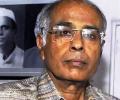
Dabholkar (67), an anti-superstition crusader, was shot dead while on a morning walk on Omkareshwar Bridge here on August 20, 2013.

Hamid Dabholkar, son of the slain rationalist thinker and founder of Maharastra Andhshradha Nirmulan Samiti, said there is a "striking similarity" between the three murders.

The investigating agencies could not expose the masterminds behind the murder of rationalist Dr Narendra Dabholkar, and must introspect whether it was a mere failure or a 'deliberate inaction' due to the influence of any 'person in power', the trial court here said on Friday in its judgment.

'A message was sent to society that those who question dogmas and believe in scientific methods will be silenced.' Hamid Dabholkar tells Neeta Kolhatkar why he is disappointed that his father Narendra Dabholkar's killers have not been arrested yet.

In another development, the CBI submitted in a sealed cover a forensic report from Ahmedabad Forensic Laboratory on ballistic evidence related to the killing of the three rationalists --- Dabholkar, Pansare and Kalburgi.

The Prevention and Eradication of Human Sacrifice and other evil and Aghori practices Act, which faced immense opposition for over seven years, was passed in the Maharashtra State Vidhan Sabha (lower house) on Friday.
'If timely action was taken by the CBI, the other three murders could have been prevented.'

'One after the other, they have committed four murders (Dabholkar, Pansare, Kalburgi, Gauri Lankesh)...' 'They feel they will not have to face the consequences of their actions as it is a favourable time for them.'

Though the list of superstitious beliefs is long, often dissolving distinctions of class, caste, religion and education, Karnataka's anti-superstition bill is seen as a big step ahead.

Acclaimed writer Nayantara Sahgal, the niece of India's first prime minister Jawaharlal Nehru, has returned the prestigious Sahitya Akademi Award to protest against the "vicious assault" on India's diversity and the government's failure to protect cultural diversity.

The writers, artistes, thinkers and academics had gathered for a "resistance" meet (Pratirodh) against what they described as "attack on reason, democracy and composite culture".
 © 2026 Rediff.com - Advertise with us - Disclaimer - Privacy Policy - Sitemap - Feedback - About us - Terms of use - Grievances