
New business premium of life insurance companies grew 18 per cent year-on-year (Y-o-Y) to Rs 35,417 crore in February, driven by robust growth at the state-owned Life Insurance Corporation of India (LIC) due to a favourable base.

Even as non-life insurers reported muted premium growth in October, standalone health insurers saw a robust 38 per cent year-on-year (Y-o-Y) surge. This growth was driven by pent-up demand in the retail health insurance segment.

Both the life and non-life insurance segment posted over 20 per cent premium growth in November for the first time in this financial year (FY26), supported by the reduction in goods and services tax (GST) on premiums from 18 per cent to zero and a favourable base effect.

The Delhi government's Health Department has received an audit report highlighting alleged financial and administrative irregularities within the Delhi Medical Council (DMC) between 2019 and 2025.

As heart disease increasingly impacts young Indians, understanding the complexities of health insurance, including higher premiums, waiting periods, and the benefits of specialised cardiac policies, becomes vital for financial protection.

The four public sector general insurance companies -- New India Assurance, United India Insurance, Oriental Insurance, and National Insurance Company -- have lost 800 basis points (bps) in market share in last five years to their private counterparts, the data from the Insurance Regulatory and Development Authority (Irdai) revealed. In 2018-19, the four had a cumulative market share of 40.04 per cent, with New India Assurance having a market share of 14 per cent and United India Insurance with a market share of 9.63 per cent. But, gradually in the past five years, these state-backed firms have lost their market share to private sector players, due to the declining health of their business.
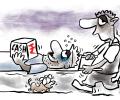
Recent years have been turbulent for the insurance industry due to direct and indirect tax reforms, regulatory overhaul and other external pressures. The events cumulatively slowed growth rate to single digits from the high teens seen earlier.

'Investment by insurers in the Bima Sugam India Federation is illegal as it is a private limited company.'

Finance Minister Nirmala Sitharaman on Tuesday said that raising the FDI limit to 100 per cent in the insurance sector will help attract more capital, improve competition and increase insurance penetration by making policies more affordable.

'It is imprudent on the part of Indian insurance companies to invest out of the shareholders' fund in a private limited company.'

'It has always been viewed as a hedge against inflation.'
New India Assurance and Niva Bupa have invested in the Bima Sugam India Federation.

Health insurance premium growth has slowed after touching record highs during the Covid-19 pandemic due to tapering demand from retail consumers amid affordability issues. According to General Insurance Council data, health insurance premiums grew by 10.44 per cent year-on-year (Y-o-Y) in the Apr-Jan period of FY25 in comparison with 20.79 per cent in the year-ago period. It was around 23.57 per cent in FY23, and 25.89 per cent in FY22.

According to the data compiled by General Insurance Council, which is not publicly available, the insurers have settled 508,334 claims amounting to over Rs 4,800 crore.

While investors would focus on the results and guidance for the third quarter of financial year 2025-26 (Q3FY26) in the normal course of business, the US-Israeli attack on Iran and the latter's retaliation at Gulf allies of the US has forced them to weigh the consequences of the event.

Residents across the Gulf region, including the UAE, Bahrain, and Qatar, experienced fear and disruption following attacks, leading to flight suspensions and heightened security measures.

With the Iran war escalating sharply and crisis deepening in the global energy market, India on Monday unveiled a coordinated plan to support exporters and shippers caught in the fallout.
The Life Insurance Corporation of India has the wherewithal to acquire a composite license, a top source aware of the development told Business Standard, adding that the insurance behemoth may look into entering the health and general insurance segments. "LIC has the scale, capacity, IT infrastructure, and the distribution reach to take advantage of the composite license. "LIC is looking at organic as well as inorganic growth opportunities.

While the costs of auto and home covers have gone down, that of health cover has gone up.

In its master circular on general insurance products, which takes immediate effect, Irdai specified, 'The customer may be required to submit only those documents directly related to claim settlement.'

Following suggestion from Minister for Roads Nitin Gadkari, Centre seeks ideas from IRDAI and General Insurance Council on feasibility of providing insurance cover for retrenchment.
Health premiums have picked up again after a slight moderation in growth, taking the non-life insurance industry's growth to 22 per cent in November, and to almost 17 per cent so far this financial year. Health premiums grew by 22.54 per cent in the April-November period, driven largely by group health plans, which have seen good growth due to rationalisation of discounts in premiums caused by adverse claim ratios in prior periods, medical inflation, and enhanced coverage. Health premiums grew by 29 per cent in the same period last year.
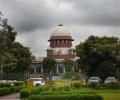
The Supreme Court of India has reprimanded the central government for failing to implement a cashless treatment scheme for road accident victims. The court expressed its concern over the delay in formulating the scheme, which is designed to provide immediate medical care to accident victims within the crucial "golden hour." The court highlighted that despite a statutory provision requiring the scheme's implementation, the government has not taken any action, prompting the court to intervene. The court also criticized the General Insurance Council (GIC) for raising objections to the scheme and delaying its implementation. The court has now directed the government to notify the scheme within a week and has scheduled a hearing on the matter for May 13.
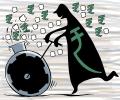
Some of the key names include: Maruti, M&M, Ashok Leyland, Britannia, Ultratech, JK Cement, Havells, Voltas, Amber, Metro, Trent, LemonTree, Indian Hotels, Niva Bupa, HDFC Life, IGL, Acme Solar, Suzlon, Swiggy, Delhivery, ICICI Bank, HDFC Bank, Bajaj Finance, Shriram Finance," according to a report by Motilal Oswal Financial Services.
The code of market conduct is being prepared under the aegis of the General Insurance Council (a self-regulatory body of the 12 non-life insurance companies) in this regard.
In a move that will bring cheer to health insurance policyholders, non-life insurers are finalising the contours of a new product that will have a common minimum standard cover and will be renewable and portable across companies.

Ask rediffGURU and PF expert Milind Vadjikar your insurance, stocks, mutual fund and personal finance-related questions.
The Insurance Regulatory Development Authority of India (IRDA) and non-life insurance companies are working towards setting up a pool for creating a capacity within India to underwrite risks from natural catastrophes.

In the wake of the natural disaster in Uttarakhand, the proposal for 'catastrophe insurance' is in spotlight.

As many as 121,739 claims settled by insurers so far, amounting to Rs 1,165.81 crore.

The new draft guidelines issued by IRDAI proposes a minimum sum assured of Rs 50,000 and a maximum of Rs 5 lakh. A General Insurance Council official said the guidelines were still being worked on and would only be finalised next week.

Unlike other health insurance policies, which mostly covers hospitalisation expenses alone, the specialised cover is likely to include the cost of treatment during quarantine and payment of cash for incidental expenses.

The Insurance Regulatory and Development Authority of India (IRDAI) is considering a proposal to make insurance frauds a parameter for calculating credit scores in an attempt to put a lid on the increase in such activity. The proposal, which is a part of the recommendations made by a working group formed by Irdai and the General Insurance Council, suggests that insurance frauds should feature when the risk profiles of individuals are evaluated and should be used to calculate their credit scores. A poor credit score can deprive a person of financial services such as loans and credit cards, and deter him from indulging in fraud.
Irdai had introduced two Covid specific products in the market - Corona Kavach and Corona Rakshak - that saw huge acceptance among the consumers as these products had lower premiums.

To add to the worry of the insurers, non-Covid claims, which were muted in the initial months of the pandemic, have also picked up pace and are more or less at pre-Covid levels.
While initially, the claim amount was high, it has now moderated with many states prescribing a standard treatment rate for Covid-19. Of the total claims received, nearly 66,000 claims amounting to Rs 628.95 crore have been settled so far.

Govt could cut the GST rate payable every time someone buys a health insurance product; or it could also provide a larger income tax set off for those who buy a health insurance product

'It must become faceless, just as the entire direct tax assessment system has already become fully online, without any human intervention in the normal course,' recommends A K Bhattacharya.

At its heart, the issue is more than compliance. It is the risk of possible breakdown of a strong nexus between insurance firms and motor car dealers that makes the business the top earner for the former.

Even by conservative assumptions that 5 to 10 per cent of infected individuals develop long Covid, India today may be home to 50 to 100 million infected individuals -- many silently coping with breathlessness, fatigue, palpitations, brain fog, or unexplained clotting tendencies.
