
India's ambitious attempt to flight-test its indigenous cryogenic engine on Thursday received a setback as the homegrown rocket Geosynchronous Satellite Launch Vehicle (GSLV-D3) deviated from path within seconds of lift-off.
Indian Space Research Organisation is preparing to launch a geosynchronous satellite launch vehicle (GSLV-D3), powered for the first time by a home-made cryogenic engine, from Sriharikota spaceport this month, its chief K Radhakrishnan said on Friday.
Indian Space Research Organisation is all set for the launch of the first flight-testing of indigenous cryogenic engine on homespun rocket, Geosynchronous Satellite Launch Vehicle (GSLV-D3), from the Satish Dhawan Space Centre at Sriharikota at 4.27 pm on Thursday.
India's top space scientists will be meeting in Thiruvananthapuram on Saturday to analyse the data and find the cause for failure of GSLV-D3 rocket, which was launched for the first time on Thursday using an indigenously made cryogenic engine.
ISRO officials said that the Rs 330 crore mission failed minutes after the rocket lifted off at 4.27 pm. Although they would go ahead with the same mission next year, it is still considered to be a setback since ISRO had planned on using the GSLV rocket for its second moon mission.
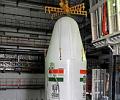
The launch of a Geosynchronous Satellite Launch Vehicle was called off by the Indian Space Reasearch Organisation at the eleventh hour on Monday due to a fuel leak in its second stage -- in a setback to the mission to test its homegrown cryogenic engine -- after its failure three years ago.
