
The Indian government is set to accelerate reforms, including measures to enhance foreign direct investment, speed up divestment, and boost asset monetisation, to maintain economic growth despite rising fuel and fertiliser import costs driven by the West Asia crisis.

The Reserve Bank of India (RBI) and the central government have introduced a package of measures, including tax exemptions for FPIs on government securities and a concessional foreign-exchange swap facility, aiming to attract up to $50 billion in foreign capital. This initiative is designed to strengthen India's balance of payments and potentially cover the projected BoP gap for FY27.

The Reserve Bank of India (RBI) has announced a record surplus transfer of Rs 2.87 trillion to the central government for FY26, driven by increased income and an expanded balance sheet, despite a reduction in the contingent risk buffer (CRB) to 6.5 per cent.

The Indian banking system's net liquidity surplus has reached a four-year high of Rs 4.57 trillion, driven by maturing government securities, with further maturities expected to push the surplus to around 5 trillion.

A prolonged supply shock can transmit to lower incomes, and dampen confidence and sentiment, warns Aditi Nayar, chief economist, head-research and outreach, ICRA.

CRISIL Ratings predicts that the share of bank loans in NBFCs' overall borrowings will increase to 44-45 per cent by FY27, driven by elevated bond yields and softening bank lending rates.

We will explore some of the reasons why a stock-only portfolio may no longer be sufficient and some of the modern alternatives and strategies that can help investors build resilient and profitable portfolios.

* Repo rate reduced by 25bps to 5.25 pc; * 4th rate cut, totalling 125 bps, since February 2025; * MPC also decided to continue with neutral stance; * GDP growth forecast for FY26 raised to 7.3 pc from 6.8 pc;

India's high cost of capital due to relatively shallow corporate bond markets, limited institutional investor depth, sovereign risk premia, and regulatory restrictions on capital flows, is a constraint on private investment and long-run growth, the Economic Survey, authored by Chief Economic Advisor (CEA) V Anantha Nageswaran, said.

The banking sector could see better loan growth in the third quarter of financial year 2026 (Q3FY26) with improved net interest margins (NIMs), though the full impact of latest rate cuts will be largely felt in the fourth quarter. There may be lower slippage in unsecured loans and microfinance institutions (MFIs) along with steady recovery trends, which should lower credit cost.

'...a mix of asset classes.' 'Include equities for growth (across market caps), debt for stability and liquidity, gold as a hedge against macro and currency risk, and global assets for geographical and economic diversification.'

India's inclusion in JP Morgan's bond index can channel billions of dollars into India. How will the government securities market handle it?

With India's inclusion in global bond indices starting next financial year, the central government believes there will be greater scope for shifting to borrowings via long-term government securities (G-sec) from short-term instruments. This change may be factored into the FY25 interim Budget. "While this has been our focus, the inclusion of India in global bond indices gives us the opportunity to accelerate the shift towards longer tenure G-secs," an official said, requesting anonymity.

The government bond yield curve is likely to flatten in the financial year 2027 (FY27) as the Reserve Bank of India (RBI) is expected to ease supply pressure in the ultra-long segment. In FY26 so far, reduced investments by insurance companies and pension funds pushed up yields on ultra-long tenor securities, steepening the curve.
There are, however, a few aspects to factor in before considering G-Secs as an investment option, advises Bindisha Sarang.
'Maintain a balanced approach with a preference for short-to medium-duration funds.'

Following a more than 15 per cent surge in the National Stock Exchange (NSE) Nifty 50 from this year's lows, the spread between the 10-year government security (G-sec) and the Nifty earnings has approached the danger zone of 2 percentage points (ppt). At present, the G-sec yield is roughly 7.09 per cent, while the Nifty earnings are 5.12 per cent. As a result, the spread works out to 1.98 ppt, ever so slightly below the danger mark of 2 ppt.

Saurav Ghosh's step-by-step guide will help you understand what bonds are, how they help investors make money, how much money they make and which bonds to invest in.
India's corporate bond market, driven by public sector undertaking (PSU) banks and financial institutions last year, is losing momentum since the second quarter of FY26.

Foreign investment in bonds issued by Indian corporates touched a 10-year high in May at 20,996 crore, driven by $3.35 billion fundraise by the Shapoorji Pallonji (SP) group, which saw infusion from Deutsche Bank, BlackRock, Morgan Stanley, Davidson Kempner, and Cerberus Capital, among others. The SP group sold three-year bonds, offering 19.75 per cent yield compounded annually and payable at maturity.

Public-sector banks (PSBs) are attracting the attention of investors and the PSU Bank Index has gained nearly 10 per cent in the past month. PSBs have seen return on assets (RoA) climbing to 1 per cent in 2024-2025 (FY25) and margins are believed to have moved up further in the first half of this financial year (H1FY26) with asset quality remaining stable.

'Investing in these funds makes sense if their net yield over better-quality funds -- corporate bond funds or banking and PSU funds -- is meaningful.'

Indian corporate are increasingly shifting away from bank funding towards alternative sources, such as equity and bond markets, as their deleveraged balance sheets have improved their ability to raise equity at better valuations. Moreover, the 100 basis points (bps) rate cut by the Reserve Bank of India (RBI) has enabled them to access long-term funds from the debt capital market at cheaper rates.
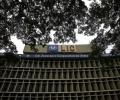
The IPO-bound national insurer LIC is not only the largest holder of government debt -- owning 19 per cent of the G-secs -- but also the single largest owner of equities, the largest fund manger as well as holder of household savings, dwarfing even SBI deposits, as per a report. Holding 17 per cent of the over Rs 80.7 lakh crore dated government securities, maturing by 2061, the Reserve Bank is the second largest holder of government debt, while led by public sector banks, commercial banks collectively own around 40 percent. Other insurers cumulatively own only 5 per cent.

The RBI issues these securities via an auction mechanism through out the year on a calendar schedule.
Global financial firm J P Morgan has said that it plans to include Indian government bonds (IGBs) or government securities (G-Secs) into its benchmark Emerging Market index from next year, a move that will bring down borrowing cost for the government. The inclusion of the IGBs will be staggered over a 10-month period from June 28, 2024 to March 31, 2025, indicating one per cent increment on its index weight. "India's weight is expected to reach the maximum weight threshold of 10 per cent in the GBI-EM Global Diversified, and approximately 8.7 per cent in the GBI-EM Global index," J P Morgan said in a statement on Friday.
The introduction of tax deducted at source (TDS) on income from central government securities and state bonds may not lead to a significant effect on retail participation, according to market participants. The Union Budget proposed that starting October 1, 2024, investors may face a 10 per cent TDS on investments in central government securities and state development loans (SDLs). "Last Budget, TDS on interest on securities was reintroduced.

India's economy is expected to grow 6.4-6.7 per cent during the current financial year driven by strong domestic demand, even as geopolitical uncertainty poses downside risks, the newly appointed CII president Rajiv Memani said on Thursday.

The cap in G-Secs and corporate bonds now stands at $10 billion and $20 billion, respectively (up from $5 billion and $15 billion).
Banks are preferring instruments with higher premium over government securities for their held-till-maturity (HTM) portfolio, following the new investment norms, which came into effect from April 1. They are stocking up on corporate bonds and state government securities to boost yield on their portfolio, according to market participants. "Definitely, if there is a good spread available and without lower credit risk, those instruments will be favoured to boost the yield on the portfolio.

Markets regulator Sebi has launched a centralised database portal for corporate bonds in a bid to create a single, authentic source of information on such securities. The portal -- Bond Central-- has been developed by Online Bond Platform Providers Association (OBPP Association) in collaboration with Market Infrastructure Institutions (MIIs) comprising stock exchanges and depositories.
G-secs offer good liquidity, high safety. If the interest rate dips, as is widely expected, these could give you higher gains.
The Reserve Bank of India has permitted sale of government securities already contracted for purchase with effect from April 2, subject to certain conditions.
Securities and Exchange Board of India may soon launch a full-fledged investigation into the alleged violation of mutual funds regulations by JM Mutual Fund while dealing in government securities.

By taking the mutual fund route, investors can take exposure to gilts with small amounts. Over a decade or more, returns from these funds tend to be sound.

With the RBI infusing Rs 7.5 lakh crore in liquidity -- and possibly more in the future -- the short- to medium-term corporate bond market is expected to benefit.
The savings in interest outgo through the government securities buyback is likely to decline after 2006.
Stemming from the default of IL&FS in September, on various debt instruments including commercial papers, bonds and loans, the financial sector has been facing a liquidity crunch for the last eight to ten weeks.
Finance Minister Jaswant Singh will launch screen-based retail trading in government securities (G-sec) on the stock exchanges

'Each state is unique, but when it comes to finance, the fundamentals cannot be different.'
