
Legendary economist and former Federal Reserve chairman Alan Greenspan has died at the age of 100 due to complications related to Parkinson's disease, his wife Andrea Mitchell confirmed.
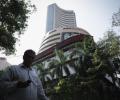
Indian benchmark equity indices, Sensex and Nifty, experienced a decline in early trade, primarily due to a sell-off in IT stocks and growing concerns over potential interest rate hikes by the US Federal Reserve. Track, Sensex, Nifty on November 19, 2026.

Citing India's 7 percent GDP growth rate and low interest rates by the central bank (RBI), US President Donald Trump on Friday (local time) criticised the American central bank for keeping borrowing costs high, arguing that the US economy could achieve growth of 15 to 20 per cent if interest rates were lowered.

Indian benchmark equity indices snapped a two-day rally, with the Sensex falling over 500 points and the Nifty settling below 25,230, driven by profit-taking and global market bearishness fueled by US Federal Reserve rate hike speculations.

Indian benchmark equity indices, Sensex and Nifty, experienced a decline in early trade due to elevated crude oil prices, ongoing geopolitical uncertainties, and investor caution ahead of the US Federal Reserve's policy decision later this week. Track Sensex, Nifty on October 26.

Indian stock markets are set to be influenced this week by a confluence of factors including quarterly corporate earnings, the US Federal Reserve's interest rate decision, fluctuations in crude oil prices, and ongoing geopolitical developments in West Asia.

Indian benchmark indices Sensex and Nifty experienced a significant drop in early trade, primarily due to a sell-off in IT stocks, a surge in crude oil prices, and investor caution ahead of the US Federal Reserve's policy decision.

Indian benchmark indices, Sensex and Nifty, closed largely unchanged after a volatile trading session, influenced by persistently high crude oil prices, selling pressure in major bank stocks, and investor caution ahead of the US Federal Reserve's policy decision.
Indian benchmark indices Sensex and Nifty closed lower, primarily due to declines in Reliance Industries and IT sector stocks, coupled with rising crude oil prices and investor caution ahead of the US Federal Reserve's policy decision.

Gold prices in India are projected to reach Rs 1.60-1.68 lakh per 10 grams over the next 6-12 months, driven by sustained investment demand, central-bank purchases, and global economic and geopolitical uncertainties, according to a report by Motilal Oswal Financial Services Ltd (MOFSL).

Indian benchmark indices Sensex and Nifty saw a significant rebound in early trade, with the Sensex surging over 700 points, driven by a decline in crude oil prices, easing concerns over Federal Reserve tightening, and the appointment of Anup Bagchi as the new MD and CEO of HDFC Bank.
Indian benchmark equity indices, Sensex and Nifty, closed higher on Monday, driven by softer-than-expected US jobs data which reduced expectations of aggressive monetary tightening by the US Federal Reserve, boosting risk appetite across emerging markets.

Indian benchmark indices, Sensex and Nifty, experienced declines in early trade due to persistently high crude oil prices and significant selling pressure in IT stocks, with global factors like US bond yields and upcoming Federal Reserve decisions also contributing to cautious investor sentiment. Track Sensex, Nifty on October 27.

Indian benchmark indices, Sensex and Nifty, saw an early rebound after significant losses, driven by value buying, though elevated oil prices and anticipation of the US Federal Reserve's policy decision tempered gains. Track Sensex, Nifty on September 16.

Foreign portfolio investors (FPIs) withdrew Rs 34,843 crore from Indian equities in October, marking the second consecutive month of heavy outflows due to concerns over crude oil prices, global interest rates, and corporate earnings. However, a notable shift occurred towards the end of the month, with FPIs turning net buyers and infusing approximately Rs 6,300 crore between October 26-30.

Indian benchmark indices, Sensex and Nifty, closed nearly flat on Thursday, influenced by the US Federal Reserve's interest rate hike and indications of further monetary tightening. Despite some intraday gains, caution prevailed, with foreign institutional investors continuing to offload equities. Meanwhile, the National Stock Exchange of India's (NSE) mega initial public offering opened for subscription, garnering 39 per cent subscription on its first day.

Indian benchmark equity indices, Sensex and Nifty, saw gains in early trade, primarily driven by strong buying in Reliance Industries and sustained foreign fund inflows. Adani Ports also emerged as a significant gainer after reporting an 18 per cent rise in consolidated net profit. Track Sensex, Nifty on October 29.

Indian benchmark indices, Sensex and Nifty, traded marginally higher in early trade despite the US Federal Reserve's recent rate hike and indications of further tightening, with the National Stock Exchange's much-anticipated Rs 22,569-crore IPO also opening for subscription.

Indian benchmark equity indices, Sensex and Nifty, rallied in early trade, driven by positive global market trends and easing crude oil prices, despite the US Federal Reserve's hawkish stance tempering overall sentiment. Track Sensex, Nifty on September 18.

Indian benchmark indices, Sensex and Nifty, closed marginally lower due to elevated crude oil prices, fresh US-Iran tensions, and expectations of a tighter monetary policy from the US Federal Reserve, despite strong domestic GDP growth.

Indian equity markets, led by the Nifty 50, saw gains following a pullback in Brent crude prices towards $101-102 a barrel and weaker-than-anticipated US jobs data, which eased concerns about a Fed rate hike. However, analysts caution that markets are likely to remain volatile in the near term.
Indian benchmark indices, Sensex and Nifty, experienced declines in early trade due to elevated crude oil prices, escalating US-Iran hostilities, and renewed concerns over a potential US interest rate hike.

New investors should avoid a lumpsum investment after last year's big rally. Limit gold to 5 to 10 per cent of the portfolio and hold for 5 to 10 years.

Indian government bond yields have recorded their worst losing streak in three decades, rising for the tenth consecutive week, driven by elevated crude oil prices and increasing global yields. The rupee also weakened, and India's foreign exchange reserves saw a significant decline.

Gold and silver prices are expected to remain range-bound this week as investors await crucial US economic data, including the non-farm payrolls report, and further signals from the Federal Reserve regarding its interest rate policy.

Analysts predict that geopolitical developments, particularly surrounding the Strait of Hormuz and the US-Iran standoff, along with crude oil prices, will be the primary factors influencing stock market movement in the coming week. Investors will also monitor foreign institutional flows and the Federal Open Market Committee (FOMC) minutes for signals on the Federal Reserve's policy outlook.
Gold and silver prices are expected to continue their upward trend next week, driven by anticipation of key US inflation data and Federal Reserve signals, though profit-booking may occur at higher levels.

Major Indian banks, including Bank of Baroda and Federal Bank, have begun raising interest rates on select fixed deposit (FD) tenures following the Reserve Bank of India's 25-basis points repo rate hike in October, with some special schemes offering up to 7.50% for senior citizens.

Indian stock markets are set to be influenced by a confluence of factors this week, including escalating geopolitical tensions, particularly concerns over US-Iran conflict, volatile crude oil prices, and the ongoing quarterly earnings season. Additionally, the US midterm elections, foreign investor activity, and key macroeconomic data releases will also be closely monitored by investors.

Analysts predict that developments in the West Asia conflict, crude oil prices, and upcoming US inflation data will be the primary factors influencing the Indian stock market next week, alongside foreign investor activity and global market trends.

Gold prices in India extended their losing streak, falling by Rs 1,500 to Rs 1,60,900 per 10 grams, influenced by hawkish remarks from Federal Reserve Chair Kevin Warsh and rising oil prices, which have increased expectations of an interest rate hike.

The Indian rupee experienced its sharpest single-day decline in eight weeks, settling at 94.83 per dollar, primarily due to escalating crude oil prices and persistent risk-off sentiment driven by heightened geopolitical tensions and limited foreign inflows.
Analysts predict that the Indian stock market's sentiment this week will be primarily influenced by the domestic GDP data announcement, crude oil prices, and the crucial US non-farm payrolls report.
Indian benchmark indices Sensex and Nifty rebounded on Wednesday, driven by value buying in banking stocks and select heavyweight counters, with the Sensex climbing 332.63 points and the Nifty ending above 23,200.

Thanking Narendra Modi for his support to the Zoroastrian community over the years, Vada Dasturji Khurshed Dastoor said the community had full faith that whatever decision the PM takes would be 'to the benefit of Bharat and our Zoroastrian community'.

Crude oil prices are set for another volatile week with an upward bias, as ongoing US-Iran negotiations and heightened geopolitical risks, particularly concerning energy shipments through the Strait of Hormuz, continue to influence the market, according to analysts.

Foreign Portfolio Investors (FPIs) have withdrawn Rs 48,056 crore from Indian equities in October, driven by elevated crude oil prices, Middle East tensions, inflation concerns, and weak corporate earnings, though selling pressure moderated towards the end of the month.
Indian benchmark indices Sensex and Nifty experienced declines in early trade, influenced by the Reserve Bank of India's (RBI) recent repo rate hike and its signal for continued monetary tightening, coupled with rising crude oil prices and foreign fund outflows. Track Sensex, Nifty on October 8.

Investors should cap gold allocation at 10-15 per cent and consider staggered purchases through gold ETFs.
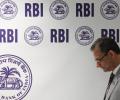
The Reserve Bank of India on Wednesday raised its policy repo rate by 25 basis points to 5.50 per cent, beginning a rate-hike cycle as rising inflation risks, elevated global yields and resilient domestic growth strengthened the case for tighter monetary policy. The decision by the Monetary Policy Committee marks a shift from its August policy, when it kept the repo rate unchanged at 5.25 per cent and retained a neutral stance while seeking greater clarity on the inflation outlook and growth-inflation balance.
