
Fitch Ratings on Friday said persistently higher oil prices could cause India's retail inflation to rise faster than the expected gradual pace, and lead to a slowdown in economic growth in the first half of financial year 2026-27 (FY27).

'The changes in its leadership team will help address the scepticism that has engulfed the bank over the recent period.'

India's wholesale price index (WPI) inflation marginally eased to 9.78 per cent in July 2026, down from 9.87 per cent in June, primarily due to a cooling in the prices of fuel, power, and food items, marking the first month-on-month drop under the new 2022-23 base year.
Tax experts clarify that merchants will pay 18% GST on Merchant Discount Rate (MDR) for UPI payments exceeding Rs 2,000, effective October 15. However, registered merchants can claim Input Tax Credit (ITC), mitigating the tax burden. This move is expected to generate significant GST revenue for the exchequer while funding payment infrastructure.

Indian Hotels Company (IHCL) reported a healthy 14.6 per cent consolidated revenue growth in Q1 FY27, largely driven by a robust 17.6 per cent increase in domestic operations, offsetting geopolitical disruptions. Brokerages anticipate sustained growth, with Motilal Oswal Research projecting 12-14 per cent growth in FY27, supported by strong leisure demand and an asset-light expansion pipeline.

Indian benchmark indices Sensex and Nifty recorded their third consecutive day of gains, primarily driven by an over 8 per cent surge in Bajaj Finance following strong Q1 FY27 results, coupled with significant foreign fund inflows and a dip in crude oil prices.

The Reserve Bank of India (RBI) is widely expected to keep its benchmark repo rate unchanged in the August monetary policy review, with economists citing elevated inflation risks and the pending closure of the FCNR(B) deposit scheme as key factors. Most anticipate a 'Neutral' policy stance but with a hawkish tone due to geopolitical tensions, high crude oil prices, and an uneven monsoon.

The government also proposes to set up risk guarantee fund for infrastructure sector, she added.

The RBI once again said the Tata group holding company's application for deregistration as an NBFC remains under examination.

Divestment has emerged as a priority for the government following a moderation in direct tax collections.

koda Auto Volkswagen India is actively exploring various approaches to penetrate India's burgeoning electric vehicle (EV) market, including importing global models, local assembly, and developing highly localised products, as EV penetration is expected to reach 17-18% by the end of the decade.

Roles that mention AI in software development have grown 138 per cent between Q2 2024 and Q2 2026.

India's trade deficit reached a six-month high of $31.98 billion in July, driven by a sharp increase in imports, particularly crude oil, electronic goods, coal, and fertilisers. Both merchandise exports and imports recorded their second-highest levels during the same period.

Indian IT services firms are expected to report a soft Q1 FY27 performance due to a challenging macro environment, the impact of AI, and geopolitical uncertainties, leading to reduced discretionary spending and slower decision-making cycles, according to Motilal Oswal Financial Services.

Indian Hotels Company Ltd (IHCL) is expected to benefit from higher room rates, rising occupancy, and strategic acquisitions, with analysts projecting double-digit revenue growth for FY27 driven by strong domestic demand and a favourable demand-supply dynamic.

FSN E-Commerce Ventures (Nykaa) reported nearly 30 per cent year-on-year revenue growth in Q1FY27, marking its highest revenue growth in 13 quarters, primarily driven by accelerated expansion in its fashion segment.

Eternal's quick commerce platform, Blinkit, significantly outperformed in Q1 FY27, with net order value (NOV) rising 19.1 per cent quarter-on-quarter, indicating strong market share gains driven by increased monthly transacting users and transaction frequency.

Manappuram Finance has announced the appointment of Ashish Singh as its new managing director and chief executive officer, effective January 1, 2027, marking a significant shift from its family-led governance structure.
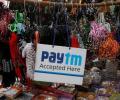
Paytm's parent company, One 97 Communications Ltd, has seen its domestic ownership increase to 51.6% in Q1 FY27, solidifying its status as an Indian-Owned and Controlled Company. This rise is driven by increased investments from mutual funds and insurance companies, reflecting growing investor confidence following Paytm's first full-year profit in FY26 and improved operating performance.
Paytm's parent company, One 97 Communications Ltd, has seen its domestic ownership increase to 51.6% in Q1 FY27, solidifying its status as an Indian-Owned and Controlled Company. This rise is driven by increased investments from mutual funds and insurance companies, reflecting growing investor confidence following Paytm's first full-year profit in FY26 and improved operating performance.

India's fresh investment plans in Q1FY27 surged 71 per cent to 14.77 trillion, primarily driven by four large nuclear power projects worth 6.5 trillion, according to investment monitoring firm Projects Today. Excluding these nuclear projects, fresh investment plans actually declined 4.27 per cent quarter-on-quarter.

In August, Hyundai recorded its highest ever domestic sales for the month with 54,396 units sold, marking a 23.6 per cent Y-o-Y increase. The Creta Electric currently anchors Hyundai's mass-market electric portfolio, while the Ioniq 5 caters to the premium end

Analysts predict that crude oil prices, geopolitical tensions in West Asia, and upcoming inflation data will be the primary drivers of the Indian stock market this week, alongside foreign investor activity and domestic quarterly earnings.
Indian Hotels Company (IHCL) reported a 20.8 per cent year-on-year rise in net profit for Q1 FY27, reaching 357.9 crore, despite macroeconomic headwinds like geopolitical tensions in West Asia impacting international travel and airline catering business.

A new report suggests that prolonged conflict in the Middle East could significantly impact India's GDP growth and inflation.

The Ministry of Heavy Industries (MHI) anticipates disbursing approximately 4,700 crore in incentives under the automotive PLI scheme in FY27, more than double the previous two years, while also exploring financing mechanisms for electric buses and trucks and promoting domestic manufacturing of critical EV components.
Mobile payments pioneer Paytm reported significant growth in its UPI payments business for Q1 FY27, driven by app simplification, AI investments, and a focus on attracting Gen Z customers. The company saw a 45% year-on-year increase in Consumer UPI Gross Transaction Value and a rise of 60 lakh in Monthly Transacting Users, outpacing the industry. Paytm's strategy prioritises customer retention and product innovation, leading to a profitable quarter with strong revenue and EBITDA growth, further supported by AI-led operational efficiencies and an India-focused language model.

HDFC Life Insurance and ICICI Prudential Life Insurance have reported double-digit growth in profitability for the first quarter of FY27, buoyed by healthy premium collections and increased investment income, with HDFC Life's net profit rising 11.9% and ICICI Pru's by 27.8%.

'Hiring within IT services firms is going to be very specialised.'

Analysts predict that the Reserve Bank of India's interest rate decision, the evolving situation in West Asia involving the US-Iran conflict, and crude oil prices will be the primary factors influencing investor sentiment in the Indian stock market this week.

India's fertiliser ministry has introduced a new analytical tool and a national-to-retail dashboard to monitor fertiliser dispatches, movement, and inventories in real time, aiming to prevent localised shortages and ensure equitable access for farmers.

IT major Tech Mahindra reported a 28.4 per cent increase in consolidated net profit for the June quarter, reaching Rs 1,465 crore, driven by broad-based growth across manufacturing and financial services, and expressed confidence in a positive demand environment for the rest of the year.

ITC reported a 16.2 per cent year-on-year drop in consolidated net profit to 4,394.13 crore in Q1 FY27, primarily due to a significant increase in taxes on its cigarette business. Consolidated net revenues also declined by 11.1 per cent to 19,114 crore, missing analyst estimates.
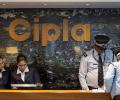
Homegrown pharma major Cipla Ltd reported a 39 per cent decline in consolidated net profit to Rs 785.55 crore in the first quarter ended June 2026, primarily due to a dip in sales in the North American market and higher expenses.

'Improved law and order and transparent governance have helped change UP's investment image.'

'Midcaps and smallcaps are the 'go-to segments' for retail investors.'

After four consecutive months of withdrawals, Foreign Portfolio Investors (FPIs) injected Rs 20,200 crore into Indian equities in July, driven by attractive valuations, improving corporate earnings, and a more favourable global environment.

Analysts predict that the US-Iran geopolitical conflict, upcoming quarterly earnings announcements, and fluctuations in crude oil prices will be the primary drivers of investor sentiment in the Indian equity markets.

'Healthy double-digit returns are still possible, though a sharp rally is unlikely.'

Several Indian real estate companies, including BPTP Ltd and Smartworld Developers, are rethinking or shelving their initial public offering (IPO) plans, which were expected to raise around 15,000 crore, due to weaker housing demand, higher costs, and a more cautious investment climate.
