
Raymond Limited's real estate arm, Raymond Realty, plans to get listed during the second quarter of the next financial year (Q2FY26), according to Harmohan Sahni, chief executive officer (CEO), Raymond Realty. "We are expecting the order by June-July 2025 as far as the National Company Law Tribunal (NCLT) is concerned.

India's economy is expected to grow 6.4-6.7 per cent during the current financial year driven by strong domestic demand, even as geopolitical uncertainty poses downside risks, the newly appointed CII president Rajiv Memani said on Thursday.

From the 30-Sensex firms, Maruti, Power Grid, Tata Motors Passenger Vehicles, HDFC Bank, Asian Paints and Tata Steel were among the biggest laggards. However, Titan, HCL Tech, Tech Mahindra, Infosys and Tata Consultancy Services were among the gainers.

The operating performance of the country's largest passenger carmakers, Maruti Suzuki India (MSIL) and Hyundai Motor India (HMIL), in the July-September quarter (Q2) of 2025-26 (FY26) outpaced brokerage expectations.

India is the second-most-preferred destination among chief executive officers planning international investments - up from the fifth spot last year, according to PwC's 29th Annual Global CEO Survey released on Tuesday. The United States is their first choice.

The Indian steel industry is faced with a paradox: Rising demand and falling prices. Demand continues to surge as user industries gather pace, with the World Steel Association projecting around 9 per cent annual growth for India over 2025 and 2026, the year domestic demand is projected to be almost 75 million tonnes (mt) higher than in 2020.

CAG warns most states of fiscal imprudence as March spending overshoots limits, with key departments exhausting large portions of budgets in the last month of FY24.

Adani Energy Solutions on Monday posted a 28 per cent decline in consolidated net profit to Rs 557.10 crore for the September quarter, mainly due to one-time adjustment of deferred tax of Rs 314 crore in the year-ago period. Adani Energy Solutions Ltd (AESL) had reported a net profit of Rs 773 crore in the July-September quarter of the last fiscal.

* Repo rate reduced by 25bps to 5.25 pc; * 4th rate cut, totalling 125 bps, since February 2025; * MPC also decided to continue with neutral stance; * GDP growth forecast for FY26 raised to 7.3 pc from 6.8 pc;

Highlighting India as the company's most important growth market, Fabricio Bloisi, group chief executive officer (CEO) of the Dutch technology investor Prosus signaled a sharp acceleration in artificial-intelligence investments across its portfolio in the country.

Wholesale price inflation extended upward momentum for the second straight month, recording at 0.83 per cent in December 2025, driven by an uptick in prices of food, non-food articles, and manufactured items on a month-on-month basis, government data showed on Wednesday. Wholesale Price Index (WPI)-based inflation returned to positive in December, after witnessing a deflationary trend in the previous two months.

ICICI Bank delivered satisfactory results in the second quarter of 2025-26 (Q2FY26), sustaining return on assets (RoA) of around 2.3-2.4 per cent and improving asset quality. Provisions declined 26 per cent year-on-year (Y-o-Y) and 50 per cent quarter-on-quarter (Q-o-Q).
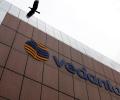
Mining major Vedanta's consolidated net profit plunged 58.69 per cent year-on-year (Y-o-Y) to Rs 1,798 crore in the second quarter of 2025-26 (Q2FY26), dragged down by exceptional losses booked during the period under review. The company had reported a net exceptional gain of Rs 1,160 crore in Q2FY25.

Capex, infrastructure development, and prudent fiscal management are the key focus areas in the Budget, says Nilesh Shah.

India is growing fast, but to keep growing strong, the government must make more things at home, create jobs, and spend money wisely, suggests Rajiv Memani, regional managing partner, Africa-India Region, EY.

Gold imports climbed 349.22 per cent to $12.07 billion in January, while silver imports rose 127 per cent to $2 billion.

The pickup was driven partly by fresh corporate investment but more by higher working-capital demand.

India's economy experienced a growth of 7.8 per cent during the October-December quarter of 2025-26, according to the new series of national accounts with 2022-23 as the base year.

Maruti Suzuki sold more cars than ever before, earned more money, and saw many first-time buyers choosing small cars again.

Hit by a slowdown in information technology (IT) hiring, Info Edge (India)'s results for the July-September quarter (Q2) of 2025-26 (FY26) fell short of brokerage expectations. What helped the online recruitment major offset the weak IT hiring trend was broad-based growth across other sectors.

Two-wheeler sales volume is expected to grow 5-6 per cent this fiscal, while that of passenger vehicles to see a 2-3 per cent rise, following the GST rates rationalisation on automobiles, according to Crisil Ratings. The GST Council's decision to move to a two-rate structure of 5 per cent and 18 per cent, effective September 22, 2025, is a timely move that will revive demand for automobiles, Crisil Ratings said in a statement.

'Earnings growth will be the main driver of India's market in 2026, with profits expected to rise 9% to 10% in H2 FY26 and accelerate to 12% to 15% in FY27.'

Real GDP growth surprised on the upside in 2025, but weaker nominal growth, trade uncertainty, and soft demand signal a bumpier road ahead.

Securities and Exchange Board of India (Sebi) Chairman Tuhin Kanta Pandey on Thursday called for sharper disclosures in IPO (initial public offering) offer documents, particularly around risk factors, valuation rationale, objects of the issue, and utilisation of proceeds.

'We operate in an economy that is structurally positioned for long-term growth. As market levels rise over time, our AUM grows in line.'

Utilities in the power sector present an interesting investment case at this moment. Most power stocks have lost substantial ground in the past 12 months.

The life insurance industry recorded nearly 40 per cent year-on-year (Y-o-Y) growth in new business premiums (NBP), aided by the rationalisation of goods and services tax (GST) on individual life insurance premiums, which has made policies more affordable for consumers.

Ask rediffGURU and PF and MF expert Janak Patel your mutual fund and personal finance-related questions.

Indian equities declined on Friday, with the benchmark Nifty posting its worst weekly fall since September, as foreign investor sentiment remained weak amid tepid earnings growth and little progress on the India-US trade front.
The imposition of safeguard duty, an uptick in exports, and an increase in input cost are driving steel prices higher. The latest round of price increase took place on Friday, with some steel mills increasing hot-rolled coil (HRC) prices by ~500-750 a tonne, according to price reporting and market intelligence firm BigMint. HRC is a benchmark for flat steel.

'The frenzy for gold is primarily due to the uncertainty surrounding the tariff war.'
Retail inflation inched up to 0.71 per cent in November on rising prices of vegetables, protein-rich items, and fuel, government data showed on Friday. The consumer price index (CPI)-based retail inflation had fallen to a record low of 0.25 per cent in October, mainly due to lower prices helped by GST rate cuts and a favourable base.

Trading pattern in the stock market this week will largely depend on the ongoing Q3 earnings announcement from corporates, global trends, and foreign fund movement, analysts said. Moreover, geopolitical developments and any update on trade negotiations would also be keenly tracked by investors, experts noted.

Prism, the parent firm of global travel tech unicorn Oyo, has filed preliminary papers with market regulator Sebi to raise Rs 6,650 crore through an initial public offering (IPO) using a confidential route, people familiar with the development said on Wednesday.

Colgate-Palmolive India's September quarter (Q2FY26) performance has reinforced concerns among brokerages about the company's continued market challenges.

The stock of mid-tier information technology (IT) major Persistent Systems has been one of the outperformers in the IT pack with a return of 5.3 per cent over the last year, while its peer index, the Nifty IT, is down 16.2 per cent over the same period. The strong September quarter (Q2FY26) result and upgrades by brokerages are positive but its ability to sustain growth momentum in a weak macroeconomic environment will be key for future gains. At the current levels, the stock is trading at a premium valuation of 38 times its FY27 earnings estimates.

Fintech firm One97 Communications, which owns the Paytm brand, reported its first-ever consolidated net profit at Rs 122.5 crore in the quarter ended June 2025, mainly on account of cost optimisation and an increase in payment revenue. Paytm had posted a net loss of Rs 840 crore in the year-ago period.

'This Budget has a one-year agenda, which you can call the sprint, and the marathon is towards Viksit Bharat.'

Net direct tax collection grew 8 per cent to over Rs 17.04 lakh crore this fiscal till December 17 on slower refunds and higher advance taxes from corporates, the income tax department data showed on Friday.

Gross GST collections rose 6.1 per cent to over Rs 1.74 lakh crore in December 2025, even as sweeping tax cuts slowed down growth in revenues from domestic transactions, according to government data released on Thursday.
