
Indian factories saw an 8 per cent decline in gross fixed capital formation (GFCF) in FY25, marking the first drop since the pandemic, despite achieving record high employment generation, according to the latest Annual Survey of Industries (ASI) data.

Across all 10 schemes from FY24 to FY26, print media captured 58.8 per cent of the total ad spending, followed by electronic media at 19.5 per cent, digital media at 14.6 per cent, and outdoor media at 7.2 per cent.

Jio Platforms Ltd's initial public offering (IPO), anticipated to be India's largest, is scheduled to open for subscription on October 21 and close on October 23, with reservations for employees and Reliance Industries Ltd shareholders.

Private corporations in India invested approximately 30.3 trillion in fixed assets during FY25, marking a 7 per cent increase from the previous year, according to the statistics ministry. This growth in private capital expenditure contrasts with a slowdown in government capital spending.
The National Company Law Tribunal (NCLT) approved a record 107 resolution plans in the second quarter of financial year 2026-27 (Q2FY27), its highest quarterly performance, despite ongoing challenges such as member vacancies and infrastructure constraints.

Indian states' capital expenditure (capex) utilisation for April-August FY27 fell to 21.21 per cent, slightly below the 21.73 per cent recorded in the same period of FY26, according to a CAG analysis. Despite the dip, this figure remains the third highest in the past six years, with significant variations observed across states.

The Indian coal ministry announced that 147 commercial coal blocks auctioned since 2020 are expected to attract approximately 55,000 crore in capital investment, generate 490,000 jobs, and contribute significantly to state revenues.

UPI transactions saw a 27% volume increase and 20% value increase in the first half of the current fiscal year. Despite a slight moderation in September, the digital payment system is set to implement a 0.4% merchant discount rate on transactions over Rs 2,000, aiming for a sustainable revenue model. Small merchants and person-to-person payments remain exempt, and UPI's global presence continues to expand.

A new EY India report highlights how young professionals, women wealth creators, entrepreneurs, ESOP beneficiaries, and digitally active consumers from Tier-2 and Tier-3 cities are fundamentally changing India's wealth ecosystem. This shift is evidenced by increased participation of young and women investors, a rise in disciplined investing via SIPs, and the crucial role of Digital Public Infrastructure in democratizing access to long-term wealth creation. The report predicts over 100 million new investors by 2035.

Tewolde Gebremariam, Air India's CEO and MD-designate, has outlined passenger safety, operational reliability, and sustainable profitability as the airline's foremost priorities, emphasising a stronger safety-reporting culture and improved disruption recovery.

Meesho, a value-commerce platform targeting middle- and lower-income geographies, is poised for significant growth driven by its asset-light model and low fulfilment costs, but faces intense competition from e-commerce giants and high valuations.
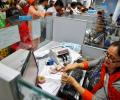
Indian bank credit expanded by 16.08 per cent year-on-year in FY26, marking its fastest pace since FY24, while deposits grew by 13.47 per cent, according to RBI data. Experts caution that year-end figures may be inflated due to reporting date changes, but acknowledge strong momentum in corporate, MSME, and retail segments.

Gold loans accounted for 41 per cent of retail loan disbursements in FY26, up sharply from 18 per cent in FY23 and 20 per cent in FY24.

Passenger traffic Y-o-Y fell 26.8 per cent in April and 24.6 per cent in May, while capacity declined 9.6 per cent and 11.3 per cent, respectively.

Net SIP inflow is calculated by subtracting redemptions from gross SIP investments.

RBI Deputy Governor S C Murmu stated that the introduction of merchant discount rate (MDR) on UPI transactions is unlikely to cause a shift back to cash, despite some concerns, emphasising that MDR will help the payments ecosystem recover costs.
The BJP has accused the Congress of spreading "fake news" regarding UPI transaction charges, asserting that the government has clarified that consumers will not be levied merchant discount rate (MDR) charges. This comes after the Congress criticised a government notification, alleging it paves the way for imposing fees on UPI transactions. The BJP has strongly refuted these claims, highlighting that most UPI transactions remain free and the government provides incentives to maintain a charge-free ecosystem for users.

Icra predicts that the top seven Indian cities will see an 8-11 per cent year-on-year growth in housing sales value by FY27, reaching approximately 7.9 trillion, primarily driven by the ongoing trend of premiumisation and a favourable product mix.

A working paper by the Economic Advisory Council to the Prime Minister (EAC-PM) reveals a continuous decline in the rate at which foreign-owned firms invest in fixed assets in India since the FY20 peak, contrasting with a steady increase from Indian business groups.

N Chandrasekaran not only faces muted financial performance from the group's listed companies, but also mounting losses at Tata Sons' unlisted subsidiaries, many of which have been set up by him in the last decade.

Chandra's tenure also saw a big jump in Tata Sons' other income, such as brand fee from group companies, treasury gains, and other non-recurring income.

Central tax authorities detected input tax credit (ITC) fraud worth Rs 74,781.56 crore across 30,162 cases in FY26, more than doubling the number of cases from the previous year, according to the Ministry of Finance.

The food delivery platform sector in India employed 1.37 million workers in the financial year 2023-24 (FY24) and is growing at a compound annual growth rate (CAGR) of 12.3 per cent, estimates a new report released by the Delhi-based think tank National Council of Applied Economic Research (NCAER).

Election-related freebies and populist measures are other factors crimping the revenue profile of these states.

The highest number of frauds was reported under the card, Internet, and digital payments categories in FY24 and FY25. 'Advances' accounted for the largest share (85.5 per cent) in FY26.

'A favourable base, last year's policy measures, the carryover impact of a good monsoon and improving earnings should all help.'

Manipal Health Enterprises is set to launch India's largest healthcare initial public offering (IPO) on July 29, aiming to raise Rs 9,275.22 crore to fund expansion and debt reduction, with the issue closing on July 31.

Natarajan Chandrasekaran, credited with stabilising Tata Sons after a boardroom coup and overseeing significant expansion, has announced his resignation as chairman, capping a nearly decade-long tenure marked by both successes and escalating tensions with the group's controlling charitable trusts.

Eighteen of India's 28 states exceeded the fiscal deficit ceiling of 3 per cent of GSDP in FY25, a deterioration comparable to the Covid year of 2020-21, according to the Comptroller and Auditor General (CAG). The report also noted a decline in states reporting a revenue surplus, with Bihar, Mizoram, and Telangana moving into deficit.

Education sector experts agree that using the "best technology" was essential to ensure students did not have to sit for an examination all over again because of a question paper leak.

'The share of the private sector is at its all-time high of around Rs 42,000 crore in FY26, reflecting its expanding role in the defence ecosystem.'

Honda Motorcycle & Scooter India (HMSI) plans to create over 3,800 jobs and expand its annual two-wheeler production capacity to 80 lakh units by 2028, reinforcing India's role as a global manufacturing and export hub for Honda.

Mahindra & Mahindra (M&M) is expanding its farm equipment strategy beyond tractors to include a wider range of mechanisation solutions like harvesters, balers, seed drills, and telematics-enabled services, aiming to capitalise on the growing demand for rental services by rural entrepreneurs and address low mechanisation levels in Indian agriculture.

Tata Consultancy Services' (TCS) annual dividend payout declined to a four-year low of approximately 39,820 crore in FY26, marking its steepest decline in a decade and potentially adversely affecting Tata Sons' finances, which heavily rely on TCS's dividend income.

India's remittance inflows have remained robust despite the West Asia conflict, driven by precautionary transfers and diversification of remittance sources, with bankers expecting continued stability for the year.

India's top 16 IT services companies distributed a record 1.3 trillion to shareholders in FY26 through dividends and share buybacks, a 36.3 per cent increase from FY25, even as the industry grappled with AI-driven business model threats and a significant decline in market capitalisation.

State-owned enterprises in India are projected to significantly increase their overseas borrowings, potentially exceeding $15 billion in FY27, driven by the Reserve Bank of India's new concessional forex swap facility which offers a 3 per cent funding-cost advantage.

API Holdings, the parent company of online pharmacy PharmEasy, has significantly reduced its debt from 1,800 crore to 1,050 crore and refinanced it at lower interest rates under CEO Rahul Guha, shifting its focus from 'growth at any cost' to profitability and aiming for a debt-free balance sheet before a potential stock market listing.

Why would a country that requires close to $90 billion in net foreign capital annually to create jobs, build productive capacity, and sustain rapid growth permit $30 billion of capital to flow abroad, thereby contributing to pressure on the rupee? asks Debashis Basu.

India's electric passenger vehicle market saw an 87.4 per cent year-on-year increase in FY26, reaching 233,246 units, primarily driven by the mid-size SUV segment (20-30 lakh price bracket), while the entry-level segment (sub-10 lakh) experienced a decline.
