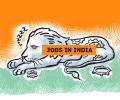
Net job creation in the economy fell by 16.9 lakh in FY21 over the previous fiscal, shows an SBI Research analysis of EPFO payroll data. However, the FY21 numbers are better than the FY20 net job creation, which had declined by 28.9 lakh, further cementing the view that the economy is not creating new employment opportunities. The latest EPFO data shows that net new EPF subscribers stood at 94.5 lakh in FY21, and NPS added 5.82 lakh, taking the cumulative net addition to 100.4 lakh, which is marginally down from 102.3 lakh in FY20.

Domestic ratings agency Icra on Monday forecast a 2 per cent GDP growth in the fourth quarter of 2020-21, and a 7.3 per cent contraction for the full fiscal year. From a GVA or gross value added perspective, the agency pegs Q4 growth at 3 per cent and the full year contraction at 6.3 per cent. According to the agency, the 2 per cent projected GDP growth will help the economy avoid a double-dip recession as indicated by the National Statistical Office (NSO) for Q4. Icra's projection is better than the 8 per cent contraction forecast by the NSO as it sees Q4 growth at only 1.1 per cent.

Despite relatively smaller Indian populations in cities like Seattle and Buffalo, the proportion of Indian nationals detained in these locations remains disproportionately high.

India has nearly 490 million online gamers, and an estimated Rs 10,000 crore is spent every month on online gaming transactions.

Jio Platforms Limited is likely to have a valuation of $148 billion by the time it goes public on the back of strong free cash flow and potential deleveraging, ICICI Securities said.

'The frenzy for gold is primarily due to the uncertainty surrounding the tariff war.'

India's top information- technology (IT) services companies, all cash-rich, have been tightfisted about ploughing back their earnings in new projects or acquisitions and the bulk of the profits have been distributed to shareholders through dividend and share buybacks. In the past 10 years (that is, excluding the current one), the firms have reinvested in growth and expansion only around 13.5 per cent of the cash flow generated from their operations.

Hero MotoCorp and TVS Motor crossed Rs 1,000 crore in R&D spend for the first time, as legacy OEMs accelerate innovation to compete with new-age EV players.

The money sent home by Indians from West Asian countries took a beating in 2020-21 due to the pandemic. On the other hand, overseas Indians in advanced nations - the United States, United Kingdom and Singapore - emerged as important sources of remittance, according to a Reserve Bank of India (RBI) survey. Indians working in informal sectors in West Asia seem to have been impacted the most due to the lockdowns and subdued crude oil prices as well as slower pace of migration in recent years.

UPI crossed 20 billion monthly transactions for the first time in August 2025, with a transaction value of Rs 24.85 trillion.

The brokerage said that the reform measures announced by the government will help growth only over the medium term and are not expected to have any benefit in the near-term.

Though a weak dollar will lend some support to revenues and margins in FY21, the demand environment will outweigh any gain.

Promoters of India's top private listed companies have cut their stakes sharply since 2021, taking advantage of elevated valuations and reshaping ownership dynamics in the market. Holdings of promoters in the top 200 privately owned listed firms declined nearly 600 basis points (bps) to 37 per cent at the end of FY25, from 43 per cent in FY21.

The non-life insurance industry has received over 1 million Covid-related claims in the first quarter of the current fiscal year (Q1FY22), higher than in the entire FY21, indicating the severity of the second wave of the pandemic. According to the General Insurance Council data, which is not publicly available, non-life insurers have received 1.22 million Covid-related claims so far in FY22 and have settled 944,573 of those worth Rs 9,178 crore. In comparison, they had received 986,366 Covid claims in FY21 and settled 849,034.

The listing day gain-to-loss ratio for FY21 was 71 per cent, the highest since FY17, when it was 85 per cent.

Among India's 150,746 railway bridges, 25.8 per cent are over a century old.

Software giant Wipro's Azim Premji donated Rs 9,713 crore or Rs 27 crore a day to retain his top rank among Indian philanthropists in FY21. Premji, the founder chairman of the company, increased his donation by nearly a fourth during the pandemic year, as per the Edelgive Hurun India Philanthropy List 2021, which had HCL's Shiv Nadar at second place with contributions of Rs 1,263 crore towards upliftment causes. Mukesh Ambani of Reliance Industries, India's richest man, came third on the list with a Rs 577 crore contribution and was succeeded by Kumar Mangalam Birla with Rs 377 crore.

The boardrooms of India's large listed companies are steadily expanding as corporate governance standards tighten and regulatory compliance rises. Boards of Nifty 100 companies boasted an average of 10.52 members as of FY24, compared to 9.86 in FY21 and 10.48 in FY23, according to the fifth edition of Excellence Enablers' Survey on Corporate Governance, an initiative led by M Damodaran, former chairman of the Securities and Exchange Board of India (Sebi).

Between 2015 and 2023, around 543 train accidents occurred, resulting in 805 deaths.

Society of Manufacturers of Electric Vehicle (SMEV) on Thursday said sales of EVs in India fell 20 per cent in the financial year 2020-21 to 236,802 units. In 2019-20 sales of electric vehicles (EVs), including electric two-wheelers (E2W), electric three-wheelers (E3W) and electric four-wheelers (E4W), stood at 295,683 units. For FY21, the E2W segment sales declined by 6 per cent to 143,837 units, as compared to 152,000 units in FY20, SMEV said in a statement, adding that the FY21 E2W sales included 40,836 high-speed and 103,000 low-speed E2W. The E3W segment registered sales of 88,378 units as against 140,683 units sold in FY20.

Qcom alone is expected to account for a 60 per cent surge in gig hiring, adding 1.5 million to 2 million roles.

India's economy grew by 1.6 per cent in the fourth quarter of 2020-21, restricting the full-year contraction to 7.3 per cent, official data showed on Monday. The fourth quarter growth was better than the 0.5 per cent expansion in the previous October-December quarter of 2020-21. The gross domestic product (GDP) had expanded by 3 per cent in the corresponding January-March period of 2019-20, according to data released by the National Statistical Office (NSO).

Asia's richest man Mukesh Ambani drew nil salary from his oil-to-telecom-and-retail conglomerate Reliance Industries for the fifth year in a row and dividends remain his main source of earnings. Ambani, 68, had capped his annual remuneration at Rs 15 crore from financial year 2008-09 (April 2008 to March 2009) to 2019-20 (FY20); and since FY21, he opted to forego his salary, due to COVID-19 pandemic, until the company and all its businesses were fully back to their earnings potential.

Sitharaman's Budget missed deficit target for the third year in a row, pushing shortfall to 3.8 per cent of GDP in the current fiscal as compared to 3.3 per cent previously planned.

Only 80.6 per cent of the Rs 6-trillion allocation has been spent by February, data from the Controller General of Accounts shows.

The IT services giant is also slated to hold a board meeting on April 13 and 14, to approve of and take on record the consolidated financial results of the company for the quarter and year ended March 31, 2021. Indian IT majors will be announcing their fourth quarter (Q4) and 2020-21 results starting April 12. At the end of the Q3 FY21 Infosys had cash and investment of $4.5 billion.

The information technology (IT) services industry may be headed for another year of sluggish growth. Based on the results of the top five IT services companies for the first quarter of 2025-26 (Q1FY26), analysts say the possibility of hitting high single-digit revenue growth in FY26 looks unlikely.

In 2020-21, Indian firms offered to buy back shares worth Rs 39,295 crore, or 97% more than Rs 19,972 cr proposed in the previous financial year.
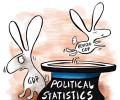
It is also likely to assume a deflator of around 4 per cent. That could take the nominal GDP outlook for FY21 to around 10 per cent. It is this nominal GDP forecast on the basis of which the finance ministry is calculating key Budget targets like the fiscal deficit as a percentage of GDP and tax revenue growth for the coming year.

The famous 'tareekh pe tareekh' dialogue from the Hindi movie Damini captures where we are now.

In Q1, India's GDP shrank by a staggering 24 per cent year-on-year amid the imposition of one of the most stringent global nationwide lockdowns.

Hiring demand is strongest for high-impact technology and product roles, particularly DevOps engineers, product managers, and full-stack developers.

Many high-profile IPOs in India since 2021 have destroyed investor wealth due to overvaluation, weak business models, and post-listing disinterest, turning 1 lakh investments into as little as 3,500.

Ola has reported its first operating profit of Rs 89.82 crore for 2020-21, even as the ride-hailing company's revenue declined 65 per cent to Rs 689.61 crore amid COVID-19 induced lockdowns. As per regulatory documents filed by ANI Technologies - the parent company of Ola - it had logged standalone operating profit (profit before finance cost, depreciation, amortisation and tax (EBITDA)) of Rs 89.82 crore in FY21 on a standalone basis, while it had registered a loss of Rs 610.18 crore in the preceding fiscal year.

For the fiscal ended 2021, the group has made a loss of Rs 5,943 crore on sales of Rs 11,723 crore, a drop of 66 per cent over fiscal 2020. The group's total debt was up by 7 per cent to Rs 20,742 crore.

India fully utilised its military modernisation budget in 2024-2025 -- the first time in five years -- and signed a record Rs 2 trillion defence contracts.

The government Rs 20 lakh crore package includes Rs 1.7 lakh crore of fiscal stimulus announced in the first phase, Rs 5.6 lakh crore stimulus provided through various monetary policy measures and Rs 5.94 lakh crore through the second phase, implying Rs 6.70 lakh crore package is still to be announced.

Thus far in FY21, BSE, NSE have rallied 70 per cent and 71 per cent, respectively.

ITRs with zero tax liability have increased to 55.7 million in FY25.

The World Bank on Sunday said the coronavirus outbreak has severely disrupted the Indian economy, magnifying the pre-existing risks to its outlook. In its 'South Asia Economic Update: Impact of Covid-19', the World Bank estimated the Indian economy to decelerate to 5 per cent in 2020 and projected a sharp growth deceleration in fiscal 2021 to 2.8 per cent in a baseline scenario.
