
Resignations of Anil Ambani and four other directors were conveyed to the CoC of RCom in its meeting on November 20 and were unanimously rejected.

The government did not tell us why our economy had imploded. The prime minister simply stopped speaking on the subject, asserts Aakar Patel.

FinMin does not expect tax or non-tax revenue to reach anywhere close to the targets set in the interim Budget. Sources say that the challenge before the new government will be either to accept the reduced projection and tailor the Budget accordingly or set a more ambitious target.

The pre-owned vehicles arm of the Mahindra Group plans to add 30 outlets in a few days taking the total number to 1,000.

Indian economy is likely to rebound with an 8.9 per cent growth in the fiscal year beginning April 2021 after economic activity showed significant improvement in the last quarter, IHS Markit said on Friday. The National Statistical Organisation (NSO) on Thursday predicted that the economy will contract 7.7 per cent in the current financial year ending in March, the worst performance in four decades.

According to several industry sources in the know, expenses towards deploying contractual staffer, which used to account 10 per cent of the overall billable employee cost at IT firms, has fallen to around 3 per cent. IT firms typically use the contractual workers from staffing solutions providers or subcontractors.

The analyst said since servicing of principal and interest on loans will beome challenging for mall operatos in the next couple of months.

After the government backtracked on its plan to impose Customs duty on pricier components, Samsung has decided to begin production of key mobile parts in Noida from April.

The duo bought additional shares in pharmaceutical companies Lupin and Jubilant Life Sciences, along with Agro Tech Foods and NCC during Q2FY21

Last year in January at Amazon's flagship event Smbhav, Infosys Co-founder N R Narayana Murthy had to shorten his keynote speech from 20 minutes to about five because the event was delayed by 1.5 hours. "I will try to finish it in five minutes, because I am not used to delays," said Murthy, while addressing hundreds of micro, small and medium enterprises (MSMEs) about building businesses that last. In the audience was Amazon founder Jeff Bezos. Murthy referred to Bezos' prediction that the 21st century will be the Indian century. "That confidence enhances our enthusiasm," said Murthy. The relationship between Murthy and Bezos dates to 2014, when Prione, a 49:51 joint venture (JV) between Amazon and Murthy's venture capital company Catamaran, was formed.
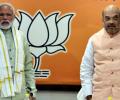
Corporate leaders said a stable government at the Centre will help boost infrastructure spend, address agricultural distress, and encouraging employment.

Share prices of Dewan Housing, Indiabulls Housing, and PNB Housing have declined 30-80% in the past one year

An immediate RBI rate cut will lower lending rates for banks' MSME/retail/mortgage loans before the 'busy' industrial season ends in March.

This is the lowest that the BCI has ever fallen in the history of 113 rounds of the NCAER Business Expectations Survey.

Most rate-sensitive stocks ended on a negative note, with BSE auto, bankex, finance and realty indices cracking up to 2.10 per cent.

Diamond industry expects revenues to drop by 20-25% in the current financial year.

After the hit of the pandemic, India Inc is now worried about the adverse impact of inflation and higher commodity prices on their revenues and margins. The inflation scare is the strongest among manufacturers of consumer goods such as automobiles, consumer durables, and fast-moving capital goods (FMCG). Companies across sectors fear they will not be able to pass on the hike in input costs to their consumers due to weak demand, which, in turn, would lead to a hit on margins and profitability in the forthcoming quarters.

Large investors track high-frequency data that is immediately available today. That data has been bullish, points out Debashis Basu.

If there is no third wave of the pandemic, the fiscal position of the Centre and the states will be much better than budgeted for FY22 and the states may garner Rs 60,000 crore more in tax collections at Rs 8.27 lakh crore this fiscal year than they have budgeted, a report said. The report by SBI Research on Monday bases its optimism on GST collection so far this fiscal, which has been the best ever in spite of the fact that the two months bore the maximum brunt of the second wave -- with April setting a record Rs 1.41 lakh crore and May collection a tad low at Rs 1.03 lakh crore. The report also said overall government finances do not look overstretched as GST collections have continued to maintain pace so far and the additional fiscal impact arising from free vaccination and more food supplies will only be around Rs 28,512 crore.

NSO has pegged economic growth at 5 per cent in 2019-20 in its second advance estimates.

In his second year at the helm, Infosys CEO & MD Salil Parekh looks optimistic about the company's growth prospects. With stability back in the industry, Parekh, in an interview with Bibhu Ranjan Mishra and Debasis Mohapatra, says turbulence is over and Infosys is on its way to regaining its old glory.

If raters get away by moving from AAA to D overnight after companies default, as happened with DHFL, YES Bank, RCom, and IL&FS, it shows a complete breakdown in the rating system. It calls for exemplary punishment, not kid glove treatment, says Debashis Basu.

Fresh capital will help Flipkart further grow its e-commerce marketplace in India as the world's second-largest internet market begins to recover from the COVID-19 crisis.

Since 2014, the public sector banks' branch network in rural and semi urban has grown by a mere 4,000 while for private sector banks, it doubled from 9,673 to 18,437.

Twenty years after India's insurance sector was opened up, unshackling the control of state-owned companies, as many as 50 private players have set up shop. Along with their foreign partners, private players have brought about a sea change in the product offering, distribution and underwriting processes, and services levels. Yet, India's insurance penetration needle has not moved much.

Outlay for infra is also expected to see a significant increase in view of the government's Rs 111-trillion investment plan under the national infrastructure pipeline to develop social and economic infrastructure over five years.

The slowdown had been brewing since 2016 but was intensified further by several disruptions in the past two years including demonetisation.

Fitch Ratings on Thursday said the resurgence of COVID-19 infections may delay India's economic recovery, but won't derail it, as it kept the sovereign rating unchanged at 'BBB-' with a negative outlook. It projected a 12.8 per cent recovery in GDP in the fiscal year ending March 2022 (FY22), moderating to 5.8 per cent in FY23, from an estimated contraction of 7.5 per cent in 2020-21. Fitch had in June last year revised outlook for India to 'negative' from 'stable' on grounds that the coronavirus pandemic had significantly weakened the country's growth outlook and exposed the challenges associated with a high public debt burden.

The bigger threat for DMart is that the Reliance-Future combine now has grocery revenues that are nearly 2.5 times of it, putting pressure on the former to improve stickiness of its consumers.

To make possible discretionary spending including capex and that on welfare, the government decided to borrow more than planned in FY21 -- Rs 12.7 trillion.

Mumbai Metropolitan Region recorded housing sales of nearly 9,200 units in Q3 of calender 2020, against 3,620 units in the preceding quarter, registering a 1.5 times growth which is the highest growth seen any city except Chennai.
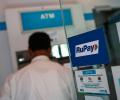
RuPay is working on how to increase offers to customers. It is also focused on technology innovation in the card payment system.

To attract bidders, the government had decided to hive of around Rs 35,000 crore of the company's debt into a separate subsidiary, leaving around Rs 23,286 crore to be absorbed by the new bidder.

Yes Bank was the top gainer in the Sensex pack, rallying up to 8.44 per cent, followed by Maruti, PowerGrid, NTPC, L&T and SBI.

The properties the government is eyeing to dispose of this year are located in prime locations of cities like Delhi, Mumbai, Surat, Ahmedabad, Bengaluru and Chennai.

India is expected to harvest 291.95 mt of foodgrain in 2019-20

Real estate experts say rentals have corrected by 5-10 per cent across formats, including office, retail and housing, with a pick-up expected over the next few quarters as the economy recovers.
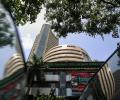
The combined profit before tax of 748 companies, which have declared their results for Q1FY21, is down 46 per cent YoY. Their net sales went down by a quarter as the Covid-19 lockdown led to a sharp fall in economic activity.

Economic growth is likely to plummet to a multi-decade low of 1.6 per cent in fiscal year 2020-21 due to the Covid-19 pandemic and ensuing measures like lockdowns and social distancing, an American brokerage said on Wednesday in one of the bleakest forecasts on GDP yet. Indian policymakers have not been aggressive enough in their response till now to the crisis, and will need to eventually intensify their efforts, economists at Goldman Sachs said.

The veteran banker has been instrumental in building the bank from scratch and turning it into the largest private sector lender of the country.
