
Supported by strong buoyancy in public sector capital expenditure (capex), growth in infrastructure investment is expected to accelerate in 2025-26 (FY26) compared to 2024-25 (FY25), according to the First Advance Estimates of gross domestic product (GDP) for FY26 released by the National Statistics Office (NSO) on Wednesday.

Foreign portfolio investors (FPIs) infused Rs 22,615 crore into Indian equities in February, marking the highest monthly inflow in 17 months, driven by factors such as the interim India-US trade deal, correction in domestic market valuations, and strong corporate earnings.

Highlights of the Economic Survey 2025-26
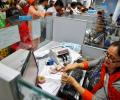
Led by the country's biggest lender State Bank of India (SBI), public sector banks logged a record cumulative profit of Rs 52,603 crore in the third quarter of the current fiscal, reflecting an 18 per cent year-on-year growth.

The Economic Survey on Thursday projected the GDP growth in the range of 6.8 to 7.2 per cent in 2026-27, a tad lower than 7.4 per cent estimated in the current fiscal.

Capex, infrastructure development, and prudent fiscal management are the key focus areas in the Budget, says Nilesh Shah.

As the Trump administration pushes denaturalisation targets, US citizenship trends show a decline in Indian naturalisations and longer scrutiny of immigrants.

Indian stock markets experienced a significant rally following the announcement of a US-Iran ceasefire, coupled with a drop in crude oil prices. The Sensex and Nifty both closed nearly 4 per cent higher, mirroring gains in global markets.

Shares of apparel retail major Trent fell over 8.6 per cent to ~4,048 apiece at the close of trade on Tuesday. Trading near its 52-week low, the stock has shed about 43 per cent over the past year. Sentiment around the Tata group company weakened after it reported lower than expected revenue for the third quarter (October-December/Q3) of 2025-26 (FY26). Brokerages expect the stock to remain under pressure in the near term.

Deloitte India on Thursday projected India's economy to grow 6.7-6.9 per cent in the current fiscal amid buoyant demand and policy reforms. Indian economy grew 7.8 per cent in the April-June quarter of current fiscal.

Cigarette-to-soap conglomerate ITC on Thursday reported a consolidated net profit (attributable to owners) of Rs 4,931.19 crore for the third quarter (October-December/Q3) of 2025-26 (FY26), affected by a one-time provision related to the new labour codes and a base effect from an exceptional item in Q3 of 2024-25. In the year-ago period, net profit had stood at Rs 4,934.8 crore.

The Indian stock market is poised for a volatile week, influenced by the Reserve Bank of India's monetary policy decision, crucial global macroeconomic data, and the escalating geopolitical tensions in West Asia, according to market analysts.

'The West Asia or the Gulf crisis has shown that what we develop as national infrastructure when things are not as bad as they could be, we forget to plan for adversities.'

A strong third-quarter (October-December/Q3) performance for 2025-26 (FY26) has helped the stock of India's largest listed pharmaceutical (pharma) company, Sun Pharmaceutical Industries, gain about 7 per cent since the start of February.

Stocks of fast-moving consumer goods companies have taken it on the chin in calendar year 2026 (CY26) with the Nifty FMCG index falling over 6 per cent compared to the Nifty 50 dipping 0.8 per cent. Nifty FMCG is one of the worst-performing sectors on the NSE in CY26.

The exchange rate of the rupee against the dollar may delay the economy's rise to become the fourth-largest.

Under FAME-II, automakers provided subsidies to electric vehicle (EV) customers at the time of purchase, with the understanding that the government would reimburse the firms later.

The Indian government has launched the Urban Challenge Fund (UCF) with a total outlay of Rs 1 lakh crore, aiming to leverage private and market finance for urban infrastructure projects by providing state support in capacity building and credit guarantees.

HCLTech reported flat net income of Rs 4,235 crore in the second quarter of 2025-26 (Q2FY26) compared to last year, even as its revenue was up 10.7 per cent to Rs 31,492 crore helped by financial services and technology business verticals.

Production growth in India's eight core infrastructure sectors slowed to a three-month low of 2.3 per cent in February, impacted by contractions in crude oil, natural gas, and refinery products output.

Foreign investors pulled out Rs 21,000 crore (around $2.3 billion) from Indian equities over the last four trading sessions amid deteriorating global risk sentiment triggered by the West Asia crisis.

Indian markets on Dalal Street rallied sharply as easing tensions in the US-Iran conflict and stable oil prices boosted sentiment. Track Nifty 50 and BSE Sensex performance and key global triggers.

India's industrial production saw a 5.2 per cent increase in February, primarily fuelled by a significant improvement in the manufacturing sector, with 14 out of 23 industry groups recording positive growth.

The loss of input tax credit (ITC) following the rationalisation of the goods and services tax (GST) on individual life and health insurance from 18 per cent to nil is may weigh on the profits of life insurers in the third quarter (Q3) of 2025-26 (FY26).

Benchmark lending rates unchanged with repo rate at 5.25%

A BofA Global Research report indicates that Paytm is leading in monetisation compared to its competitors due to its diversified mix of merchant lending and financial services, which enhances profitability and strengthens its position in the Indian fintech market.

Owing to uncertainties on higher inflation and muted growth in the United States (US), coupled with concerns around America's rising debt and tariffs imposed by President Donald Trump, the world's largest economy has become the epicentre of an unabated record rally in prices of precious metals.

There is a minimum requirement of Rs 2.5 trillion capital expenditure every year and it is understood at the highest levels of the government.

Indian stock markets tumbled sharply with the Sensex falling 800 points and nearly 4 lakh crore wiped out in a single session. Here are the 6 key factors, including rupee weakness and global cues, behind the crash.

Domestic gold jewellery consumption is likely to decline by 9-10 per cent in 2025-26, mainly due to a 33 per cent surge in gold prices, a report said on Thursday. The consumption of bars and coins increased 17 per cent and 25 per cent, respectively, in FY24 and FY25, reflecting investor preference for safe-haven assets amid global macroeconomic uncertainty and heightened geopolitical and trade tensions, Icra said in the report.

The US' move to raise the tariff on most Indian goods to 50 per cent could drag India's GDP growth for FY26 by 35 to 60 basis points, according to various economists. One basis point (bp) is equal to 0.01 per cent.

Only 2.5 per cent of the equity in Jio Platforms will be offloaded through the OFS route -- meant for secondary share sale.

India has the world's highest Nipah fatality-case ratio at 72 per cent -- reported during 2001-2025.

Of the Rs 31,820.80 crore allocated to central sector schemes and projects, only Rs 11,868.05 crore was utilised, according to the revised estimates.
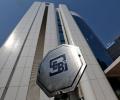
The Securities and Exchange Board of India (Sebi) has identified around Rs 77,800 crore as "difficult-to-recover" or DTR dues in its annual report for 2024-25 (FY26), marking a nearly 2 per cent increase from the previous year. These dues remain unrecovered despite exhaustive recovery efforts.

The Union Cabinet on Wednesday approved a relief package for debt-laden Vodafone Idea, freezing the AGR (Adjusted Gross Revenue) dues at Rs 87,695 crore and rescheduling the payment from FY32 to FY41, according to sources.

If the conflict continues for a prolonged period, State-run oil companies may have to review retail fuel prices accordingly.

Shares of information technology (IT) companies were in demand on Friday, with the National Stock Exchange's (NSE's) Nifty IT index rallying 3.3 per cent on . This came after Infosys reported steady sequential growth, driven by health care boost and large deal rampup in a seasonally weak quarter (Q3FY26).

The Asian Development Bank (ADB) on Wednesday lowered India's growth forecast for FY26 to 6.5 per cent from 6.7 per cent on account of trade uncertainty and higher US tariffs that are expected to impact exports and investment. Despite the downward revision from the April 2025 Asian Development Outlook (ADO), India remains one of the fastest-growing major economies in the world.

"There is an India that is embracing global luxury symbols and another which, as it evolves, is comfortable owning its 'Indian-ness'. We're deeply rooted in India, yet global," say Nicobar Design founders Simran Lal and Raul Rai.
