
FIIs have offloaded shares of Bajaj Corp, Nestle, Jyothy Laboratories and Britannia.

Slowdown? If there is one, producers of colas, tea, biscuits and toiletries -- or fast moving consumer (FMCG) goods -- haven't noticed. All of them are reporting substantial growth in sales volumes in the first three months of 2009. A major reason for this surge in sales is changing income demographics -- newer buyers in small towns are opting for branded products. Also, price cuts have reduced differentials between premium and economy products, inducing consumers to
With 21 states having implemented value-added tax and eight states still to adopt it, the impact of the new tax regime is seen largely positive for sectors like FMCG, paper and pharmaceuticals.

Sanjiv Puri, chairman and managing director of ITC, is looking to expand the conglomerate's play outside India by taking "strategic positions" in markets close to home in the non-cigarette fast-moving consumer goods (FMCG) and hospitality businesses. In a recent conversation with Business Standard, Puri revealed that ITC is setting sights beyond India's borders. "We already export to 100-odd countries. We want to scale that up and take some strategic positions in markets close to us," he said.

As wholesalers largely failed to meet GST norms, companies were in a fix. According to industry veterans like Sunil Duggal, chief executive of Dabur, the hazard led many to look beyond third-party distribution and take the leap to cover unattended markets directly.

National brands prefer the acquisition route since the southern market is culturally different, reports T E Narasimhan from Chennai.
Second quarter numbers hint at a rocky road ahead with a slowdown in discretionary categories set to continue.

'In India, managers and the leadership almost glorify overworking.'

'While every year presents new challenges, it also provides opportunities for better growth and performance.'

Among the Sensex firms, ITC, Kotak Mahindra Bank, ICICI Bank, Nestle, Axis Bank, IndusInd Bank, UltraTech Cement, Bajaj Finance, Maruti and HDFC Bank were the major laggards.

With a growing penetration of the Internet, which reaches to rural areas of the country, the retailers would be able to deepen their market

Among Sensex shares, Bajaj Finserve, ICICI Bank, Bharti Airtel, Bajaj Finance, Sun Pharma, Maruti Suzuki, ITC, and Nestle were the lead gainers. On the other hand, L&T Wipro, IndusInd Bank and TCS and Tata Motors were the lead losers.
The thrust on agriculture, removal of Fringe Benefit Tax etc should help improve the earnings of the FMCG sector

Among the Sensex firms, Tata Steel, JSW Steel, Tata Motors, Bajaj Finserv, Bajaj Finance, Asian Paints, ITC and Nestle were the major gainers. Mahindra & Mahindra, Reliance Industries, Axis Bank, ICICI Bank and Power Grid were among the laggards.
Watchmaker Ajanta India Ltd has forayed into the fast-moving consumer goods sector with a gamut of consumer care products and expected to close the current fiscal with a turnover of Rs 120 crore.
Winds of change are blowing across the fast-moving consumer goods market.

The booming recruitment environment that B-schools experienced in 2007 could be back on the campuses next year as the fast moving consumer goods (FMCG) sector is planning around 40 per cent increase in the number of pre-placement offers (PPOs).

Despite a dull macro-economic environment almost all the FMCG companies posted a decent volume growth.
ITC, Godrej Agrovet, DCM Shriram and other companies expanding in rural areas may eclipse the growth of their urban counterparts, including Reliance Fresh and the Future Group-owned Food Bazaar chain, helped by higher farm income that is spurring a boom in sales of fast moving consumer goods, consumer durables and apparel.

'Although currently, urban areas contribute more to growth than rural, there is no reason why rural areas should not contribute.'

Companies in the FMCG space are increasing their focus on herbal and ayurvedic category in India

'Investors should consider small and midcaps only if they can handle volatility and have a longer investment horizon.'
With Bharti Airtel making it to the list of top-ten advertisers of the year, cellular phone service providers as a category have overthrown fast moving consumer goods (FMCG) products such as toilet soaps and shampoos to emerge as the top advertising category on television in 2007.
Market research company, AC Nielsen, in its monthly retail sales audit of consumer goods, has identified 24 categories in the personal grooming space that are growing at an average rate of 13 per cent.
After shampoos and oral care, fast-moving consumer goods (FMCG) companies are betting big on soaps this year.

Other than ITC, other laggards include PowerGrid, Infosys, M&M, NTPC, SBI, HDFC, Kotak Bank, HDFC Bank, TCS, Hero MotoCorp, Coal India, ONGC, RIL, Asian Paint, IndusInd Bank, ICICI Bank, Maruti Suzuki, Bajaj Auto, Tata Motors, Bharti Airtel and Axis Bank.
The budget was negative for the FMCG sector.
With substantial cash reserves, a buoyant domestic market and increasing global opportunities, almost every consumer goods (FMCG) company is looking for acquisition targets.

FMCG major Britannia Industries' results for the January-March quarter (Q4) of the financial year 2023-24 (FY24) were received enthusiastically by the market with the share going up by 6.7 per cent on Monday to close at Rs 5,061.60 on the BSE. However, analysts said the results were in line with margins, and disappointing in terms of revenue growth. The consolidated net sales (excluding other operating income) rose 3 per cent year-on-year (Y-o-Y) to Rs 4,010 crore in Q4.
The FMCG sector has grown consistently during the last three to four years and is expected to grow at 12-15 per cent over the next three to four years.

The "asset-right" strategy, reiterated by ITC chairman Sanjiv Puri during the company's 112th annual general meeting (AGM) on August 11, received a thumbs up from the analysts. They, however, believe that sustained earnings growth and synergies with the demerged hotel's vertical will help the stock break out from the ongoing consolidation. "The stock is expected to consolidate between Rs 420 and Rs 450 in the near future.
Excise duty hike for cigarettes could be lower.
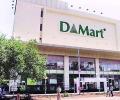
Discount retailer DMart (Avenue Supermarts) hit its highest levels in a year and a half last week and is up over 11 per cent in the last one month. The company depends on low operating costs to offer the lowest prices to consumers, which enables sales velocity and scale, further reducing costs. This virtuous feedback loop has helped DMart gain market share in a sector dominated by unorganised stores.

HUL has achieved few milestones in the fiscal gone by and hence is performing good on revenues front.

Fair trade regulator CCI on Tuesday said it has approved the demerger of the hotel business of diversified entity ITC Ltd into a separate entity. After the completion of the demerger, shares of ITC Hotels Ltd, a new entity, will be listed on the stock exchanges. The proposed combination relates to the demerger of the demerged undertaking to ITC's wholly-owned newly incorporated subsidiary, ITC Hotels.

'Bilateral trade has suffered seriously because of the growing unrest.' 'There is a standstill on both sides amid the curfew.'
