
Dabur India's shares rose 3.7 per cent after reporting in-line Q4FY26 results, driven by a healthy 10 per cent growth in its India business, despite some analysts remaining cautious about future execution.

Reliance Industries Ltd (RIL) has expressed caution regarding 'extreme volatility' risks stemming from the West Asian conflict, which could impact global oil demand and the company's margins, while also noting that near-term retail consumption demand may remain sensitive to macro conditions. Chairman Mukesh Ambani, in the annual report, remained silent on the timeline for Jio Platforms' anticipated public listing, stating the group will 'continue to evaluate strategic pathways'.

Amul, India's leading dairy brand, has achieved a historic turnover of Rs 1 trillion in FY26, marking an 11 per cent growth. This milestone is attributed to aggressive domestic distribution, product diversification, and strategic international expansion into markets like Europe, the US, Africa, and Southeast Asia.

FMCG major Nestle India reported a significant 27.18 per cent increase in consolidated net profit for the March quarter of FY26, reaching Rs 1,110.9 crore, driven by record domestic sales and a substantial boost in advertising investments, leading to a more than 7 per cent surge in its share price.

Two unidentified assailants on a motorcycle robbed a man and his grandfather of approximately 1 lakh in the Madhu Vihar area of east Delhi. The robbers fired a gun in the air during their escape.

With lower GST rates taking effect, fast-moving consumer goods players face challenges in setting reduced prices for their products in round figures, but expect the magical price points to be restored within two months.

FMCG major Hindustan Unilever Ltd (HUL) reported a 21 per cent increase in its March quarter consolidated net profit, reaching Rs 2,994 crore, primarily driven by higher volumes and a significant gain from the divestment of its stake in Nutritionalab.

'We are targeting a 2.5x to 3x increase in valuation by FY31.'

Gautam Adani, Chairman of the Adani Group, has surpassed Mukesh Ambani to become Asia's richest person, with a net worth of USD 92.6 billion, placing him 19th globally according to the Bloomberg Billionaires Index.

Fast-moving consumer goods (FMCG) companies are expected to report mid-single-digit revenue growth in the July-September 2025-26 quarter, according to their quarterly updates. Most companies also noted that supply chains were focused on liquidating existing stock ahead of the implementation of new goods and services tax (GST) rates in categories where the tax was lowered.

The volume growth of India's FMCG industry has slowed down in the March quarter to 5.1 per cent, driven by increased consumer purchases of small-value packs, according to the latest report from data analytics firm NielsenIQ. Volume growth is slowing across categories, and non-food segments are still outpacing food in the FMCG sector.

Foreign portfolio investors (FPIs) withdrew a substantial amount from Indian equities in the first half of March, driven by geopolitical tensions, rupee depreciation, and concerns about crude oil prices.

Marico has entered into a definitive agreement with PVR INOX to buy its 93.27 per cent stake in Zea Maize Private Limited (ZMPL), which owns the gourmet popcorn brand 4700BC, in an all-cash transaction worth Rs 226.8 crore.

Godrej Consumer Products Ltd (GCPL) delivered a robust Q4FY26 performance, with steady demand in India and signs of stabilisation in international markets, despite persistent inflationary pressures. The company expects to maintain profitability in FY27 through strategic cost management and pricing adjustments.

Benchmark indices Sensex and Nifty experienced a significant decline, falling over 1 per cent due to foreign fund outflows and global uncertainties.

Benchmark equity indices Sensex and Nifty extended their gains for the third straight session on Wednesday, driven by last-hour buying in bank, metal, and FMCG shares.

'Despite a challenging FMCG environment, ITC Foods has grown at or above the industry rate.'

West Asia conflict triggers sharp sell-off in Indian markets, with realty, banking and auto stocks leading losses amid energy shock fears.
The Iran conflict led to a sharp correction in Reliance Industries Ltd's (RIL's) share price, which has been partially reversed by a rebound.

Indian stock market benchmarks Sensex and Nifty rebounded by over 1% on Monday, driven by value-buying in banking stocks after a three-day slump. Key gainers included UltraTech Cement, HDFC Bank, and Mahindra & Mahindra.

India has initiated a probe into imports of subsidised paperboard from China and Indonesia following complaints from domestic manufacturers. The investigation will assess the impact of these imports on the Indian paper industry and determine if anti-subsidy duties are warranted.
India has initiated a probe into imports of subsidised paperboard from China and Indonesia following complaints from domestic manufacturers. The investigation will assess the impact of these imports on the Indian paper industry and determine if anti-subsidy duties are warranted.
FPIs net sold equities worth Rs 1.7 trillion in 2025 -- the highest annual net sale on record.

Fears around artificial intelligence (AI) sparked a global selloff in information technology (IT) stocks, dragging down domestic software shares and prompting the heaviest foreign portfolio investor (FPI) outflows since the second half of July 2025.

Hiring demand strongest in ecommerce, tech startups, healthcare, and energy sectors, with Bengaluru, Hyderabad, and Pune leading.

Several fast-moving consumer goods (FMCG) companies have said that they would pass on the full benefit of goods and services tax (GST) rate cuts to consumers starting September 22. Dairy major Mother Dairy, on Tuesday, announced rate cuts in products spanning its portfolio-- from milkshakes to paneer and jams to frozen products under its Safal brand.

10 stocks from the Nifty 200 index that offer good growth potential and scope to deliver decent returns from current levels, based on brokerage estimates.

The FMCG industry in India achieved a 10.6% growth in value terms in the December quarter of 2024, driven largely by rural markets, which have surpassed the large urban markets in growth for the fourth consecutive quarter. Festive demand and consumption-driven growth played a key role, with overall volume up 7.1% despite inflationary pressures. However, the industry also saw a "preference shift of consumers towards smaller packs" due to high food inflation. Local manufacturers continue to outperform larger FMCG companies, fueled by consistent volume growth.

Stock markets closed higher on Friday after the Reserve Bank of India kept its benchmark interest rate unchanged as expected and proposed allowing banks to lend to Real Estate Investment Trusts (REITs) with certain prudential safeguards to deepen the financing pool for the real estate sector.
Indian equity markets closed higher, driven by gains in PSU bank, auto, and financial stocks, following the US Supreme Court's decision on tariffs. Sensex climbed 479.95 points to 83,294.66, and Nifty advanced 141.75 points to 25,713.

'The problem is not just slower growth, but also the quality of growth.'

Analysts predict continued volatility in Indian equity markets due to domestic macroeconomic data, F&O expiry, global developments including US tariff policies, and geopolitical tensions.

The fiscal tilt towards capex benefits companies in investment-related sectors like capital goods, defence equipment, engineering & construction and metal & mining. The planned cut in revenue expenditure will weigh on companies in consumption sectors like FMCG, consumer durables and retail.

IndusInd Bank, Nestle, UltraTech Cement, Mahindra & Mahindra, Power Grid, Asian Paints, Sun Pharma and Tech Mahindra were also among the laggards. Bajaj Finance, Bharti Airtel, ICICI Bank, Adani Ports and HCL Tech were among the gainers.

FMCG major Hindustan Unilever Ltd (HUL) on Thursday reported a two-fold jump in consolidated net profit to Rs 6,603 crore in the December quarter of FY'26, on a year-on-year basis, driven by a one-off positive impact from the demerger of its ice cream business.

The Reserve Bank of India's (RBI's) caution on inflation, highlighted during the recent monetary policy meeting, may put investors' faith in fast moving consumer goods (FMCG) stocks to test, analysts said. They, however, believe FMCG stocks may ride through this near-term investor anxiety as related companies are, typically, well-equipped to handle inflation due to their pricing power and steady demand for essential goods.
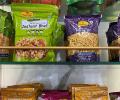
The process of merging Haldiram's Nagpur and Delhi branches to form Haldiram Snacks Food Private Ltd has been completed, informed its CEO Krishan Kumar Chutani on the social media platform LinkedIn. "A new chapter begins in the Haldiram story, and it's a significant one," Chutani posted on LinkedIn on Monday.
Hit by inflation, higher input costs and pricing measures, fast-moving consumer goods companies are expected to see a contraction in their gross margin and a modest-to-flat operating profit in the October-December quarter. Several FMCG makers are likely to log a low single-digit rise in their revenue, returning to the cycle of value-driven growth.

Around 73 per cent of employers interviewed intend to hire freshers during January-June 2026, with recruitment decisions mainly driven by internships and real-world project experience rather than academic credentials alone, a report said on Wednesday. Nearly 3 in 4 employers (73 per cent) intend to hire freshers during January-June this year, marking a 3 per cent increase over the previous half-year, according to TeamLease EdTech Career Outlook Report HY1 2026.
Stock markets closed higher for the second straight session on Tuesday, driven by gains in bank, IT and capital goods shares.
