
Gold prices are struggling and are down 18 per cent from their March highs. But stock prices have fallen even more. As a result, the precious metal has begun to outperform equities - both in the domestic market and international markets. Gold prices are up 2.6 per cent in the domestic market in the current calendar year (CY22) so far, according to the World Gold Council (WGC), compared to a 1.7 per cent decline in the Sensex year-to-date (YTD).
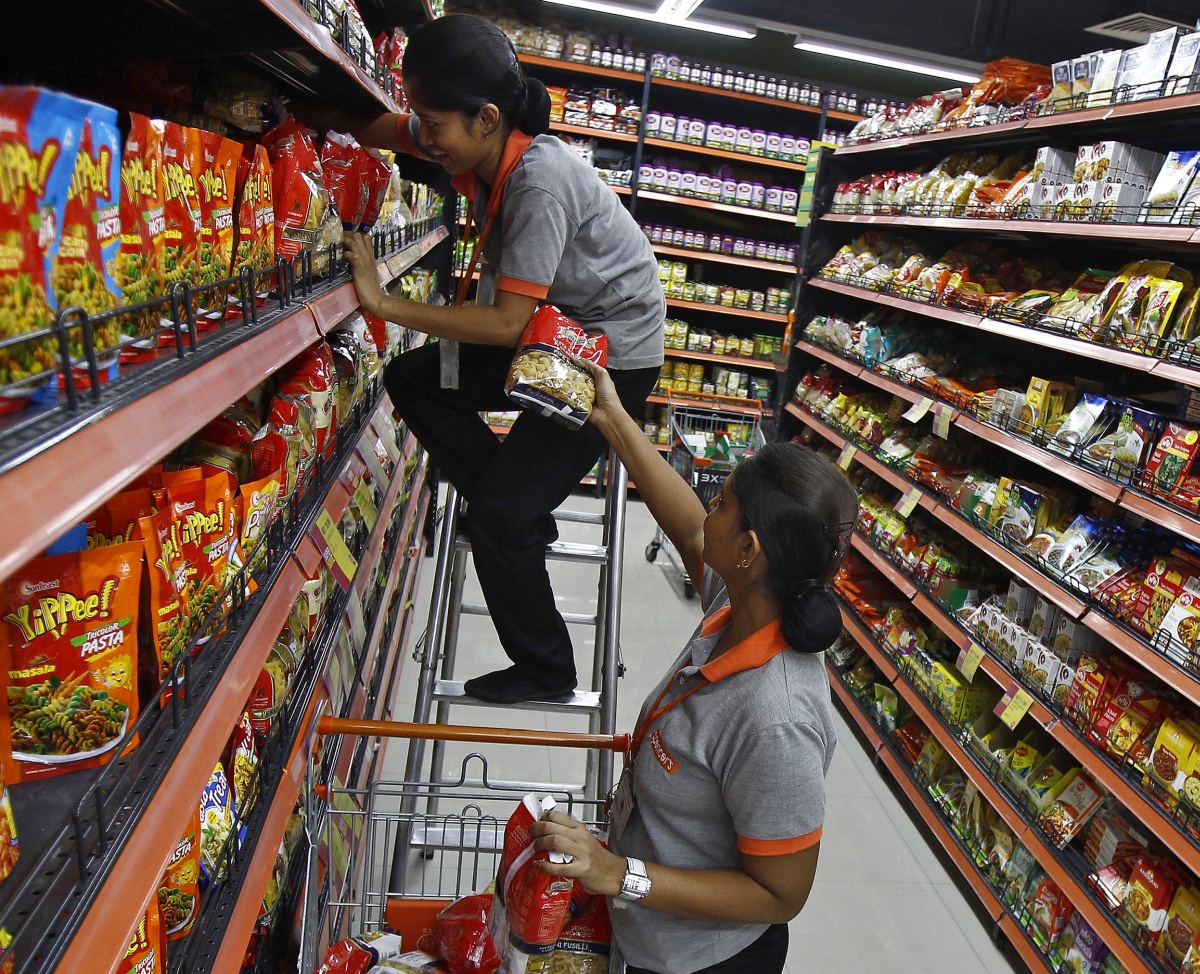
However, rural demand continued to remain a concern for FMCG companies during the quarter.

Benchmark indices bounced back on Wednesday after falling for five straight sessions, with investors snapping up the recently-mauled IT, finance and consumption stocks amid a supportive trend overseas. A rebounding rupee further bolstered sentiment, traders said. Halting its five-session slide, the BSE Sensex jumped 574.35 points or 1.02 per cent to finish at 57,037.50. Similarly, the NSE Nifty surged 177.90 points or 1.05 per cent to 17,136.55.

Maruti was the top gainer in the Sensex pack, rallying nearly 4 per cent, followed by PowerGrid, ITC, NTPC, SBI, M&M, Kotak Bank and HDFC Bank. On the other hand, TCS was the top loser on the Sensex, shedding over 6 per cent.

The results of Indian IT services players in the just-concluded fourth quarter of 2021-22 are expected to reveal continuing growth momentum as demand surges on the back of digital transformations and the cloud shift, but analysts anticipate margins to be under pressure due to supply challenges. Analysts covering the sector expect revenue commentary should be strong despite the Russia-Ukraine conflict and inflation. Top-line growth will be driven by broad-based demand with a strong uptick for cloud, digital, cybersecurity, data analytics, and artificial intelligence, among other services.

Currently, TCS is India's second most valuable firm after Reliance Industries, which has a market cap of nearly Rs 12.9 trillion.

The entry of SoftBank-backed Ola into the electric scooter (e-scooter) segment is set to power up the overall market and perhaps fast-track the adoption of battery-operated vehicles. But for manufacturers of internal combustion engine (ICE)-powered two-wheelers, such as Bajaj Auto, Hero MotoCorp, and TVS Motor, it will be a double whammy. Not only will they have to contend with the aggressive pricing of Ola's scooter and incur a loss at each unit of the e-scooter sold, the volumes of their regular (ICE) models, too, could feel the squeeze, observed analysts. Ola is expected to price its e-scooter in the range of Rs 85,000-1.1 lakh.

Accenture's Q1 FY22 results have sent a wave of cheer among analysts, as the company raised its revenue guidance and said it expects double-digit growth in outsourcing, up from single digit to low double-digit growth expected earlier. Accenture's financial year ends on August 31. The company raised its revenue outlook for FY22 to 19-22 per cent in local currency, up from 12-15 per cent earlier.

'Younger investors start their journey with very little capital so they are risking less while they have a lot of time to experiment and learn early on.'

Pegging the cost of the covid-19 lockdown at USD 120 billion (approximately Rs 9 lakh crores) or 4 per cent of the GDP, analysts on Wednesday sharply cut their growth estimates and stressed on the need to announce an economic package. The Reserve Bank of India (RBI), which is scheduled to announce its first bi-monthly policy review on April 3, is set to deliver a deep rate cuts and it should also be assumed that the fiscal deficit targets will be breached, analysts said.

The bank may post a loss of Rs 1,000 crore during October-December 2019-20 quarter, an analyst commented.

A weak margin outlook in the near term and lack of fresh triggers may keep the Godrej Consumer Products (GCPL) stock under pressure. The stock, after tepid September quarter (Q2) results and marginal downward revision in earnings estimates, declined 3.5 per cent in trade on Friday. Though consolidated sales of the company, which owns the Goodknight and Cinthol brands, grew 8.5 per cent year-on-year (YoY), its operating profit declined because of the sharp contraction in margins.

Retail inflation inched up to 4.48 per cent in October due to an uptick in food prices, government data showed on Friday. The Consumer Price Index (CPI) based inflation was at 4.35 per cent in September and 7.61 per cent in October 2020.

Last month, the National Stock Exchange witnessed 'flash crash', when the Mumbai-based brokerage Emkay Global Financial Services sent the exchange index tumbling as much as 15.5 per cent in just a few seconds, creating a panic among traders.

The Reserve Bank of India (RBI) has announced a dollar-rupee two-year sell-buy swap auction for $5 billion on March 8, which will suck out rupee liquidity from the system. The swap will be in the nature of a simple sell/buy foreign exchange from the RBI side, in which a bank will buy US dollars from the central bank and simultaneously agree to sell the same amount of US dollars at the end of the swap period. "With a view to elongating the maturity profile of its forward book and smoothen the receivables relating to forward assets, it has been decided to undertake sell/buy swap auction of $5 billion on March 8, 2022," the RBI said in a statement. The auction cut-off will be based on the premium amount in paisa terms up to two decimal points.

Tech Mahindra was the top loser in the Sensex pack, shedding over 3 per cent, followed by NTPC, IndusInd Bank, Kotak Bank and Reliance Industries. NSE Nifty fell 185.60 points to 17,671.65.

'The recent correction in indices has made the markets cheaper to invest for the long term.'

'Investors should keep them on their radar and invest over a longer time frame, and expect some of these companies to bite the dust.'

Other gainers included Nestle India, Asian Paints, Bajaj Finance, NTPC, L&T, Axis Bank and Bajaj Auto. On the other hand, TCS, ONGC, Infosys, HDFC and SBI were among the laggards. NSE Nifty surged 121.65 points or 1.03 per cent to 11,889.40.

ICICI Bank was the top gainer in the Sensex pack, rising over 3 per cent, followed by ITC, SBI, HCL Tech, Axis Bank, Bajaj Finserv and Tech Mahindra. NSE Nifty advanced 32 points to 15,856.05.

Experts believe while escalation with Pakistan might not have a significant impact on trade economics, both India and China have major trade and investments in each others' economies. While the dispute might continue, it could have a temporary effect on the markets.

Despite a shaky Q3, conviction over the stock remained high, with 65 per cent of the analysts polled on Bloomberg retaining their 'buy' recommendation.

After unseasonal rains, supply disruptions and pandemic-induced woes pushed retail inflation well over the Reserve Bank's comfort zone in 2020, the scenario is likely to stay that way at least in the short term as economic recovery slowly gains foothold. For most part of this year, pricier food items pushed the retail inflation, based on Consumer Price Index (CPI), higher in the range of 6.58-7.61 per cent, except for March when the reading was 5.91 per cent. Experts believe retail inflation is likely to average around 6.3 per cent this fiscal and mostly will remain sticky going forward owing to pick-up in demand across sectors.

The regulator, which is already working on new guidelines to avoid repeat of such incidents, is also investigating whether the flash crash of over 15 per cent could have been avoided or contained at an earlier stage by the exchange.
Axis Bank's acquisition of Citibank's consumer finance business for Rs 12,325 crore - the second biggest deal in the Indian banking sector - is seen as a good deal at a good price. The acquisition enables Axis Bank to close the gap with competition in some key segments such as credit cards. At the same time, there are some key issues that are crucial for the deal's success, apart from the fact that it will take some time for Axis to reap the full harvest of its investment.

Pessimism largely emanates from the fact that the volume outlook for FY20 isn't encouraging at the moment.

The sudden movement of the rupee - post the monetary policy - is not a reason to panic, said currency dealers. According to them, a correction was overdue for the rupee that remained the best performing currency in the region for well over a month. The rupee closed at 74.72 a dollar on Friday from its previous close of 74.60. It had dropped 1.52 per cent against the dollar on April 7 after the Reserve Bank of India (RBI) announced its monetary policy, committing to buy Rs 1 trillion of bonds in the June quarter. A weak rupee goes well with the export narrative of the government, and is consistent with the RBI's intervention strategy that prevented an appreciation.

Inflation print for food articles, as a basket, remained nearly flat at 7.47 per cent during the month.

The broader NSE Nifty fell 78.75 points, or 0.70 per cent, to close at 11,234.55.

Lifting of deposit withdrawal moratorium on March 18 could open flood gates and will require a calibrated approach along with active support and signaling from the RBI, government and investor banks.

Many investors, who have made money in the rising market of the recent past, are pulling out of equity funds, believing that they can earn more by investing directly.

The decline is attributed to lower salary growth and a rise in households' financial liabilities.

Its production declined for the third consecutive year in financial year 2020-21 (FY21) to an 11-year low, while sales volume contracted for the second year to the lowest since FY15. The company manufactured around 1.08 million vehicles last fiscal, a decline from 1.17 million the previous year, and a steeper fall from its all-time high tally of 1.62 million reported in FY18.

Spiralling prices pinched the pocket of consumer as edible oil, fuel and many other commodities turned dearer this year amid pandemic-induced disruptions but the inflationary pressure is anticipated to ease, though marginally, in the coming months. As consumers, at retail as well as wholesale levels, are willy-nilly learning to live with the new normal of curbs to contain the spread of coronavirus infections, experts are of the view that elevated inflation is likely to stay longer. After dealing with the devastating blows from the second COVID wave, especially during the April-June period, the economy is well on the revival path but the emergence of Omicron might unsettle the recovery trajectory in the short term.

Use the opportunity to increase equity exposure because these are short-term blips.

India's industrial production grew by 1 per cent in December, official data showed on Friday. According to the Index of Industrial Production (IIP) data, the manufacturing sector output grew by 1.6 per cent in December 2020.

There will be pressure on the fiscal situation, especially at a time when the monsoon can also disappoint. More populist expenditure is on cards if the mandate is a hung Parliament or a coalition government.

Infosys was the top gainer in the Sensex pack, rallying around 7 per cent, followed by TCS, IndusInd Bank, ONGC, HDFC Bank and HCL Tech. On the other hand, ITC, Bajaj Finance, Kotak Bank and Sun Pharma finished in the red.

Top losers in the Sensex pack included Tata Steel, Vedanta, Maruti, SBI, Coal India, Tata Motors, Sun Pharma, HUL, RIL, IndusInd Bank, Axis Bank, HDFC duo, ICICI Bank, M&M, Kotak Bank, and Infosys, falling up to 2.89 per cent.

Top losers in the Sensex pack included Yes Bank, Vedanta, IndusInd Bank, Tata Steel, L&T, SBI, NTPC, Kotak Bank, HDFC, HDFC Bank, PowerGrid, Infosys and ITC, falling up to 4.18 per cent.
