
The feud reached its peak when Musk made explosive allegations about Trump's connection to disgraced financier Jeffrey Epstein, marking a dramatic escalation in their increasingly personal conflict.

'The favourable rupee-dollar exchange rate, there are opportunities we can tap.'

Maruti will launch its first electric vehicle (EV) in the next financial year (FY24), and will roll out six EVs in the country by FY30, the automaker's parent firm Suzuki said on Thursday.

Brushing aside concerns raised by proxy advisory firm IiAS on Suzuki's investment in the EV project, Maruti Suzuki chairman RC Bhargava on Thursday asserted that there was nothing in it against the interest of the company and its shareholders as it is part of an earlier arrangement. Countering the criticism from the proxy advisory firm, Bhargava noted that all models produced at Suzuki Motor Gujarat (SMG), including EVs, would be ultimately sold by Maruti Suzuki India (MSI) in the marketplace. IiAS has raised serious questions regarding the decision of the Suzuki Motor Corporation (SMC) to invest directly in the EV project instead of MSI doing it.
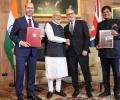
'That way you're not hostage just to US sort of exports to India.'

Only a few thousand chargers dot the Indian landscape, some in working condition, others not, with some held hostage to the power supply vagaries of local utilities, reports S Dinakar.
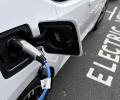
A joint venture of Reliance Industries Ltd and BP of the UK on Wednesday said it has signed an agreement with the Mahindra Group to explore EV and low-carbon solutions, including battery swapping technology options, for electric 3-wheelers. Besides exploring creation of EV products and services, the non-binding MoU signed by Reliance BP Mobility Limited (RBML) and Mahindra Group would look for identifying synergies in low-carbon and conventional fuels, the company said in a statement. "The MoU also covers evaluating charging solutions by Jio-bp for Mahindra vehicles including electric 3 and 4 wheelers, quadricycles and e-SCV (Small Commercial Vehicles - sub 4 ton)," it said.

Automaker MG Motor India on Monday said it has partnered with Bharat Petroleum Corporation Ltd (BPCL) to bolster EV charging infrastructure across the country. The partnership with BPCL will add momentum to EV adoption by expanding opportunities for intercity travel as the two entities will install EV chargers across highways and within cities, the automaker said in a statement. With BPCL's vast customer reach and operations and MG's strides in the EV space, the two entities can combine expertise to strategically identify charging sites, garner consumer insights, devise loyalty programs, and create technology to manage charging systems, it added.

After a successful tie up in traditional ICE and strong hybrid models, Suzuki and Toyota are now set to take their partnership to the next level: the electric vehicle segment. Both the Japanese auto giants recently announced a plan to produce Suzuki eVX-based SUV which will be sold under Toyota brand across the globe. This electric SUV, bearing Toyota's logo, will go for production at Suzuki Motor Group (SMG) facility in Hansalpur, Gujarat beginning the spring of 2025, marking the first EV launch for both companies in India.
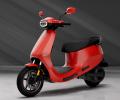
Ola Electric on Friday said it has launched eight scooter models under the S1 brand, developed on its Gen 3 platform, priced between Rs 79,999 and Rs 1,69,999. The company said it will continue to sell retail its Gen 2 scooters along with the latest Gen 3 S1 scooters.

Ola Electric has eliminated its regional warehouses across India, and will now leverage its 4,000 retail stores nationwide for maintaining vehicle inventory, spare parts, accessories, and last-mile deliveries. The strategic move is expected to boost EBITDA margins by almost 10 percentage points, besides improving inventory management and faster customer deliveries, sources directly familiar with the matter said.
The semiconductor chip supply for the electric two-wheeler industry has normalised but the prices are up by nearly 50 per cent compared to pre-pandemic period, said Eric Vas, president, Urbanite, the electric vehicle (EV) business of Bajaj Auto. "It (the supply) has improved greatly. It has pretty much normalised. The problem is the cost. "The costs remain very high. Hopefully, the costs will start correcting themselves over this fiscal year," he said in an interview with Business Standard.
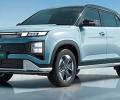
Hyundai Motor India Ltd (HMIL) has since 2019 saved around Rs 5,700 crore in foreign exchange (forex) by locally manufacturing or sourcing more than 1,200 components, including battery packs for electric vehicles, said a senior executive of the automaker. The company's efforts for Aatmanirbhar Bharat, the government's campaign for domestic manufacturing, have resulted in a localisation rate of 92 percent in India, said Gopalakrishnan Chathapuram Sivaramakrishnan, whole-time director and chief manufacturing officer at HMIL.

Honda Motorcycle and Scooter India (HMSI) on Wednesday forayed into the fast-growing domestic electric mobility market with the introduction of e-scooters, ACTIVA e: and QC1, with swappable and fixed batteries. With this, the Japanese two-wheeler maker will now be competing with other legacy players such as Bajaj Auto, Hero MotoCorp, TVS Group as well as pure EV players like Ather and Ola, who already have a good presence in the segment, which is growing at 34 per cent year-on-year.
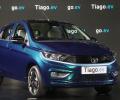
Tata Motors on Wednesday launched its Tiago EV with introductory prices for first 10,000 customers ranging between Rs 8.49-11.79 lakh

They don't just want better returns -- they're looking for global opportunities, more variety and smarter ways to grow their money, says Soubho Moulik, CEO, Appreciate.
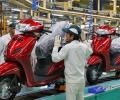
Honda Motorcycle and Scooter India (HMSI), the country's second-largest two-wheeler manufacturer, is planning to launch its first electric vehicle (EV) here by March next year, said CEO & MD Atsushi Ogata on Monday. The company would also enter the low-end motorcycle market in March by launching a 100cc engine bike at a price that will "positively shock" customers, he said while speaking with reporters, after launching the Activa with Honda Smart Key. HMSI's first EV, an electric scooter, will have a fixed battery and the second model will have two swappable batteries, Ogata explained.

The Adani Group plans to invest a record $15-20 billion across businesses over the next five years to chart out the next phase of growth, chairman Gautam Adani said on Tuesday as he touted the conglomerate's strong balance sheet and robust business to shrug off relentless scrutiny it faces. Record earnings from the businesses ranging from seaports to airports, renewable energy parks to data centres, cement to gas and electricity has built India's largest infrastructure group that not only exists just to serve the markets but to serve the nation's destiny, he said.
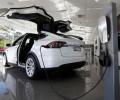
With increasing incidents of electric two-wheelers catching fire, Union minister Nitin Gadkari on Thursday said the companies found negligent will be penalised and a recall of all defective vehicles will be ordered after receiving the report of an expert panel that has been formed to enquire into the matter. In a series of tweets, Gadkari said several mishaps involving electric two-wheelers have come to light in the last two months. "We have constituted an expert committee to enquire into these incidents and make recommendations on remedial steps.

Earlier in May, Ford India announced that it had dropped its plans to make electric vehicles (EVs) in India, which it intended to export, under the production-linked incentive scheme (PLI). Ford was among 20 companies that had signed a Champion OEM Incentive Scheme under the PLI project with the government in February this year. The decision comes as a blow for the 4,000-odd employees at Ford India's Maraimalai Nagar plant near Chennai and in Sanand, Gujarat. In September last year, the company had announced that it would exit the India market, which it had entered in 1995 through an on-again, off-again joint venture with Mahindra & Mahindra (they split in 1998, signed a JV in 2019 and split again in December 2020), retailing petrol and diesel brands such as the EcoSport, Figo, Aspire, and Endeavour.

Sluggish urban demand, a high base effect, and weak sales of hatchbacks and sedans weigh down passenger vehicle sales in FY25.

When Gensol Engineering made its public market debut through a small and medium enterprises (SME) initial public offering (IPO) in September 2019, its promoters held a commanding 96 per cent stake. Now, that figure has shrunk to a "negligible" fraction.

India's electric mobility goal, which has so far been riding on two wheels, is all set to graduate to four wheels. At least, the journey has begun. Hyundai Motor India said it would invest Rs 4,000 crore till 2028 to launch half-a-dozen electric vehicles (EVs) in India. It would eventually straddle premium and mass segments. The first of these - the electrified version of an internal combustion engine (ICE)-powered model - will go on sale as early as next year.
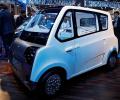
An EV has to be purchased along with the battery as there are hardly any battery swapping, rental, or leasing business models available across India.

'We handle close to 3 million rides daily, making us one of the largest players in this segment'
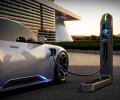
State governments need to focus on building charging infrastructure to realise the goal of transitioning a large proportion of their sales to EVs, reports Ishaan Gera.
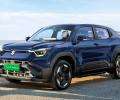
Speaking at the unveiling of the model at the Auto Expo, held as part of the Bharat Mobility Show, Suzuki Motor Corporation representative director and president Toshihiro Suzuki said the electric SUV would be exported to various regions, including Europe and Japan. Suzuki Motor Corporation, which has around 58 per cent stake in Maruti Suzuki India, plans to make India a global production hub for the model.

Ola Electric's initial public offering (IPO), of Rs 5,500 crore, is essentially aimed at ensuring the company maintain its top position in the electric two-wheeler segment, with incumbent players TVS and Bajaj Auto giving a fight to the number one player in market share. Most experts and competitors say the amount being raised is in line with the investment required to expand the electric-vehicle (EV) business. There are two discernible trends in the competitive electric two-wheeler market.
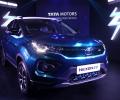
Tata Motors is actively considering tapping into some of the export markets beyond South Asia, for its range of electric vehicles (EVs) as it sees an opportunity of selling affordable EVs in markets outside India. The export plans will coincide with the commercial launch of the Curvve - an electric SUV concept that broke cover on Wednesday, in two years from now, Shailesh Chandra, MD, Tata Motors PVs and Electric Mobility, told Business Standard. "We are actively thinking of the international markets and we would like to go with a portfolio of products. "We have identified a few markets and in a couple of years, we should commence the same," said Chandra.

'Wherever the government has provided incentives for the purchase of two-wheelers, three-wheelers, cars, buses, and trucks, it gets a push for most of these alternate fuels. '
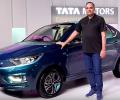
Tata Motors on Tuesday launched its second electric vehicle -- Tigor EV, catering to the personal segment in the domestic market, priced between Rs 11.99 lakh and Rs 13.14 lakh (ex-showroom). The model comes in three variants, priced at Rs 11.99 lakh, Rs 12.49 lakh and Rs 12.99 lakh. A dual tone top-end trim is tagged at Rs 13.14 lakh. The auto major has already achieved success with its first electric model, Nexon EV and now commences deliveries of Tigor EV from around 150 sales outlets in 70 cities across the country.
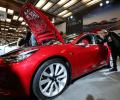
American electric carmaker Tesla has opened recruitment for various roles in India, including business operations analyst and customer support specialist, in what could be a precursor for the company's entry into the country. As per the job postings on the company's website, the posts are for the 'Mumbai Suburban' area.
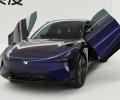
Baidu and the Chinese automaker Geely unveiled a prototype of an AI powered fully autonomous EV hatchback ROBO-01 under tbe brand name Jidu in Beijing on Wednesday, June 8, 2022.

'The customer is fast changing, and she demands newer experiences that wealth can buy.'

Finance Minister Nirmala Sitharaman on Saturday announced the removal of import duties on 12 critical minerals, lithium-ion batteries scrap, cobalt products, LED, zinc and 36 drugs for cancer and rare diseases.

Manu Bhaker is on a three-month break from shooting following her triumphant campaign at the Paris Games.

Actor Kamal Haasan launched Makkal Needhi Miam at a public meeting in Madurai in 2018.

Rajesh Karkera/Rediff.com takes the XUV 400, the first electric SUV from the Mahindra stable, for a spin and comes away impressed.
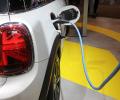
Maruti Suzuki India will launch electric vehicles in the country only after 2025 as demand for such vehicles at the moment is less and it would like to sell around 10,000 units a month whenever it enters the electric mobility space, company chairman RC Bhargava said on Wednesday. Addressing a virtual conference on the company's second quarter earnings, he said under the current circumstances a lot of things in the EV ecosystem such as batteries, charging infrastructure and electric supply are done by other parties and therefore the costing is not in the hands of the company. Also with fuel prices going up, car market leader Maruti Suzuki India is intensifying its focus on more CNG offerings of its models.
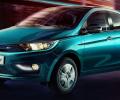
Tata Motors on Wednesday unveiled Tigor EV, its second electric model in the personal mobility space after Nexon EV. The auto major has tasted success with Nexon EV, which currently commands about 70 per cent market share in the domestic electric vehicle segment. The Tigor EV comes powered by the company's high voltage electric architecture - Ziptron - and has been developed based on three pillars of technology, comfort and safety.
