
Usually, in the western view, corporate success is attributed to efficiency, organisational structure, and scale. R Gopalakrishnan and Harish Bhat argue that philosophy, culture, and the transmission of values are more important for sustaining growth and profitability of an enterprise over a period of time.

Ratan was extremely ethical in his dealings, which he brought to bear on the business house which he helmed, remembers Sailesh Kottary.

Has liberalisation squeezed the personality out of India Inc's leaders?

Mistry is not the first Tata bigwig to be ousted and Tata is not the only big name which saw a doyen or two leave
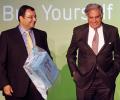
Ratan Tata: A Life, the much awaited biography, reveals that after a year of 'parallel running', Tata began having second thoughts about Cyrus Mistry's 'suitability'. 'Mistry targeted Ratan, the man who had elevated him from virtual oblivion into the mainstream of the Tatas...'

An exclusive excerpt from The Tatas: How A Family Built A Business And A Nation.

Environmentalist R K Pachauri, accused of sexual harassment by his former women colleagues in the recent past, has stepped down as a member of the governing council of the TERI.

Tata Sons, holding company for the Tata group, is working on building a centralised rural business platform that could be leveraged for the entire group's benefit, instead of each company looking at it separately.

The Tata empire turns 150 this year. R Gopalakrishnan, former director, Tata Sons Ltd, imagines a conversation among the group's founder Jamsetji, his son Dorabji, his successor, Nowroji Saklatwala, and his successor, J R D Tata.

About time the Tata companies that are owned by the public are freed from the clutches of Tata Sons, says Sudhir Bisht.
 © 2026 Rediff.com - Advertise with us - Disclaimer - Privacy Policy - Sitemap - Feedback - About us - Terms of use - Grievances