
The output has dropped after hitting a peak of about 62 mmscmd in August, 2010.

Natural Gas production from KG-D6 block has dropped to 25.35 million standard cubic meters a day this month, from over 63 mmscmd peak output achieved in August 2010.
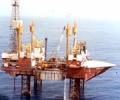
RIL in August submitted a revised field development plan for the Dhirubhai-1 & 3, the only producing gas fields among a total of 18 gas discoveries made so far in the KG-D6 block in Bay of Bengal, sources with direct knowledge of the development said.
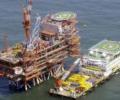
It is shut due to high water and sand ingress and it awaits regulatory nod to carry out urgent workover.

RIL will initially start gas production from eight wells, with an initial output likely to be 5 mmscmd (million standard cubic metres) per day. Bombay high court had last week allowed Reliance to sell gas from KG-D6 at $4.20 per million British thermal units in accordance with the government's gas utilisation policy, which gives priority to fertiliser units followed by existing power plants.
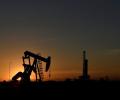
India on Tuesday opened its largest oil and gas bid round, offering 25 blocks covering 1.91 lakh square kilometers mostly in offshore area, as the government looks to boost domestic production to cut imports and help energy security. Petroleum Minister Hardeep Singh Puri launched the 10th bid round under the Open Acreage Licensing Policy (OALP) at the India Energy Week (IEW) in Mumbai.
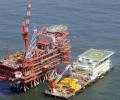
While government/PSU procedures focus on piece meal & individual tenders taken on standalone basis, avoiding delays and cost of not doing things becomes a primary consideration in PSC procurement
The field pumped about 5,000 barrels of crude oil on the restart as the company tested equipments and systems. Output may rise to 10,000-12,000 barrels per day (bpd) by the month-end, when the field would be shut again for 45 days to hook up more oil wells.

The auditor said that in the case of performance audit on hydrocarbon production sharing contracts, 'interactive meetings were held with two operators, including RIL, prior to the finalisation of the draft performance audit report'.
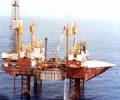
BP, which recently bought 30 per cent stake in KG-D6 and 20 other blocks of Reliance Industries for $7.2 billion, is keen to undertake sea-bed surveys this winter season -- the only four months weather window available in Bay of Bengal for such jobs, to acess potential of satellite discoveries in the block and draw blue-print of their development.
The report, submitted to the government last week, says the slow pace of field development is the reason production has fallen to 50 million standard cubic metres a day (mscmd) from a peak of 60 mscmd last year.

Reliance currently holds 90 per cent interest in KG-D6.
The company is in advanced talks with Hindustan Petroleum Corp, Chennai Refinery and Kochi Refineries for sale of 34,000 barrels per day of oil it will start producing from the gas-rich KG-D6 block on Krishna Godavari basin from September. The company is investing $2.234 billion in developing the MA-1 and MA-2 oil fields in the predominantly gas-rich block.

Reliance Industries' eastern offshore KG-D6 oil and gas fields have seen output further dipping to 44.5 million standard cubic metres per day this month.

Reliance Industries, which has seen output from its prolific KG-D6 fields fall by 15 per cent, can raise production to 67-68 million cubic metres of gas a day by next month if it can drill additional wells.
Reliance Industries has said the natural gas output at its Krishna Godavari basin KG-D6 fields averaged 54.5 million cubic meters a day in the quarter ended December 31, 2010, down from 60 mmscmd achieved in April.

The Directorate General of Hydrocarbons (DGH) last month wrote to Reliance asking it to drill two more wells by April to meet its commitment of drilling 22 wells in the phase-1 development of the Dhirubhai-1 and 3 or D1 and D3 gas fields in the KG-D6 block, official sources.

RIL plans to give up about 56 per cent of "low prospectivity area" in its eastern offshore KG-D6 block and retain only the portion where oil and gas discoveries have been made.
GAIL India chairman and managing director B C Tripathi said the availability and possibility of gas has changed with the change in government policy.
BP Plc, Europe's second biggest oil company, and Reliance Industries will invest $5 billion in developing untapped gas reserves in the KG-D6 block as the partners attempt to reverse the fall in gas production.
Agrees with RIL's stand that CAG cannot do a performance audit of the company.
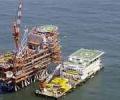
Reliance Industries has sought tripling of its KG-D6 gas price from April 1, 2014 after the current below market rate of USD 4.205 per mmBtu expires.
The ministry of petroleum and natural gas would be issuing instructions for fresh gas allocation from D6 this week.

The Comptroller and Auditor General can do a performance audit of production sharing contracts

Reliance Industries Limited had in late-August filed a revised field development plan for discoveries Dhirubhai-1 and 3 (D1&D3) in KG-DWN-98/3 cutting gas reserves to 3.10 Trillion cubic feet from 10.03 Tcf approved in 2006.
Reliance Industries on Saturday said it had never contested the government's right to get the company's spending on KG-D6 gas fields audited by the Comptroller and Auditor General but hoped it will not be subjected to a performance audit."RIL has at no time contested the government's right to conduct an audit by any agency, including the CAG, as provided in Section 1.9 of the Accounting Procedure of the PSC," the company said in a statement on Saturday evening.

RIL, which holds 90 per cent interest in KG-D6, paid $2.47 million while Niko Resources of Canada paid USD 274,767 in profit petroleum for the April-June quarter, officials said.

Several FIITJEE centres in Delhi-NCR have abruptly shut down, leaving students and parents who paid lakhs of rupees in fees in a difficult situation. The closures are attributed to non-payment of salaries for months, leading to teachers resigning and joining other coaching institutes. FIRs have been registered against two FIITJEE centres in Noida and Ghaziabad, highlighting allegations of criminal conspiracy and breach of trust. Parents are concerned about their children's academic future and are seeking answers and solutions from FIITJEE.

Gas output from KG-D6 in the week ended April 1 dropped to 33.89 mmscmd from 34.09 mmscmd in the previous week, according to a status report filed by the company with the Oil Ministry.

The KG-D6 production is lower than 61.5 mmscmd rate achieved in March, 2010, as a drop in pressure in the wells and increased water ingress has led to a lower per-well gas output.

rediffGURU Vipul Bhavsar answers readers' personal income tax queries.

Reliance Industries has accused CAG of exceeding its brief in the audit of spending on eastern offshore KG-D6 block saying hindsight is being used to question operational decisions taken 8 years back.
RIL has raised the marketing margin to $0.15 per million British thermal unit from $0.12 per mmBtu earlier, a source said. The rate, which would be charged over the $4.20 per million British thermal unit base gas price, is however lower than the $0.18 per mmBtu margin charged by state-run GAIL. The increase, he said, was due to the additional risk of 'ship-or-pay,' an obligation under which the company would be obliged to transport the committed volumes or pay for the gas.
The ministry has attributed the fall in output to non-fulfilment of RIL's commitment to drill 22 wells in the field.

Reliance Industries has drilled two new wells in its KG-D6 gas block, but both have turned out to be almost dry, with very little hydrocarbon presence, vindicating the company's stand that indiscriminate drilling will not help solve the problem of falling gas output.

Concerned over fall in output at India's biggest gas field, oil regulator DGH has sent a fact finding mission to Reliance Industries-operated KG-D6 fields to ascertain reasons for the decline in production.

Non-core sponge iron plants, petrochemicals units and oil refineries have cornered as much as 13.13 million cubic metres per day out of the 60.76 mmscmd of KG-D6 gas allocated.
Global supermajor BP Plc's exclusivity with Reliance Industries Ltd has ended but the energy giant will continue to pursue oil and gas as well as mobility ventures in India with the Mukesh Ambani firm owing to an unwritten strategic partnership, BP's outgoing India head Sashi Mukundan said. BP in 2011 spent $7.2 billion to acquire 30 per cent interest in 23 oil and gas blocks of Reliance. Eastern offshore KG-D6 block was the cornerstone of the deal that also provided for a 10-year exclusivity period which meant that BP would take up energy projects or investments in India only in partnership with Reliance.
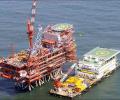
Reliance is seeking help from Shell to rectify glitches in D6 block in the Krishna-Godavari basin.

The govt auditor also indicts DGH and management committee of D1 and D3 fields
