
Owing to erratic monsoons this year, the kharif grain output is projected to fall 18 per cent to a seven-year low of 96.63 million tonnes against last year's 117.70 million tonnes.
Wholesale price-based inflation stood at 8.90 per cent in the corresponding week a year ago.

These foods will keep your energy levels high and drive away your hunger pangs.

The inflation in vegetables remained stubborn, which jumped 16.91 per cent

The price rise of essential food items like vegetables, fruits and cereals, pushed up inflation to five-month high of 6.01 per cent in May.
The NRAA was set up to do precisely this in rain-fed areas, but inter-ministerial wrangling ensured this didn't happen.

Having sex every other day may be optimum, says Dr Raghuveer Karne. Prolonged abstinence can increase the number of dead sperm.

You can consume 5 to 10 ml of water per kilogram of body weight in the two to four hours before a workout

The two-day seminar, starting Thursdayday, is being conducted to form strategy for the coming Rabi season in consultation with states to compensate against the losses in many crops due to drought during the Kharif season.

For the week ending January 2, food inflation (prices of non-processed food articles) stood at 17.28 per cent.
By 2020, rice prices would rise by 13 per cent, wheat by 15 per cent, and maize by 27 per cent, it said, adding that in the past few months, the prices of major cereals have fallen by about 30 to 40 per cent as a result of the economic slowdown and favourable weather conditions, but they remain high compared to the rates three years ago. Many developing regions have experienced high economic growth in recent years.
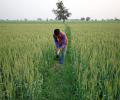
For potato farmers in the north and wheat growers in the eastern parts -- particularly in Jharkhand, Bihar, and Odisha -- the recent rains could in fact be beneficial.

Prices of food articles continued to rise over the previous week. Bajra and urad prices rose by two per cent each, and condiments and spices, arhar, and fruit and vegetables became more expensive by one per cent.

Prices for pulses fell by 0.47 per cent on a weekly basis.

Wholesale prices in India shrunk for the first time in 32 years with inflation touching minus 1.61 per cent for the week ended June 6.

Based in Chicago, he will report to PepsiCo Americas Foods CEO John Compton.

Food inflation eased to 16.23 per cent for the week ended May 15 on account of a fall in prices of masur, fruits and vegetables.
Inflation turned negative for the first time in the week ending June 6. Inflation in the corresponding week last year was 12.38 per cent.
These women and a handful of others are still a minority in financial and regulatory circles

Pappu Qureshi, a good samaritan in Mumbai, helps feed more than 50 migrants, mostly daily wagers and their children, but with the 21-day national lockdown looming large, time is running out.
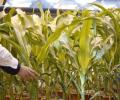
Low rain coupled with the fact that maize prices in the open market have surged from around Rs 15-16 a kg to almost Rs 25 this year have forced farmers to turn to this crop.

SAD chief Sukhbir Singh Badal announced the decision to snap ties with the NDA on Saturday night, amid stepped up agitation by farmers in Punjab over the three legislations which were recently passed by Parliament amid Opposition protests.

The wholesale price index during the corresponding week a year ago was as high as 12.91 per cent, while in the previous week, it stood at (-) 1.58 per cent. During the week, prices of barley, jowar and gram rose by two per cent and condiments and spices, arhar and fruits and vegetables by one per cent each.

The prices of food items like mutton rose by 14 per cent, arhar by 9 per cent, gram by 4 per cent, fruit and vegetables by 2 per cent during the week. However, a major decline was registered in mineral index, as prices fell by 16.8 per cent mainly due to softening iron ore prices by 24 per cent and felspar by 3 per cent.
Inflation rose to (-)1.17 per cent for the week ended July 11 compared to (-)1.21 per cent in the previous week as food articles like pulses, cereals, fruits and vegetables turned expensive.
The rate of inflation for the week stood\nat minus 1.14 per cent as against minus 1.61 per cent for the week ended June 6,\nofficial data released in New Delhi on Thursday.
This is the second week in a row when inflation remained in negative territory. The wholesale price index stood at 11.80 per cent during the corresponding week a year ago.
Climate change will make monsoons unpredictable; as a result, rain-fed wheat cultivation in South Asia will suffer in a big way and the total cereal production will go down.
Wholesale price-based inflation stood at 8.90 per cent in the corresponding week a year ago. During the week, the prices of the maize, arhar, spices and fruit went up while ragi and barley declined.
The wholesale prices-based inflation stood at 0.48 per cent in the previous week. However, in the corresponding week a year-ago the rate of price rise was 8.57 per cent. Among manufactured category sugar, imported edible oil and oil cakes became expensive.
Inflation has dropped to 0.48 per cent for the week ended May 2 from 0.70 per cent in the previous week.
A study from the University of Sydney in Australia suggests that having a breakfast of white bread and sugar-rich cereals may make a person susceptible to diabetes, heart disease, and even cancer. University scientists evaluated 37 diet studies that involved nearly two million people across the world, and analysed the effect of eating foods with high glycemic index, a measure of how different foods affect blood glucose levels.
Inflation rose to 0.70 per cent for the week ended April 25 on account of higher prices of essential food articles like cereals, pulses, vegetable, milk and sugar.

The Indian government has demanded that the year be changed to a more recent period, taking into consideration the rise in food prices and rate of inflation.
Certified personal trainer and nutritionist Samreedhi Goel discusses becomig a vegetarian from a nutritional standpoint.
Wholesale price-based inflation stood at 7.95 per cent in the corresponding week a year ago. Inflation, still nearly the lowest in three decades during the week, does not take into account policy rate cuts announced by the RBI in its annual credit policy.
Inflation eased to 0.18 per cent, the lowest ever in the last three decades, even as prices of food articles like pulses, cereals and vegetable hardened during the week ended April 4.
National Agricultural Cooperative Marketing Federation, the central government's procurement agency for non-cereal crops, is in talks with leading retail companies to serve as a back-end supply chain in agri-commodities.

This is contrary to the expectations of a majority of analysts predicting for another hike given the rise in inflation lately, including domestic ratings agency Icra

Sourdough is not only a type of bread, but also a technique.
